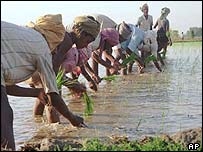
PREAMBLE: World hunger spiked sharply in 2009, significantly worsening an already disappointing trend in global food security since 1996. The combination of food and economic crises has pushed the number of hungry people worldwide to historic levels.
This issue gives space to the text of a report published in the International Monetary Fund on-line bulletin: Finance & Development, March 2010, Vol 47, No 1.. The report, entitled “Hunger on the Rise” was developed by David Dawe and Denis Drechsler, based on The State of Food Insecurity in the World, published by the Food and Agriculture Organization of the United Nations (FAO) in 2009 (see below for full citations).
OVER A BILLION HUNGRY PEOPLE
The Food and Agriculture Organization of the United Nations (FAO) estimates that 1.02 billion people were undernourished in 2009—about 100 million more than in 2008. As a result, reaching the World Food Summit target and the Millennium Development Goal for hunger reduction looks increasingly out of reach.
Poor harvests are not to blame. The FAO estimates that total cereal production in 2009 was only slightly below the record high set in 2008. Instead, the increase in hunger is mainly a result of poor people’s inability to afford the food that is produced. Many drew down savings during the food price crisis and have now lost jobs as a result of the global economic crisis.
Food prices increased considerably in developing countries during the 2006–08 world food crisis and were still high when the economic crisis started. Domestic prices of staple foods were typically 17% higher at the end of 2008 than two years earlier, after adjusting for inflation. This seriously hurt the purchasing power of poor consumers, who often spend 40% of their income on staple foods.
Thus, the global economic crisis hit developing countries at a very bad time. It further reduced access to food by lowering employment opportunities, remittances from abroad, development aid, foreign direct investment, and export opportunities.
How can hunger be eliminated? Improving world food security calls for both measures for immediate relief and more fundamental structural changes. In the short term, safety nets and social protection programs must be improved to reach those most in need.
In the medium and long term, the structural solution to hunger lies in increasing agricultural productivity to increase incomes and produce food at lower cost, especially in poor countries. The importance of longer-term measures is evidenced by the unacceptably high number of people who did not get enough to eat before the crises and are likely to remain hungry even after the food and economic crises have passed. In addition, these measures must be coupled with better governance and institutions at all levels.
Source: Dawe D, Drechsler D. Hunger on the Rise, available online at: http://www.imf.org/external/pubs/ft/fandd/2010/03/picture.htm
Text material attributed to the following source: The State of Food Insecurity in the World Economic crises – impacts and lessons learned, FAO Food and Agriculture Organization of the United Nations, Rome, 2009 is available from PDF [61p.] at: ftp://ftp.fao.org/docrep/fao/012/i0876e/i0876e.pdf
Sunday, 14 March 2010
Monday, 15 February 2010
CHILD SEXUAL ABUSE BY PRIESTS AND COVER-UP BY CATHOLIC CHURCH
PREAMBLE: On December 14, 2009, PacificSci Global Perspectives issued its 2009 summary of International and Global Development – Year in Review. In this, under the heading of Human Rights, we stated: “An ample truckload of “fertilizer” is required for the Catholic Church as a perpetrator of child sexual abuse by its own clergy, which it has too often sought to cover up in many countries. While not alone among organized religion in this pattern of abuse, any claim for leadership among the world Christian community is jeopardized by this hypocrisy.”
In this month’s issue, we post verbatim, a CNN press report that outlines a decades old cover-up of child sexual abuse at the hands of Catholic priests in Ireland. The actions of Irish priests and the inaction of their church hierarchy represent simultaneously the height of hypocrisy and flagrant criminal behavior, and bring into disrepute the entire edifice of organized Catholicism.
Although the action now being taken came about as a result of a commission of inquiry put into motion by the nation of Ireland, one has to ask why this took so long and why no criminal charges have ever been laid. This clearly does not absolve the state itself from some share of the responsibility and the consequences.
POPE MEETS IRISH BISHOPS OVER ABUSE REPORT
By Richard Allen Greene, CNN
February 15, 2010 -- Updated 2102 GMT (0502 HKT)
Rome, Italy (CNN) -- Alleged victims of child abuse by Catholic priests in Ireland called on the Vatican Monday to hold its own investigation into the scandal and punish those responsible.
"We ask that you take action now according to the laws and traditions of our Holy Church and discover how and why the teachings of Jesus Christ were so flagrantly abrogated over many decades," John Kelly said in a letter to Pope Benedict XVI.
"We ask that you convene a special commission ... to examine all aspects of the historical misconduct of Catholic religious orders in Ireland as well as those priests who betrayed their most sacred vows," he said.
Kelly, the founder of Survivors of Child Abuse, or SOCA, released the letter as Irish Catholic bishops met the pope in Rome after a damning report on the abuse of children by Catholic clergy.
The report, which came out in November, found that the Catholic Church in Ireland covered up widespread child abuse from 1975 to 2004.
The pope already has met with senior Irish bishops about the report, produced by the Dublin Archdiocese Commission of Investigation. The Irish government created the commission in 2006 to examine abuse allegations.
The Vatican now needs to order a major housecleaning, Kelly told CNN.
"They need to clean the stables up. They need to inquire into all the bishops, and if that means the majority of them would have to resign, then so be it," Kelly said.
"The bishops themselves are the problem. Somebody has dishonored this nation," said Kelly, who says he was himself abused in a Catholic institution in Dublin, Ireland, as a child.
"Nobody has been locked up or prosecuted for these crimes in Ireland," he said, saying it is now the Vatican's responsibility to punish the guilty. "The pope could do an awful lot if he is sincere.
"We are entitled to have great expectations," he told CNN by phone from Ireland. "I want strong leadership from the pope."
"We are asking the curia to examine the facts before them," said Patrick Walsh of SOCA, using a term for the leadership of the Catholic church.
"This is not a time for high Mass. That time is finished," he said. "It is time to pass judgment under Roman law."
The Irish Catholic bishops attended Mass in Rome on Monday morning before meeting with the pope. Benedict did not attend the Mass, his spokesman, Father Federico Lombardi, told CNN.
Cardinal Tarcisio Bertone, the Vatican secretary of state, presided, and addressed the scandal directly in his homily, calling the alleged abuse "abominable acts."
"Trials can come from either outside or inside the church. Both are painful, but those that come from within are naturally harder and more humiliating," he said, according to Lombardi.
"Such is the grave trial that at this moment your communities are going through, which see some men of the church involved in such particularly abominable acts," he said.
The Irish bishops prayed for the victims, said their spokesman, Martin Long.
"Prayers were offered to the survivors of abuse, the people, priests, and religious of Ireland. Prayers were also offered for the success of the meeting," he said.
One of the bishops meeting the pope said Sunday that the church in Ireland had been badly damaged by the revelations of abuse and cover-up.
"I would admit quite frankly what everybody else knows, shouted from housetops, that the church has been seriously wounded," Bishop Joseph Duffy said in Rome.
"This has done an immense damage to the authority of the church as the mouthpiece of the gospel of Jesus Christ. Of that there is no doubt," he said.
Each of the bishops will have seven minutes to speak at the meeting with the pontiff, Duffy said. The meeting was to go on all day Monday and resume Tuesday morning.
The bishops are staying at the Vatican, in the same hotel the cardinals of the church used when they last chose a new pope.
Benedict last week reiterated the Vatican's condemnation of child abuse.
"Unfortunately, in various instances, some [church] members, acting in contradiction with these commitments, have violated [children's] rights: a behavior that the church has not ceased to -- and will never cease to -- deplore and condemn," he said February 8.
The pope said after that meeting that he was "deeply disturbed and distressed" by the report's findings. He promised that the Catholic Church would try to develop strategies to make sure abuses don't happen again.
"He wishes once more to express his profound regret at the actions of some members of the clergy who have betrayed their solemn promises to God, as well as the trust placed in them by the victims and their families, and by society at large," the Vatican said in a statement then.
Four Irish bishops resigned in December after the report.
Source: Richard Allen Greene, Rome, Italy CNN
February 15, 2010 -- Updated 2102 GMT (0502 HKT)
http://edition.cnn.com/2010/WORLD/europe/02/15/ireland.pope.abuse/
Envoi: We will continue to monitor this apalling situation. Clearly the expressions of remorse by the Catholic church are nowhere near enough. Justice must be done, and must be seen, and believed, to be done.
In this month’s issue, we post verbatim, a CNN press report that outlines a decades old cover-up of child sexual abuse at the hands of Catholic priests in Ireland. The actions of Irish priests and the inaction of their church hierarchy represent simultaneously the height of hypocrisy and flagrant criminal behavior, and bring into disrepute the entire edifice of organized Catholicism.
Although the action now being taken came about as a result of a commission of inquiry put into motion by the nation of Ireland, one has to ask why this took so long and why no criminal charges have ever been laid. This clearly does not absolve the state itself from some share of the responsibility and the consequences.
POPE MEETS IRISH BISHOPS OVER ABUSE REPORT
By Richard Allen Greene, CNN
February 15, 2010 -- Updated 2102 GMT (0502 HKT)
Rome, Italy (CNN) -- Alleged victims of child abuse by Catholic priests in Ireland called on the Vatican Monday to hold its own investigation into the scandal and punish those responsible.
"We ask that you take action now according to the laws and traditions of our Holy Church and discover how and why the teachings of Jesus Christ were so flagrantly abrogated over many decades," John Kelly said in a letter to Pope Benedict XVI.
"We ask that you convene a special commission ... to examine all aspects of the historical misconduct of Catholic religious orders in Ireland as well as those priests who betrayed their most sacred vows," he said.
Kelly, the founder of Survivors of Child Abuse, or SOCA, released the letter as Irish Catholic bishops met the pope in Rome after a damning report on the abuse of children by Catholic clergy.
The report, which came out in November, found that the Catholic Church in Ireland covered up widespread child abuse from 1975 to 2004.
The pope already has met with senior Irish bishops about the report, produced by the Dublin Archdiocese Commission of Investigation. The Irish government created the commission in 2006 to examine abuse allegations.
The Vatican now needs to order a major housecleaning, Kelly told CNN.
"They need to clean the stables up. They need to inquire into all the bishops, and if that means the majority of them would have to resign, then so be it," Kelly said.
"The bishops themselves are the problem. Somebody has dishonored this nation," said Kelly, who says he was himself abused in a Catholic institution in Dublin, Ireland, as a child.
"Nobody has been locked up or prosecuted for these crimes in Ireland," he said, saying it is now the Vatican's responsibility to punish the guilty. "The pope could do an awful lot if he is sincere.
"We are entitled to have great expectations," he told CNN by phone from Ireland. "I want strong leadership from the pope."
"We are asking the curia to examine the facts before them," said Patrick Walsh of SOCA, using a term for the leadership of the Catholic church.
"This is not a time for high Mass. That time is finished," he said. "It is time to pass judgment under Roman law."
The Irish Catholic bishops attended Mass in Rome on Monday morning before meeting with the pope. Benedict did not attend the Mass, his spokesman, Father Federico Lombardi, told CNN.
Cardinal Tarcisio Bertone, the Vatican secretary of state, presided, and addressed the scandal directly in his homily, calling the alleged abuse "abominable acts."
"Trials can come from either outside or inside the church. Both are painful, but those that come from within are naturally harder and more humiliating," he said, according to Lombardi.
"Such is the grave trial that at this moment your communities are going through, which see some men of the church involved in such particularly abominable acts," he said.
The Irish bishops prayed for the victims, said their spokesman, Martin Long.
"Prayers were offered to the survivors of abuse, the people, priests, and religious of Ireland. Prayers were also offered for the success of the meeting," he said.
One of the bishops meeting the pope said Sunday that the church in Ireland had been badly damaged by the revelations of abuse and cover-up.
"I would admit quite frankly what everybody else knows, shouted from housetops, that the church has been seriously wounded," Bishop Joseph Duffy said in Rome.
"This has done an immense damage to the authority of the church as the mouthpiece of the gospel of Jesus Christ. Of that there is no doubt," he said.
Each of the bishops will have seven minutes to speak at the meeting with the pontiff, Duffy said. The meeting was to go on all day Monday and resume Tuesday morning.
The bishops are staying at the Vatican, in the same hotel the cardinals of the church used when they last chose a new pope.
Benedict last week reiterated the Vatican's condemnation of child abuse.
"Unfortunately, in various instances, some [church] members, acting in contradiction with these commitments, have violated [children's] rights: a behavior that the church has not ceased to -- and will never cease to -- deplore and condemn," he said February 8.
The pope said after that meeting that he was "deeply disturbed and distressed" by the report's findings. He promised that the Catholic Church would try to develop strategies to make sure abuses don't happen again.
"He wishes once more to express his profound regret at the actions of some members of the clergy who have betrayed their solemn promises to God, as well as the trust placed in them by the victims and their families, and by society at large," the Vatican said in a statement then.
Four Irish bishops resigned in December after the report.
Source: Richard Allen Greene, Rome, Italy CNN
February 15, 2010 -- Updated 2102 GMT (0502 HKT)
http://edition.cnn.com/2010/WORLD/europe/02/15/ireland.pope.abuse/
Envoi: We will continue to monitor this apalling situation. Clearly the expressions of remorse by the Catholic church are nowhere near enough. Justice must be done, and must be seen, and believed, to be done.


Friday, 15 January 2010
FOOD 2030 - A NATIONAL REPORT WITH GLOBAL IMPLICATIONS
PREAMBLE Demand for food and energy will jump 50% by 2030 and for fresh water by 30%, as the world population tops 8.3 billion. Climate change will exacerbate matters unpredictably. The United Nations Environment Programme (UNEP) predicts widespread water shortages across Africa, Europe and Asia by 2025. The amount of fresh water available per head of population will decline sharply during that time. The issue of food and energy security rose high on the political agenda last year during a spike in oil and commodity prices, but then slipped in priority with falling prices. At present, 30-40% of all crops are lost due to pest and disease before they are harvested, and future droughts and increasing salinity will affect growth and produce.
In this issue, we highlight the British Government’s new Food Strategy, released January 5th, 2010. It is a timely document, with implications for both the UK and the rest of the world.
UK GOVERNMENT’S NEW FOOD STRATEGY
A National Report with Global Implications
On January 5th, 2010, the UK Government released its new food strategy: Food 2030: How we get there is the first of its kind in over 50 years, and the UK’s first food security assessment. The report states observes that "the natural environment and the economy are intrinsically linked", and discusses issues ranging from how to create a sustainable food system locally and globally, to the challenges of rising global demand for food and how food contributes to greenhouse gas emissions (GHG).
"We need to think differently about food," said Prime Minister Gordon Brown in his Foreword to the report, produced by the Department for Environment, Food and Rural Affairs (DEFRA). 2008 was a wake-up call to world governments, as food prices rose sharply for the first time in a generation, provoking riots in some parts of the world. Many countries have reacted to protect food supplies in the face of climate change, a growing world population, and the spectre of “sudden shocks” such as natural disasters or price spikes.
[Ed Note: In Haiti, people are already reduced to eating mud cakes (clay with little added nutritional content); the January 13th 2010 earthquake will further exacerbate this extreme situation.]
As Secretary of State for DEFRA Hilary Benn states: “…the consequences of the way we produce and consume our food are unsustainable to our planet and to ourselves… we are at one of those moments in our history where the future of our economy, our environment, and our society will be shaped by the choices we make now.” Food production, he continues, must occur “without damaging the air, soil, water and marine resources, biodiversity and climate that we all depend on". For the UK, the aim by 2030 is to ensure that consumers are informed, can choose and afford healthy, sustainable food; that this demand is met by profitable, competitive, highly skilled and resilient farming, fishing and food businesses, supported by first class research and development. Food security is ensured through strong UK agriculture and food sectors, and international trade links with EU and global partners which support developing economies.
Globally, the report calls for a fairer international trade system that addresses import restrictions and subsidies, and the support of fair trade products, will work towards food that is produced, processed, and distributed to feed a growing global population in ways which:
o use global natural resources sustainably
o utilizes a low carbon food system which is efficient in using resources – any waste is reused, recycled or used for energy generation
o enable the continuing provision of the benefits and services that results from a healthy natural environment
o promote high standards of animal health and welfare
o protect food safety
o make a significant contribution to rural communities, and
o allow for global leadership on food sustainability.
Sustainability is a central theme throughout the document, but with the onus for this left mostly up to consumers. More government regulation and intervention may be required, given that many consumers will find it difficult to change food purchasing habits; otherwise, the agribusiness will find new ways to appeal to consumers without truly changing their activities. Related target areas:
education to help consumers know how and where food is produced and how to grow and cook it themselves;
programmmes to provide schoolchildren with opportunities to grow food;
the public sector would lead by example and purchase healthy and sustainable foods.
A broader understanding of sustainability is advocated that would address GHG emissions, water use, animal welfare, and supporting rural communities in the UK and in developing countries. The report suggests that the previous focus on ‘food miles’ was too narrow, as the transportation of food only accounts for 9% of the carbon footprint of a food product.
Food 2030 repeatedly links what is happening in the UK and the need to support communities in the developing world regarding resource use, improving technologies, purchasing fair trade products. Such endeavours could benefit communities by supporting farmers, improving infrastructure and supports, and mitigating the impacts of climate change. Or, such support could amount to another “Green Revolution”, benefiting the few and disadvantaging the many.
Sources:
HM Government. Food 2030: How we get there. Released Jan 2010. http://www.defra.gov.uk/foodfarm/food/pdf/food2030strategy-summary.pdf
Manitoba Alternative Food Research Alliance. Evaluating Food 2030, Jan 6, 2010. http://www.localandjust.ca/?p=432
Christine McGourty. Global crisis 'to strike by 2030'. Mar 19, 2009. http://news.bbc.co.uk/2/hi/uk_news/7951838.stm.
Tom MacMillan. Hilary’s contradiction casserole. Jan 5, 2010. http://www.guardian.co.uk/commentisfree/2010/jan/05/hilary-contradiction-casserole-can-worms.
Food Ethics Council. Food security. http://www.foodethicscouncil.org/topic/Food%20security. Accessed Jan 14, 2010.
Food Ethics Council. Food poverty. http://www.foodethicscouncil.org/topic/Food%20poverty. Accessed Jan 14, 2010.
Food Ethics Council. Hunger. http://www.foodethicscouncil.org/topic/Hunger Accessed Jan 14, 2010.
DISCUSSION: Looking back: how far have we really moved ahead? Defined at the 1996 World Food Summit, food security: “… exists when all people, at all times, have physical, social, and economic access to sufficient, safe, and nutritious food that meets their dietary needs and food preferences for an active and healthy life”. Leaders at that meeting committed to tackling hunger. By June 2009, however, the world’s hungry had increased to 1.02 billion people.
In the aftermath of high global food prices in 2008, amid growing concern about the effects of climate change on agriculture, much of the focus shifted to boosting food production. Yet, people go hungry because they cannot afford to eat rather than because there is no food available, and agricultural investment could exacerbate problems unless it is focused on reducing economic inequalities.
For examples: increasing meat and dairy consumption in the fastest growing economies will increase pressure on supplies; the roles played by financial speculation and biofuel promotion on the 2008 price hikes shows how developed country politics, consumption and spending power, not food production, adversely impact hunger globally.
Despite increasing choice and affordability of food in some countries, many people eat “what they can afford”, not what they “want” let alone what nutrition “experts” tell them they “should”. Food poverty means that an individual or household isn’t able to obtain healthy, nutritious food, or can’t access the food they would like to eat. This often results in lower nutrient intake, bad dietary patterns, hunger, low fruit and vegetable consumption and problems accessing food. The resulting poor diets lead to heart disease, obesity, diabetes and cancer, and inadequate levels of many vitamins and minerals. Obesity is now a sign of poverty in rich countries, as hunger is in poor countries.
Food poverty and economic poverty are linked. Policy-makers often view food security as a strategic issue of national security, dependent on logistics and global trade relations. At global level, how to feed a growing population that demands more resource-intensive diets, while tackling climate change and environmental degradation, are key questions of food security.
Envoi: According to a 2002 report from the UN Food and Agriculture Organization (FAO), global food production will continue to exceed population growth through 2030, but hundreds of millions of people in developing countries will remain hungry, and many environmental problems associated with agriculture will remain serious. Although growth in demand for food will be lower and population growth will slow, agricultural pressure on natural resources will continue to increase, albeit at a slower pace, and agricultural trade deficits in developing countries will increase drastically. Because most of those in extreme poverty live in rural areas, giving rural people better access to land, water, credit, health and education is essential for alleviating poverty and hunger, according to the report.
International trade plays an important role in achieving these aims, the agency says, calling for greater agricultural trade liberalization, better access to OECD (Organization for Economic Cooperation and Development) markets, the elimination of export subsidies and the reduction of tariffs. The FAO recommended openness toward international markets, investments in infrastructure, promotion of economic integration and limits on market concentration to make globalization work for the poor.
Citing Asia as a region where globalization has generally led to progress in reducing poverty, FAO notes that… " it has also led to the rise of multinational food companies with the potential to disempower farmers in many countries". "Developing countries need the legal and administrative framework to ward off the threats while reaping the benefits".
Source: World Agriculture: Towards 2015/2030 http://www.unwire.org/UNWire/20020820/28440_story.asp
In this issue, we highlight the British Government’s new Food Strategy, released January 5th, 2010. It is a timely document, with implications for both the UK and the rest of the world.
UK GOVERNMENT’S NEW FOOD STRATEGY
A National Report with Global Implications
On January 5th, 2010, the UK Government released its new food strategy: Food 2030: How we get there is the first of its kind in over 50 years, and the UK’s first food security assessment. The report states observes that "the natural environment and the economy are intrinsically linked", and discusses issues ranging from how to create a sustainable food system locally and globally, to the challenges of rising global demand for food and how food contributes to greenhouse gas emissions (GHG).
"We need to think differently about food," said Prime Minister Gordon Brown in his Foreword to the report, produced by the Department for Environment, Food and Rural Affairs (DEFRA). 2008 was a wake-up call to world governments, as food prices rose sharply for the first time in a generation, provoking riots in some parts of the world. Many countries have reacted to protect food supplies in the face of climate change, a growing world population, and the spectre of “sudden shocks” such as natural disasters or price spikes.
[Ed Note: In Haiti, people are already reduced to eating mud cakes (clay with little added nutritional content); the January 13th 2010 earthquake will further exacerbate this extreme situation.]
As Secretary of State for DEFRA Hilary Benn states: “…the consequences of the way we produce and consume our food are unsustainable to our planet and to ourselves… we are at one of those moments in our history where the future of our economy, our environment, and our society will be shaped by the choices we make now.” Food production, he continues, must occur “without damaging the air, soil, water and marine resources, biodiversity and climate that we all depend on". For the UK, the aim by 2030 is to ensure that consumers are informed, can choose and afford healthy, sustainable food; that this demand is met by profitable, competitive, highly skilled and resilient farming, fishing and food businesses, supported by first class research and development. Food security is ensured through strong UK agriculture and food sectors, and international trade links with EU and global partners which support developing economies.
Globally, the report calls for a fairer international trade system that addresses import restrictions and subsidies, and the support of fair trade products, will work towards food that is produced, processed, and distributed to feed a growing global population in ways which:
o use global natural resources sustainably
o utilizes a low carbon food system which is efficient in using resources – any waste is reused, recycled or used for energy generation
o enable the continuing provision of the benefits and services that results from a healthy natural environment
o promote high standards of animal health and welfare
o protect food safety
o make a significant contribution to rural communities, and
o allow for global leadership on food sustainability.
Sustainability is a central theme throughout the document, but with the onus for this left mostly up to consumers. More government regulation and intervention may be required, given that many consumers will find it difficult to change food purchasing habits; otherwise, the agribusiness will find new ways to appeal to consumers without truly changing their activities. Related target areas:
education to help consumers know how and where food is produced and how to grow and cook it themselves;
programmmes to provide schoolchildren with opportunities to grow food;
the public sector would lead by example and purchase healthy and sustainable foods.
A broader understanding of sustainability is advocated that would address GHG emissions, water use, animal welfare, and supporting rural communities in the UK and in developing countries. The report suggests that the previous focus on ‘food miles’ was too narrow, as the transportation of food only accounts for 9% of the carbon footprint of a food product.
Food 2030 repeatedly links what is happening in the UK and the need to support communities in the developing world regarding resource use, improving technologies, purchasing fair trade products. Such endeavours could benefit communities by supporting farmers, improving infrastructure and supports, and mitigating the impacts of climate change. Or, such support could amount to another “Green Revolution”, benefiting the few and disadvantaging the many.
Sources:
HM Government. Food 2030: How we get there. Released Jan 2010. http://www.defra.gov.uk/foodfarm/food/pdf/food2030strategy-summary.pdf
Manitoba Alternative Food Research Alliance. Evaluating Food 2030, Jan 6, 2010. http://www.localandjust.ca/?p=432
Christine McGourty. Global crisis 'to strike by 2030'. Mar 19, 2009. http://news.bbc.co.uk/2/hi/uk_news/7951838.stm.
Tom MacMillan. Hilary’s contradiction casserole. Jan 5, 2010. http://www.guardian.co.uk/commentisfree/2010/jan/05/hilary-contradiction-casserole-can-worms.
Food Ethics Council. Food security. http://www.foodethicscouncil.org/topic/Food%20security. Accessed Jan 14, 2010.
Food Ethics Council. Food poverty. http://www.foodethicscouncil.org/topic/Food%20poverty. Accessed Jan 14, 2010.
Food Ethics Council. Hunger. http://www.foodethicscouncil.org/topic/Hunger Accessed Jan 14, 2010.
DISCUSSION: Looking back: how far have we really moved ahead? Defined at the 1996 World Food Summit, food security: “… exists when all people, at all times, have physical, social, and economic access to sufficient, safe, and nutritious food that meets their dietary needs and food preferences for an active and healthy life”. Leaders at that meeting committed to tackling hunger. By June 2009, however, the world’s hungry had increased to 1.02 billion people.
In the aftermath of high global food prices in 2008, amid growing concern about the effects of climate change on agriculture, much of the focus shifted to boosting food production. Yet, people go hungry because they cannot afford to eat rather than because there is no food available, and agricultural investment could exacerbate problems unless it is focused on reducing economic inequalities.
For examples: increasing meat and dairy consumption in the fastest growing economies will increase pressure on supplies; the roles played by financial speculation and biofuel promotion on the 2008 price hikes shows how developed country politics, consumption and spending power, not food production, adversely impact hunger globally.
Despite increasing choice and affordability of food in some countries, many people eat “what they can afford”, not what they “want” let alone what nutrition “experts” tell them they “should”. Food poverty means that an individual or household isn’t able to obtain healthy, nutritious food, or can’t access the food they would like to eat. This often results in lower nutrient intake, bad dietary patterns, hunger, low fruit and vegetable consumption and problems accessing food. The resulting poor diets lead to heart disease, obesity, diabetes and cancer, and inadequate levels of many vitamins and minerals. Obesity is now a sign of poverty in rich countries, as hunger is in poor countries.
Food poverty and economic poverty are linked. Policy-makers often view food security as a strategic issue of national security, dependent on logistics and global trade relations. At global level, how to feed a growing population that demands more resource-intensive diets, while tackling climate change and environmental degradation, are key questions of food security.
Envoi: According to a 2002 report from the UN Food and Agriculture Organization (FAO), global food production will continue to exceed population growth through 2030, but hundreds of millions of people in developing countries will remain hungry, and many environmental problems associated with agriculture will remain serious. Although growth in demand for food will be lower and population growth will slow, agricultural pressure on natural resources will continue to increase, albeit at a slower pace, and agricultural trade deficits in developing countries will increase drastically. Because most of those in extreme poverty live in rural areas, giving rural people better access to land, water, credit, health and education is essential for alleviating poverty and hunger, according to the report.
International trade plays an important role in achieving these aims, the agency says, calling for greater agricultural trade liberalization, better access to OECD (Organization for Economic Cooperation and Development) markets, the elimination of export subsidies and the reduction of tariffs. The FAO recommended openness toward international markets, investments in infrastructure, promotion of economic integration and limits on market concentration to make globalization work for the poor.
Citing Asia as a region where globalization has generally led to progress in reducing poverty, FAO notes that… " it has also led to the rise of multinational food companies with the potential to disempower farmers in many countries". "Developing countries need the legal and administrative framework to ward off the threats while reaping the benefits".
Source: World Agriculture: Towards 2015/2030 http://www.unwire.org/UNWire/20020820/28440_story.asp
Monday, 14 December 2009
INTERNATIONAL & GLOBAL DEVELOPMENT – YEAR IN REVIEW 2009
PREAMBLE: This is our 3rd annual review of topics that justify an end of year comment. We lead off with praise (“flowers”) and criticism (“fertilizer”) within three categories: global stewardship, international development, and human rights. Then follows a synopsis of each of the monthly blog themes throughout the year.
1. GLOBAL STEWARDSHIP
This issue of Global Perspectives is being constructed during the United Nations Climate Change Conference, Copenhagen, December 2009. Clearly, no national government deserves unqualified recognition for its work to combat climate change; all are conflicted. Instead, we offer “flowers” to the World Wildlife Federation (WWF). WWF is the world’s largest conservation organization, working in 100 countries for half a century. With support from 5 million members, WWF is dedicated to delivering science-based solutions to preserve the diversity and abundance of life on Earth, to stop the degradation of the environment and to combat climate change. For more, visit www.worldwildlife.org. The WWF Climate Savers program was established in 1999 as a voluntary partnership. It has been a trend-setter in demonstrating that reducing corporate carbon emissions makes business sense and should be at the core of business strategy.
By stark contrast, we allocate “fertilizer” to the Conservative Government of Canada. Once host to the conference that led to the 1987 Montreal Protocol on Substances That Deplete the Ozone Layer, and an early advocate of the Kyoto Accords, Canada has emerged as the worst performer among G8 countries. The current Conservative government of Stephen Harper in particular has dragged its feet at every turn, showing no genuine leadership. Only when President Obama announced he would attend at Copenhagen, among other real leaders, did Harper decide to attend; this is not leadership.
2. INTERNATIONAL DEVELOPMENT
To receive our virtual bouquet of “flowers”, we select Mr Lula da Silva, President of Brazil. A former shoe-shine boy and factory worker with a grade 5 education, “Lula”, the popular 2-term president has presided over significant growth in the economy that has solidified the country as the center of gravity in Latin America and an increasingly important player in the world. Mr da Silva has demonstrated sound economic stewardship and political diplomacy. He has fostered Brazil's growth through a centrist combination of respect for financial markets and targeted social programs, which have lifted millions out of poverty and narrowed the yawning income gap between rich and poor. He has demonstrated clearly what third world countries can do for themselves, especially if they can avoid the clutches of the development industry.
References:
1. New York Times, December 8, 2009. http://topics.nytimes.com/topics/reference/timestopics/people/d/luiz_inacio_lula_da_silva/index.html
2. A Comparative Perspective on Poverty Reduction in Brazil, China and India. Martin Ravallion, The World Bank Development Research Group - Director’s Office
Policy Research Working Paper 5080 - October 2009 WPS5080
Available online as PDF file [38p.] at: http://www-wds.worldbank.org/external/default/WDSContentServer/WDSP/IB/2009/10/15/000158349_20091015114049/Rendered/PDF/WPS5080.pdf
Turning now to the case for “fertilizer”, we readily select the most powerful and wealthy developed countries: the G7. For 2008 (most recent data available), the OECD noted that aid was at its highest level ever in dollar terms, increasing over 10% from 2007 in real terms. However, as high as it was, this was only at 0.3% of GNI, compared to the 0.7% target set 35 years ago, a target that continues to be renewed but never met!). In other words, with aid at almost $120 billion, it is still short by some $260 billion (2007 prices).
Moreover, development assistance is often of dubious quality. In many cases:
• Aid is primarily designed to serve the strategic and economic interests of the donor countries;
• Or [aid is primarily designed] to benefit powerful domestic interest groups;
• Aid systems based on the interests of donors instead of the needs of recipients’ make development assistance inefficient;
• Too little aid reaches countries that most desperately need it; and,
• All too often, aid is wasted on overpriced goods and services from donor countries.
Source: Anup Shah. US and Foreign Aid Assistance. April 13, 2009.
http://www.globalissues.org/article/35/us-and-foreign-aid-assistance
3. HUMAN RIGHTS
By way of “flowers” we offer a bouquet to the Geneva Conventions (see column at right for: Geneva Conventions 101 What we thought we knew, or at least should have known, but perhaps were afraid to ask?). These are the time honored central reference point for human rights, but abused by many countries engaged in current conflicts. There are many recent examples: Israel’s military abuse of civilians in Lebanon and Gaza, to Canada’s willful blindness over detainee transfers to Afghan prisons where they are tortured and even lost to follow-up. Other human rights abuses also concern the wellbeing and future of humanity: Mugabe’s Zimbabwe and its organized rape of opposition women as a political tool, Iran’s violent suppression of civil liberties, Chinese oppression of the Uyghurs, genocide in the Sudan, and the maltreatment of indigenous minorities the world over.
An ample truckload of “fertilizer” is required for the Catholic Church as a perpetrator of child sexual abuse by its own clergy, which it has too often sought to cover up in many countries. While not alone among organized religion in this pattern of abuse, any claim for leadership among the world Christian community is jeopardized by this hypocrisy.
We will give space to these issues in the 2010 series. Now onto the review of 2009!
2009 AS WE RECORDED IT.
January: INTERNATIONAL & GLOBAL DEVELOPMENT – YEAR IN REVIEW 2008
Our 2nd annual review was offered at the beginning of New Year 2009 because we reserved our December 2008 issue to celebrate the 5th anniversary of Pacific Health & Development Sciences (PacificSci), incorporated December 8 2004.
February: CLIMATE CHANGE & THE EXPANDING GLOBAL REACH OF DENGUE FEVER
Since the late 1970s dengue fever reemerged in the Caribbean basin, and is now endemic. Because this involves co-circulation of 3 serotypes, the threat to public health has heightened as primary infection does not immunize against infection from other strains: it sets up a complex immune response that may result in serious disease e.g, dengue hemorrhage fever and dengue shock syndrome. Also, climate change has extended the range of mosquito vectors and the length of the breeding season.
Although warnings about this increasing threat are longstanding, concerns about adverse impacts on tourism have contributed to insufficient public recognition and response by politicians. This is unfortunate as the disease in the meantime is becoming more firmly established. Unfortunately, some governments are more prone to spend money on trappings of power e.g, executive helicopters, than on public health e.g., drainage ditches.
However, despite the risk to visitors, the major risk of dengue is for the people of affected countries living in mosquito infested areas. The adequacy of health care systems in many instances is insufficient to cope with epidemic surges; clearly the appropriate response is to refocus on prevention. Dengue Fever falls within a group of “Neglected tropical diseases” (NTDs) that can result in lifelong disabilities and death, as well as stigma, discrimination and poverty. Affected populations often do not have access to treatment and preventive measures, and research and development has been insufficient. In recent years, there is growing attention to NTDs as both a public health and human rights issue.
For more information: A Human Rights Approach to Neglected Tropical Diseases. http://www.who.int/hhr/activities/NTD%20information%20sheet%20-%20English.pdf
March: LEADERSHIP AND MANAGEMENT OF HEALTH ORGANIZATIONS – 7 QUESTIONS
Given the role of poorly prepared leaders and managers in the global financial crisis, we proposed that that a similar crisis develop in health organizations. As a “backgrounder” we extracted from a Globe and Mail opinion piece, in which Henry Mintzberg, McGill University, took aim at “America’s monumental failure of management”. His focus on the global financial crisis and the contribution of US management teaching, including that of Harvard University, stimulated our interest in reflecting on current approaches to health leadership and management and the potential for similar failures. Among the concerns we expressed, is that the current fashion of promoting leadership studies among health professionals early in their career development may be at the cost of first building their management skills; if so, this will eventually adversely impact the managerial competence of their organizations. To explore the issues, we posed 7 questions, then attempted to answer them. The questions follow, but readers now interested in our answers will have to visit our March issue!
The Seven Questions:
1. Like GM, are some health care organizations now “too big to fail”?
2. Is too much emphasis now being given to “leadership” training for health organizations at the expense of basic management skills?
3. Noting a trend towards recruiting CEOs for large health organizations from outside the health system, based on their success in unrelated fields e.g, food, energy, tourism, are such CEOs adequately prepared for the health context?
4. Do such CEOs give enough philosophical commitment (comparable to that of the health professionals they lead) to health goals and objectives?
5. With such CEOs is there a greater risk of remote leadership with an easy exit out of health in the event of failure?
6. Are “leaders” of health organizations receiving disproportionate compensation, driven more by the size of their operating budgets than consistency with evidence of efficacy and positive outcomes, while extolling teamwork and sustainability?
7. Do teachers of health leadership and management in tertiary education institutions have sufficient health leadership and management experience to relate their teaching to reality?
April 2009: GLOBAL ECONOMIC CRISIS AND THE MILLENNIUM DEVELOPMENT GOALS
For this issue we selected a recent UN News Release that addressed global consequences of the greed and corruption in the financial industry. While almost all people have been affected by the economic crisis, the World Bank states that the crisis is set to drive 53 million more people into poverty in 2009, seriously threatening the prospect of achieving the Millennium Development Goals.
May: INDIGENOUS PEOPLE'S GLOBAL SUMMIT ON CLIMATE CHANGE
Indigenous peoples from 80 nations gathered for The Indigenous Peoples' Global Summit on Climate Change in Anchorage, Alaska, April 20-24, 2009. “Leading the Way,” organized by the Inuit Circumpolar Council (ICC), an international organization representing Arctic Inuit nations, convened some 400 participants to exchange ideas and set strategies for responding to global warming. The Summit was designed to help strengthen communities’ participation in and articulate recommendations to the December UN conference in Copenhagen. The Summit concluded Friday, April 24 with the signing of the Anchorage Declaration and action plan. Highlights were posted.
June: ACTING ON CLIMATE CHANGE TO PROTECT HUMAN HEALTH
Following on from our May issue, for this issue we donated our space to dissemination of another statement on climate change, this time from the UK-based Climate and Health Council whose message is that ‘Climate Change is the biggest global health threat of the 21st century’. This message is part of a campaign to elicit support for action from the global health community, leading up to the United Nations Climate Change Conference (COP15) in Copenhagen, December 7-18, 2009. As the editors of the British Medical Journal and Lancet have stated, as co-chairs of the Climate and Health Council: “Over the coming months it is crucial that all those involved in the negotiations are made aware of this campaign, of the growing body of health professional consensus, and of the importance of the message.” They appeal for a broader-based communication strategy, and Pacific Health & Development Sciences Inc. is pleased to add its voice to this effort.
July: FAMILY PLANNING & REPRODUCTIVE HEALTH FALL OFF GLOBAL DEVELOPMENT RADAR
During the second half of the 20th century, world population more than doubled to reach 6 billion, an astonishing 3 billion increase in population in just 40 years. Although this rate has slowed to 1.2% a year, an additional 75 million people are being added every year this decade. The world’s population could reach 9 billion by 2050, with the majority likely to live in the world’s poorest countries.
On the eve of the 20th anniversary of World Population Day, the World Bank and the United Nations Population Fund (UNFPA) warned that family planning and other reproductive health programs had fallen off the development radar of many low-income and donor country governments and international aid agencies.
World Bank figures show that while official global development aid for health soared from US $2.9 billion in 1995 to US $14.1 billion in 2007, a 5-fold increase in 12 years, aid for population and reproductive health increased much more modestly during the same period, from $901 million in 1995 to $1.9 billion in 2007. In the 35 highest-fertility countries in Africa, Asia, and the Middle East, aid for family planning and reproductive programs started at $150 million in 1995 and increased to $432 million in 2007, while overall aid for health in these 35 countries went from $915 million in 1995 to $4.9 billion in 2007. Support for population and reproductive health programs has significantly declined as a percentage of overall health aid, from about 30% in 1994 to 12% in 2008.
Said Joy Phumaphi, Vice President for Human Development at the World Bank, ”The global economic downturn has taken a wrecking ball to growth and development in poor countries worldwide, and has become a development emergency …”
August: THE GLOBAL ECONOMIC, HEALTH & SOCIAL IMPACTS OF AGEING POPULATIONS
On June 25, 2009, the Economist published a special report on ageing populations, drawing from recently released estimates from the International Monetary Fund (IMF). We selected this topic because of its importance world-wide, and also because – in our teaching, publishing and advisory roles – we (among others active in population health sciences) have been stressing the relevance and impact of ageing to the health of populations for over two decades. We are therefore pleased that attention is finally being given to these demographic forces and effects by established media sources such as the Economist. Their ability to present the phenomenon in common (non-technical) language, placing it in the perspective of the global financial crisis (that affects everyone), and then highlighting what the future may hold, should be a wake-up call to governments around the world: to come to grips with the policy and fiscal implications. We reflect on some key points, and refer interested readers to the complete article which includes several charts to illustrate the main observations (see issue for details).
September: U.N. RELEASES MILLENNIUM DEVELOPMENT GOALS 2009 REPORTS
In September 2000, the Millennium Declaration set 2015 as the target date for achieving most of the Millennium Development Goals (MDGs), which established quantitative benchmarks to halve extreme poverty in all its forms. More than halfway to this target date, major advances in the fight against poverty and hunger have begun to slow or even reverse as a result of the global economic and food crises. A UN assessment warns that, despite successes, overall progress has been too slow for most of the targets to be met by 2015. Progress towards the goals is now threatened by sluggish or even negative economic growth, diminished resources, fewer trade opportunities for the developing countries, and reductions in aid flows from donor nations.
October: DRAWING ATTENTION TO A GLOBAL PANDEMIC - Diarrhoeal Disease
Diarrhoea remains the 2nd leading cause of death among children under five globally, surpassed only by pneumonia, the most common cause. Nearly 1 in 5 child deaths (about 1.5 million each year) is due to diarrhoea. It kills more young children than AIDS, malaria and measles combined. We draw attention to a recent joint report from UNICEF and WHO that addresses this pandemic. Diarrhoeal disease, no longer a scourge in developed countries, attracts comparatively little attention from the international donor community, when compared with conditions such as HIV/AIDS, TB and malaria. Today, the media spotlight has shifted to H1N1 influenza, with little sense of proportionality in terms of continuing real disease burdens globally.
November DESERTIFICATION, FOOD SECURITY & CLIMATE
In this issue we feature the commentary of Max Ajl in Daily Climate News and Analysis. October 20, 2009 (reference supplied). The topic is critical to survival of our planet, and Ajl’s grasp of the issues is transparent. He cites conclusions from an October 2009 UN conference on desertification, which offers warnings and solutions. For example, dryland populations are already some of the planet’s most vulnerable: about 90% of such populations are in developing countries, and infant mortality rates in dryland areas are among the highest. However, he is optimistic that the process of desertification may be fixable: example - in a northern province of Argentina, a team of soil experts worked with native plant species to restore the micro-region’s bio-diversity and soil quality through a slow, deliberate process of re-vegetation. The plants are still growing and the project is still on-going, and it appears that the process of degradation has been stopped, at least for the time being. Relevant to the global search for carbon capture methods, he notes that dry land soils are nowhere close to carbon saturated and may have enormous potential for carbon sequestration. He concludes by emphasizing the primary need to ensure that cultivation techniques are ecologically appropriate: to prevent desertification it before it starts.
December: INTERNATIONAL & GLOBAL DEVELOPMENT – YEAR IN REVIEW 2008…
This Issue!
AND A HAPPY NEW YEAR!
We extend to readers our best wishes for 2010, with hopes that the global challenges of recent years will be better understood and more humanely managed going forward. For this to happen we need more enlightened world leadership. In the public interest, PacificSci will continue to offer an independent view.
1. GLOBAL STEWARDSHIP
This issue of Global Perspectives is being constructed during the United Nations Climate Change Conference, Copenhagen, December 2009. Clearly, no national government deserves unqualified recognition for its work to combat climate change; all are conflicted. Instead, we offer “flowers” to the World Wildlife Federation (WWF). WWF is the world’s largest conservation organization, working in 100 countries for half a century. With support from 5 million members, WWF is dedicated to delivering science-based solutions to preserve the diversity and abundance of life on Earth, to stop the degradation of the environment and to combat climate change. For more, visit www.worldwildlife.org. The WWF Climate Savers program was established in 1999 as a voluntary partnership. It has been a trend-setter in demonstrating that reducing corporate carbon emissions makes business sense and should be at the core of business strategy.
By stark contrast, we allocate “fertilizer” to the Conservative Government of Canada. Once host to the conference that led to the 1987 Montreal Protocol on Substances That Deplete the Ozone Layer, and an early advocate of the Kyoto Accords, Canada has emerged as the worst performer among G8 countries. The current Conservative government of Stephen Harper in particular has dragged its feet at every turn, showing no genuine leadership. Only when President Obama announced he would attend at Copenhagen, among other real leaders, did Harper decide to attend; this is not leadership.
2. INTERNATIONAL DEVELOPMENT
To receive our virtual bouquet of “flowers”, we select Mr Lula da Silva, President of Brazil. A former shoe-shine boy and factory worker with a grade 5 education, “Lula”, the popular 2-term president has presided over significant growth in the economy that has solidified the country as the center of gravity in Latin America and an increasingly important player in the world. Mr da Silva has demonstrated sound economic stewardship and political diplomacy. He has fostered Brazil's growth through a centrist combination of respect for financial markets and targeted social programs, which have lifted millions out of poverty and narrowed the yawning income gap between rich and poor. He has demonstrated clearly what third world countries can do for themselves, especially if they can avoid the clutches of the development industry.
References:
1. New York Times, December 8, 2009. http://topics.nytimes.com/topics/reference/timestopics/people/d/luiz_inacio_lula_da_silva/index.html
2. A Comparative Perspective on Poverty Reduction in Brazil, China and India. Martin Ravallion, The World Bank Development Research Group - Director’s Office
Policy Research Working Paper 5080 - October 2009 WPS5080
Available online as PDF file [38p.] at: http://www-wds.worldbank.org/external/default/WDSContentServer/WDSP/IB/2009/10/15/000158349_20091015114049/Rendered/PDF/WPS5080.pdf
Turning now to the case for “fertilizer”, we readily select the most powerful and wealthy developed countries: the G7. For 2008 (most recent data available), the OECD noted that aid was at its highest level ever in dollar terms, increasing over 10% from 2007 in real terms. However, as high as it was, this was only at 0.3% of GNI, compared to the 0.7% target set 35 years ago, a target that continues to be renewed but never met!). In other words, with aid at almost $120 billion, it is still short by some $260 billion (2007 prices).
Moreover, development assistance is often of dubious quality. In many cases:
• Aid is primarily designed to serve the strategic and economic interests of the donor countries;
• Or [aid is primarily designed] to benefit powerful domestic interest groups;
• Aid systems based on the interests of donors instead of the needs of recipients’ make development assistance inefficient;
• Too little aid reaches countries that most desperately need it; and,
• All too often, aid is wasted on overpriced goods and services from donor countries.
Source: Anup Shah. US and Foreign Aid Assistance. April 13, 2009.
http://www.globalissues.org/article/35/us-and-foreign-aid-assistance
3. HUMAN RIGHTS
By way of “flowers” we offer a bouquet to the Geneva Conventions (see column at right for: Geneva Conventions 101 What we thought we knew, or at least should have known, but perhaps were afraid to ask?). These are the time honored central reference point for human rights, but abused by many countries engaged in current conflicts. There are many recent examples: Israel’s military abuse of civilians in Lebanon and Gaza, to Canada’s willful blindness over detainee transfers to Afghan prisons where they are tortured and even lost to follow-up. Other human rights abuses also concern the wellbeing and future of humanity: Mugabe’s Zimbabwe and its organized rape of opposition women as a political tool, Iran’s violent suppression of civil liberties, Chinese oppression of the Uyghurs, genocide in the Sudan, and the maltreatment of indigenous minorities the world over.
An ample truckload of “fertilizer” is required for the Catholic Church as a perpetrator of child sexual abuse by its own clergy, which it has too often sought to cover up in many countries. While not alone among organized religion in this pattern of abuse, any claim for leadership among the world Christian community is jeopardized by this hypocrisy.
We will give space to these issues in the 2010 series. Now onto the review of 2009!
2009 AS WE RECORDED IT.
January: INTERNATIONAL & GLOBAL DEVELOPMENT – YEAR IN REVIEW 2008
Our 2nd annual review was offered at the beginning of New Year 2009 because we reserved our December 2008 issue to celebrate the 5th anniversary of Pacific Health & Development Sciences (PacificSci), incorporated December 8 2004.
February: CLIMATE CHANGE & THE EXPANDING GLOBAL REACH OF DENGUE FEVER
Since the late 1970s dengue fever reemerged in the Caribbean basin, and is now endemic. Because this involves co-circulation of 3 serotypes, the threat to public health has heightened as primary infection does not immunize against infection from other strains: it sets up a complex immune response that may result in serious disease e.g, dengue hemorrhage fever and dengue shock syndrome. Also, climate change has extended the range of mosquito vectors and the length of the breeding season.
Although warnings about this increasing threat are longstanding, concerns about adverse impacts on tourism have contributed to insufficient public recognition and response by politicians. This is unfortunate as the disease in the meantime is becoming more firmly established. Unfortunately, some governments are more prone to spend money on trappings of power e.g, executive helicopters, than on public health e.g., drainage ditches.
However, despite the risk to visitors, the major risk of dengue is for the people of affected countries living in mosquito infested areas. The adequacy of health care systems in many instances is insufficient to cope with epidemic surges; clearly the appropriate response is to refocus on prevention. Dengue Fever falls within a group of “Neglected tropical diseases” (NTDs) that can result in lifelong disabilities and death, as well as stigma, discrimination and poverty. Affected populations often do not have access to treatment and preventive measures, and research and development has been insufficient. In recent years, there is growing attention to NTDs as both a public health and human rights issue.
For more information: A Human Rights Approach to Neglected Tropical Diseases. http://www.who.int/hhr/activities/NTD%20information%20sheet%20-%20English.pdf
March: LEADERSHIP AND MANAGEMENT OF HEALTH ORGANIZATIONS – 7 QUESTIONS
Given the role of poorly prepared leaders and managers in the global financial crisis, we proposed that that a similar crisis develop in health organizations. As a “backgrounder” we extracted from a Globe and Mail opinion piece, in which Henry Mintzberg, McGill University, took aim at “America’s monumental failure of management”. His focus on the global financial crisis and the contribution of US management teaching, including that of Harvard University, stimulated our interest in reflecting on current approaches to health leadership and management and the potential for similar failures. Among the concerns we expressed, is that the current fashion of promoting leadership studies among health professionals early in their career development may be at the cost of first building their management skills; if so, this will eventually adversely impact the managerial competence of their organizations. To explore the issues, we posed 7 questions, then attempted to answer them. The questions follow, but readers now interested in our answers will have to visit our March issue!
The Seven Questions:
1. Like GM, are some health care organizations now “too big to fail”?
2. Is too much emphasis now being given to “leadership” training for health organizations at the expense of basic management skills?
3. Noting a trend towards recruiting CEOs for large health organizations from outside the health system, based on their success in unrelated fields e.g, food, energy, tourism, are such CEOs adequately prepared for the health context?
4. Do such CEOs give enough philosophical commitment (comparable to that of the health professionals they lead) to health goals and objectives?
5. With such CEOs is there a greater risk of remote leadership with an easy exit out of health in the event of failure?
6. Are “leaders” of health organizations receiving disproportionate compensation, driven more by the size of their operating budgets than consistency with evidence of efficacy and positive outcomes, while extolling teamwork and sustainability?
7. Do teachers of health leadership and management in tertiary education institutions have sufficient health leadership and management experience to relate their teaching to reality?
April 2009: GLOBAL ECONOMIC CRISIS AND THE MILLENNIUM DEVELOPMENT GOALS
For this issue we selected a recent UN News Release that addressed global consequences of the greed and corruption in the financial industry. While almost all people have been affected by the economic crisis, the World Bank states that the crisis is set to drive 53 million more people into poverty in 2009, seriously threatening the prospect of achieving the Millennium Development Goals.
May: INDIGENOUS PEOPLE'S GLOBAL SUMMIT ON CLIMATE CHANGE
Indigenous peoples from 80 nations gathered for The Indigenous Peoples' Global Summit on Climate Change in Anchorage, Alaska, April 20-24, 2009. “Leading the Way,” organized by the Inuit Circumpolar Council (ICC), an international organization representing Arctic Inuit nations, convened some 400 participants to exchange ideas and set strategies for responding to global warming. The Summit was designed to help strengthen communities’ participation in and articulate recommendations to the December UN conference in Copenhagen. The Summit concluded Friday, April 24 with the signing of the Anchorage Declaration and action plan. Highlights were posted.
June: ACTING ON CLIMATE CHANGE TO PROTECT HUMAN HEALTH
Following on from our May issue, for this issue we donated our space to dissemination of another statement on climate change, this time from the UK-based Climate and Health Council whose message is that ‘Climate Change is the biggest global health threat of the 21st century’. This message is part of a campaign to elicit support for action from the global health community, leading up to the United Nations Climate Change Conference (COP15) in Copenhagen, December 7-18, 2009. As the editors of the British Medical Journal and Lancet have stated, as co-chairs of the Climate and Health Council: “Over the coming months it is crucial that all those involved in the negotiations are made aware of this campaign, of the growing body of health professional consensus, and of the importance of the message.” They appeal for a broader-based communication strategy, and Pacific Health & Development Sciences Inc. is pleased to add its voice to this effort.
July: FAMILY PLANNING & REPRODUCTIVE HEALTH FALL OFF GLOBAL DEVELOPMENT RADAR
During the second half of the 20th century, world population more than doubled to reach 6 billion, an astonishing 3 billion increase in population in just 40 years. Although this rate has slowed to 1.2% a year, an additional 75 million people are being added every year this decade. The world’s population could reach 9 billion by 2050, with the majority likely to live in the world’s poorest countries.
On the eve of the 20th anniversary of World Population Day, the World Bank and the United Nations Population Fund (UNFPA) warned that family planning and other reproductive health programs had fallen off the development radar of many low-income and donor country governments and international aid agencies.
World Bank figures show that while official global development aid for health soared from US $2.9 billion in 1995 to US $14.1 billion in 2007, a 5-fold increase in 12 years, aid for population and reproductive health increased much more modestly during the same period, from $901 million in 1995 to $1.9 billion in 2007. In the 35 highest-fertility countries in Africa, Asia, and the Middle East, aid for family planning and reproductive programs started at $150 million in 1995 and increased to $432 million in 2007, while overall aid for health in these 35 countries went from $915 million in 1995 to $4.9 billion in 2007. Support for population and reproductive health programs has significantly declined as a percentage of overall health aid, from about 30% in 1994 to 12% in 2008.
Said Joy Phumaphi, Vice President for Human Development at the World Bank, ”The global economic downturn has taken a wrecking ball to growth and development in poor countries worldwide, and has become a development emergency …”
August: THE GLOBAL ECONOMIC, HEALTH & SOCIAL IMPACTS OF AGEING POPULATIONS
On June 25, 2009, the Economist published a special report on ageing populations, drawing from recently released estimates from the International Monetary Fund (IMF). We selected this topic because of its importance world-wide, and also because – in our teaching, publishing and advisory roles – we (among others active in population health sciences) have been stressing the relevance and impact of ageing to the health of populations for over two decades. We are therefore pleased that attention is finally being given to these demographic forces and effects by established media sources such as the Economist. Their ability to present the phenomenon in common (non-technical) language, placing it in the perspective of the global financial crisis (that affects everyone), and then highlighting what the future may hold, should be a wake-up call to governments around the world: to come to grips with the policy and fiscal implications. We reflect on some key points, and refer interested readers to the complete article which includes several charts to illustrate the main observations (see issue for details).
September: U.N. RELEASES MILLENNIUM DEVELOPMENT GOALS 2009 REPORTS
In September 2000, the Millennium Declaration set 2015 as the target date for achieving most of the Millennium Development Goals (MDGs), which established quantitative benchmarks to halve extreme poverty in all its forms. More than halfway to this target date, major advances in the fight against poverty and hunger have begun to slow or even reverse as a result of the global economic and food crises. A UN assessment warns that, despite successes, overall progress has been too slow for most of the targets to be met by 2015. Progress towards the goals is now threatened by sluggish or even negative economic growth, diminished resources, fewer trade opportunities for the developing countries, and reductions in aid flows from donor nations.
October: DRAWING ATTENTION TO A GLOBAL PANDEMIC - Diarrhoeal Disease
Diarrhoea remains the 2nd leading cause of death among children under five globally, surpassed only by pneumonia, the most common cause. Nearly 1 in 5 child deaths (about 1.5 million each year) is due to diarrhoea. It kills more young children than AIDS, malaria and measles combined. We draw attention to a recent joint report from UNICEF and WHO that addresses this pandemic. Diarrhoeal disease, no longer a scourge in developed countries, attracts comparatively little attention from the international donor community, when compared with conditions such as HIV/AIDS, TB and malaria. Today, the media spotlight has shifted to H1N1 influenza, with little sense of proportionality in terms of continuing real disease burdens globally.
November DESERTIFICATION, FOOD SECURITY & CLIMATE
In this issue we feature the commentary of Max Ajl in Daily Climate News and Analysis. October 20, 2009 (reference supplied). The topic is critical to survival of our planet, and Ajl’s grasp of the issues is transparent. He cites conclusions from an October 2009 UN conference on desertification, which offers warnings and solutions. For example, dryland populations are already some of the planet’s most vulnerable: about 90% of such populations are in developing countries, and infant mortality rates in dryland areas are among the highest. However, he is optimistic that the process of desertification may be fixable: example - in a northern province of Argentina, a team of soil experts worked with native plant species to restore the micro-region’s bio-diversity and soil quality through a slow, deliberate process of re-vegetation. The plants are still growing and the project is still on-going, and it appears that the process of degradation has been stopped, at least for the time being. Relevant to the global search for carbon capture methods, he notes that dry land soils are nowhere close to carbon saturated and may have enormous potential for carbon sequestration. He concludes by emphasizing the primary need to ensure that cultivation techniques are ecologically appropriate: to prevent desertification it before it starts.
December: INTERNATIONAL & GLOBAL DEVELOPMENT – YEAR IN REVIEW 2008…
This Issue!
AND A HAPPY NEW YEAR!
We extend to readers our best wishes for 2010, with hopes that the global challenges of recent years will be better understood and more humanely managed going forward. For this to happen we need more enlightened world leadership. In the public interest, PacificSci will continue to offer an independent view.
Sunday, 15 November 2009
DESERTIFICATION, FOOD SECURITY & CLIMATE
PREAMBLE: For each issue of this blog, we search for topics which deserve wider dissemination and action. In this issue we feature the commentary of Max Ajl in Daily Climate News and Analysis. October 20, 2009 (reference below). The topic is critical to survival of our planet as we know it, and Ajl’s grasp of the issues is transparent. He cites conclusions from an October 2009 UN conference on desertification, which offers both warnings and potential solutions. For example, dryland populations are already some of the planet’s most vulnerable: about 90% of such populations are in developing countries, and infant mortality rates in dryland areas are among the highest. However, he appears optimistic that the process of desertification may be fixable: for example, in a northern province of Argentina, a team of soil experts worked with native plant species to restore the micro-region’s bio-diversity and soil quality through a slow, deliberate process of re-vegetation. The plants are still growing and the project is still on-going, and it appears that the process of degradation has been stopped, at least for the time being. Relevant to the global search for carbon capture methods, he notes that dry land soils are nowhere close to carbon saturated and may have enormous potential for carbon sequestration. He concludes by emphasizing the primary need to ensure that cultivation techniques are ecologically appropriate: to prevent desertification it before it starts.
Read on for more detail on these timely and constructive observations, which we have taken liberty to select and paraphrase, for further dissemination in the public interest:
Desertification Threatens Food Security and ClimateAccording to Max Ajl, one must keep in the mind the distinction between deserts as a specific ecosystem and desertification as a specific process: “deserts are beguiling and wondrous…; (but) desertification is the rapid, human-induced creation of deserts — the sudden, accelerated conversion of arid or semi-arid land, usually by over-grazing, deforestation, over-extraction of groundwater, drought, over-planting, or some nasty combination of the five. Desertification, we can hopefully stop and, if we catch it early, reverse at a reasonable cost — and in the process, do a good bit to stop climate change and global warming.” That, he notes, is the idea behind a recent congress on the United Nations Convention on Desertification, which wrapped up this month (October 2009) in Argentina. The Convention is an off-spring of the 1992 United Nations Conference on Environment and Development (UNCED), better known as the Rio Conference. Its executive secretary, Luc Gnacadja, warned that action is urgent: ‘If we cannot find a solution to this problem ... in 2025, close to 70 percent [of the planet’s soil] could be affected," Gnacadja said. "There will not be global security without food security.’ ”
Ajl summarizes the process of desertification: “When land covered with vegetation loses its vegetation, it heats up more rapidly, worsening climate change. Hotter soil leaks carbon into the atmosphere faster than non-overheated soil, thereby contributing to the world’s CO2 count. Furthermore, as vegetation is eaten up during over-grazing or destroyed, its root structure disappears. Massive amounts of plant-based carbon go directly into the atmosphere from the land, where it had formerly been securely stashed away. Furthermore, the humus that had been stored in the soil also migrates into the atmosphere, contributing to the overload of CO2 already there.” He continues: “Processes of desertification are world-wide and worsening. Even in 2000, nearly 40 percent of the world’s agricultural land was… seriously degraded, according to the World Resources Institute. In Central America, the figure was 70%; in Africa, 20%.... UN officials claim… that if current trends continue, 75% of the continent’s people will rely on some kind of food aid by 2025.”
“Dry-land — which can include forests but primarily means grasslands — is particularly susceptible to desertification. Dry-lands are 40 percent of the earth’s surface and technically refer to lands where the prevailing climate is classified as dry sub-humid, semi-arid, arid or hyper-arid. Although they have a lower per-meter amount of plant biomass, roughly 6 kg/m2, compared to other vegetation-covered ecosystems, which have between 10 and 18 kg/m2 of biomass, they are estimated to contain 27 percent of total global soil carbon. Many of these regions are also degraded, due to rampant over-grazing compounded by drought. As the United Nations Environment Program point out, such soils are not remotely close to being saturated with carbon and may have enormous potential for carbon sequestration. According to the Millennium Ecosystem Assessment (MEA), World Resources Institute, 10 to 20% of drylands are already degraded. Between 1 and 6% of the people living in drylands live in totally desertified areas."
He notes, “dryland populations are already some of the planet’s most vulnerable. About 90% of dryland populations are in developing countries, and infant mortality rates for countries dominated by drylands tower over the others. Likewise, gross national product is far lower for dryland-countries than for those countries with more diverse and moist bio-regions. Another issue is the over-use of intensive agriculture in places ecologically unsuited for it. As the MEA researchers note, ‘Transformation of rangelands and sylvo-pastoral dryland systems to croplands increases the risk of desertification.’ Such risks are worsened by the use of input-intensive and heavily mechanized cultivation practices, especially in lands that are utterly unsuited for such intensive agriculture.”
He continues: “A different source of degradation is the forced shift from grassland to shrub-land, as large-scale unsustainable ranching or pasturing practices increasingly prevail throughout the world (although properly-practiced ranching can increase the amount of carbon stores in soil). As grass-land transitions to shrub-land leads to more naked and exposed soil, accelerating run-off and heightening erosion. In savannas, the carbon flux into the atmosphere may be at least as large as that from deforestation.”
However, he appears optimistic that the process of desertification may be fixable, citing an Argentine example: in a northern province, Santiago del Estero, a team led by Italian soil expert Massimo Candelori reversed desertification in Colonia El Simbolar… the team worked with native plant species to restore the micro-region’s bio-diversity and soil quality through a slow, deliberate process of revegetation. The plants are still growing and the project on-going; it appears that the process of degradation has been stopped, at least for the time being.
More broadly, he states, “making sure cultivation techniques are ecologically appropriate, is the best weapon against desertification: preventing it before it starts…. Practices that contribute to soil degrading include removing crop residue for cheap fodder, fuel and fencing; removing top soil for making bricks; and using animal waste for household cooking rather than working it into the soil as natural fertilizer. These long-held practices can be changed through education.” He cites Rattan Lal, the world’s leading soil authority: "long-term sustainable management of soil must be given priority over the short-term gains." Ajl concludes: “Desertification is stoppable, if action begins now.”
Source: Max Ajl. Solve Climate. Daily Climate News and Analysis. October 20, 2009. http://solveclimate.com:80/blog/20091020/desertification-threatens-food-security-and-climate
Read on for more detail on these timely and constructive observations, which we have taken liberty to select and paraphrase, for further dissemination in the public interest:
Desertification Threatens Food Security and ClimateAccording to Max Ajl, one must keep in the mind the distinction between deserts as a specific ecosystem and desertification as a specific process: “deserts are beguiling and wondrous…; (but) desertification is the rapid, human-induced creation of deserts — the sudden, accelerated conversion of arid or semi-arid land, usually by over-grazing, deforestation, over-extraction of groundwater, drought, over-planting, or some nasty combination of the five. Desertification, we can hopefully stop and, if we catch it early, reverse at a reasonable cost — and in the process, do a good bit to stop climate change and global warming.” That, he notes, is the idea behind a recent congress on the United Nations Convention on Desertification, which wrapped up this month (October 2009) in Argentina. The Convention is an off-spring of the 1992 United Nations Conference on Environment and Development (UNCED), better known as the Rio Conference. Its executive secretary, Luc Gnacadja, warned that action is urgent: ‘If we cannot find a solution to this problem ... in 2025, close to 70 percent [of the planet’s soil] could be affected," Gnacadja said. "There will not be global security without food security.’ ”
Ajl summarizes the process of desertification: “When land covered with vegetation loses its vegetation, it heats up more rapidly, worsening climate change. Hotter soil leaks carbon into the atmosphere faster than non-overheated soil, thereby contributing to the world’s CO2 count. Furthermore, as vegetation is eaten up during over-grazing or destroyed, its root structure disappears. Massive amounts of plant-based carbon go directly into the atmosphere from the land, where it had formerly been securely stashed away. Furthermore, the humus that had been stored in the soil also migrates into the atmosphere, contributing to the overload of CO2 already there.” He continues: “Processes of desertification are world-wide and worsening. Even in 2000, nearly 40 percent of the world’s agricultural land was… seriously degraded, according to the World Resources Institute. In Central America, the figure was 70%; in Africa, 20%.... UN officials claim… that if current trends continue, 75% of the continent’s people will rely on some kind of food aid by 2025.”
“Dry-land — which can include forests but primarily means grasslands — is particularly susceptible to desertification. Dry-lands are 40 percent of the earth’s surface and technically refer to lands where the prevailing climate is classified as dry sub-humid, semi-arid, arid or hyper-arid. Although they have a lower per-meter amount of plant biomass, roughly 6 kg/m2, compared to other vegetation-covered ecosystems, which have between 10 and 18 kg/m2 of biomass, they are estimated to contain 27 percent of total global soil carbon. Many of these regions are also degraded, due to rampant over-grazing compounded by drought. As the United Nations Environment Program point out, such soils are not remotely close to being saturated with carbon and may have enormous potential for carbon sequestration. According to the Millennium Ecosystem Assessment (MEA), World Resources Institute, 10 to 20% of drylands are already degraded. Between 1 and 6% of the people living in drylands live in totally desertified areas."
He notes, “dryland populations are already some of the planet’s most vulnerable. About 90% of dryland populations are in developing countries, and infant mortality rates for countries dominated by drylands tower over the others. Likewise, gross national product is far lower for dryland-countries than for those countries with more diverse and moist bio-regions. Another issue is the over-use of intensive agriculture in places ecologically unsuited for it. As the MEA researchers note, ‘Transformation of rangelands and sylvo-pastoral dryland systems to croplands increases the risk of desertification.’ Such risks are worsened by the use of input-intensive and heavily mechanized cultivation practices, especially in lands that are utterly unsuited for such intensive agriculture.”
He continues: “A different source of degradation is the forced shift from grassland to shrub-land, as large-scale unsustainable ranching or pasturing practices increasingly prevail throughout the world (although properly-practiced ranching can increase the amount of carbon stores in soil). As grass-land transitions to shrub-land leads to more naked and exposed soil, accelerating run-off and heightening erosion. In savannas, the carbon flux into the atmosphere may be at least as large as that from deforestation.”
However, he appears optimistic that the process of desertification may be fixable, citing an Argentine example: in a northern province, Santiago del Estero, a team led by Italian soil expert Massimo Candelori reversed desertification in Colonia El Simbolar… the team worked with native plant species to restore the micro-region’s bio-diversity and soil quality through a slow, deliberate process of revegetation. The plants are still growing and the project on-going; it appears that the process of degradation has been stopped, at least for the time being.
More broadly, he states, “making sure cultivation techniques are ecologically appropriate, is the best weapon against desertification: preventing it before it starts…. Practices that contribute to soil degrading include removing crop residue for cheap fodder, fuel and fencing; removing top soil for making bricks; and using animal waste for household cooking rather than working it into the soil as natural fertilizer. These long-held practices can be changed through education.” He cites Rattan Lal, the world’s leading soil authority: "long-term sustainable management of soil must be given priority over the short-term gains." Ajl concludes: “Desertification is stoppable, if action begins now.”
Source: Max Ajl. Solve Climate. Daily Climate News and Analysis. October 20, 2009. http://solveclimate.com:80/blog/20091020/desertification-threatens-food-security-and-climate
Thursday, 15 October 2009
DRAWING ATTENTION TO A GLOBAL PANDEMIC - Diarrhoeal Disease
PREAMBLE: Diarrhoea remains the second leading cause of death among children under five globally, surpassed only by pneumonia, the most common cause. Nearly one in five child deaths – about 1.5 million each year – is due to diarrhoea. It kills more young children than AIDS, malaria and measles combined.
PacificSci wishes to draw attention to a recently released joint report from UNICEF and WHO that addresses this perennial global pandemic. Diarrhoeal disease, no longer a scourge in developed countries, attracts comparatively little attention from the international donor community, when compared with conditions such as HIV/AIDS, TB and malaria. And today, the media spotlight has shifted to H1N1 influenza, with little sense of proportionality in terms of continuing real disease burdens globally.
Acknowledgement: The material used in this edition of Global Perspectives is drawn almost verbatim from the Executive Summary of the joint UNICEF/WHO report, as referenced below.
THE REPORT:
In 2006, the United Nations Children’s Fund (UNICEF) and the World Health Organization (WHO) issued a report highlighting the most common cause of death among children (Pneumonia: The Forgotten Killer of Children). The purpose was to raise the profile of that neglected disease. This new report is written with the same intent – to focus attention on the prevention and management of diarrhoeal diseases as central to improving child survival. Together, pneumonia and diarrhoea are responsible for an estimated 40 per cent of all child deaths around the world each year.
There are lessons to be learned from past experience. An international commitment to tackle childhood diarrhoea in the 1970s and 1980s resulted in a major reduction in child deaths. This came about largely through the scaling up of oral rehydration therapy, coupled with programmes to educate caregivers on its appropriate use. But these efforts lost momentum as the world turned its attention to other global emergencies. Today, only 39 per cent of children with diarrhoea in developing countries receive the recommended treatment, and limited trend data suggest that there has been little progress since 2000.
This report examines the latest available information on the burden and distribution of childhood diarrhoea. It also analyses how well countries are doing in making available key interventions proven to reduce its toll. Most importantly, it lays out a new strategy for diarrhoea control, one that is based on interventions drawn from different sectors that have demonstrated potential to save children’s lives. It sets out a 7-point plan that includes a treatment package to reduce childhood diarrhoea deaths, as well as a prevention package to make a lasting reduction in the diarrhoea burden in the medium to long term.
New aspects of this approach include vaccinations for rotavirus, which is estimated to cause about 40 per cent of hospital admissions due to diarrhea among children under five worldwide.3 In terms of community-wide sanitation, new approaches to increase demand to stop open defecation have proven more effective than previous strategies. It has been estimated that 88 per cent of diarrhoeal deaths worldwide are attributable to unsafe water, inadequate sanitation and poor hygiene.
Actions needed to take interventions to scale
In many countries, progress has been made in the delivery or promotion of several of these interventions, particularly vitamin A supplementation and exclusive breastfeeding. However, a substantial reduction in the diarrhoea burden will require greater emphasis on the following actions:
■ Ensure wide availability of low-osmolarity ORS and zinc, which could have a profound impact on child deaths from diarrhoea if scaled up immediately. Possible strategies to increase their uptake and availability could include the development of smaller ORS packets and flavoured formulas, as well as delivering zinc and low-osmolarity ORS together in diarrhoea treatment kits.
■ Include rotavirus vaccine in national immunization programmes worldwide, which was recently recommended by the World Health Organization.
A 7-point plan for comprehensive diarrhoea control is outlined immediately below: two (#1 and #2) elements are contained with a treatment package”, while five (#3 to #7) are contained within a prevention package.
Treatment Package
The treatment package focuses on two main elements, as outlined in a 2004 joint statement from UNICEF and WHO: 1) fluid replacement to prevent dehydration and 2) zinc treatment. Oral rehydration therapy – which has been heralded as one of the most important medical advances of the 20th century – is the cornerstone of fluid replacement.
New aspects of this approach include low-osmolarity oral rehydration salts (ORS), which are more effective at replacing fluids than the original ORS formulation, and zinc treatment, which decreases diarrhea severity and duration. Important additional components of the package are continued feeding, including breastfeeding, during diarrhoea episodes and the use of appropriate fluids available in the home if ORS are not available, along with increased fluids in general.
Prevention Package
The prevention package highlights five main elements that require a concerted approach in their implementation. The package includes: 3) rotavirus and measles vaccinations, 4) promotion of early and exclusive breastfeeding and vitamin A supplementation, 5) promotion of handwashing with soap, 6) improved water supply quantity and quality, including treatment and safe storage of household water, and 7) community-wide sanitation promotion.
Key strategic elements include:■ Develop and implement behaviour change interventions, such as face-to-face counselling, to encourage exclusive breastfeeding.
■ Ensure sustained high levels of vitamin A supplementation, such as by combining its delivery, where effective, with other high-impact health and nutrition interventions.
■ Apply results of existing consumer research on how to motivate people to wash their hands with soap to increase this beneficial and cost-effective health practice. Handwashing with soap has been shown to reduce the incidence of diarrhoeal disease by over 40 per cent.
■ Adopt household water treatment and safe storage systems, such as chlorination and
filtration, in both development and emergency situations to support reductions in the number of diarrhoea cases.
■ Implement approaches that increase demand to stop community-wide open defecation. As with handwashing, the new approach employs behavioural triggers, such as pride, shame and disgust, to motivate action, and leads to greater ownership and sustainability of programmes.
The report states: “We know what works to immediately reduce deaths from childhood diarrhoea. We also know what actions will make a lasting contribution to reducing the toll of diarrhoeal diseases for years to come. But strengthened efforts on both fronts must begin right away.”
The following actions are needed to take the 7-point plan to scale:
■ Mobilize and allocate resources for diarrhea control.
■ Reinstate diarrhoea prevention and treatment as a cornerstone of community-based primary health care.
■ Ensure that low-osmolarity ORS and zinc are adopted as policy in all countries.
■ Reach every child with effective interventions.
■ Accelerate the provision of basic water and sanitation services.
■ Use innovative strategies to increase the adoption of proven measures against diarrhoea.
■ Change behaviours through community involvement, education and health-promotion activities.
■ Make health systems work to control diarrhoea.
■ Monitor progress at all levels, and make the results count.
■ Make the prevention and treatment of diarrhea everybody’s business.
The Executive Summary to the report concludes with the statement that "There is no better time than now. Political momentum is building to address the leading causes of child deaths, including pneumonia and diarrhoea, to achieve measurable gains in child survival. The year 2008 marked the 30th anniversary of the Alma- Ata Declaration, with reinvigorated calls to focus on primary health care. Lessening the burden of childhood diarrhoea fits squarely with this emphasis, and is essential for achieving Millennium Development Goal 4: reduce child mortality, whose target date is now only six years away."
SOURCE: Executive Summary. Diarrhoea :Why children are still dying and what can be done. The United Nations Children’s Fund (UNICEF)/World Health Organization (WHO), 2009. http://whqlibdoc.who.int/publications/2009/9789241598415_eng.pdf
PacificSci wishes to draw attention to a recently released joint report from UNICEF and WHO that addresses this perennial global pandemic. Diarrhoeal disease, no longer a scourge in developed countries, attracts comparatively little attention from the international donor community, when compared with conditions such as HIV/AIDS, TB and malaria. And today, the media spotlight has shifted to H1N1 influenza, with little sense of proportionality in terms of continuing real disease burdens globally.
Acknowledgement: The material used in this edition of Global Perspectives is drawn almost verbatim from the Executive Summary of the joint UNICEF/WHO report, as referenced below.
THE REPORT:
In 2006, the United Nations Children’s Fund (UNICEF) and the World Health Organization (WHO) issued a report highlighting the most common cause of death among children (Pneumonia: The Forgotten Killer of Children). The purpose was to raise the profile of that neglected disease. This new report is written with the same intent – to focus attention on the prevention and management of diarrhoeal diseases as central to improving child survival. Together, pneumonia and diarrhoea are responsible for an estimated 40 per cent of all child deaths around the world each year.
There are lessons to be learned from past experience. An international commitment to tackle childhood diarrhoea in the 1970s and 1980s resulted in a major reduction in child deaths. This came about largely through the scaling up of oral rehydration therapy, coupled with programmes to educate caregivers on its appropriate use. But these efforts lost momentum as the world turned its attention to other global emergencies. Today, only 39 per cent of children with diarrhoea in developing countries receive the recommended treatment, and limited trend data suggest that there has been little progress since 2000.
This report examines the latest available information on the burden and distribution of childhood diarrhoea. It also analyses how well countries are doing in making available key interventions proven to reduce its toll. Most importantly, it lays out a new strategy for diarrhoea control, one that is based on interventions drawn from different sectors that have demonstrated potential to save children’s lives. It sets out a 7-point plan that includes a treatment package to reduce childhood diarrhoea deaths, as well as a prevention package to make a lasting reduction in the diarrhoea burden in the medium to long term.
New aspects of this approach include vaccinations for rotavirus, which is estimated to cause about 40 per cent of hospital admissions due to diarrhea among children under five worldwide.3 In terms of community-wide sanitation, new approaches to increase demand to stop open defecation have proven more effective than previous strategies. It has been estimated that 88 per cent of diarrhoeal deaths worldwide are attributable to unsafe water, inadequate sanitation and poor hygiene.
Actions needed to take interventions to scale
In many countries, progress has been made in the delivery or promotion of several of these interventions, particularly vitamin A supplementation and exclusive breastfeeding. However, a substantial reduction in the diarrhoea burden will require greater emphasis on the following actions:
■ Ensure wide availability of low-osmolarity ORS and zinc, which could have a profound impact on child deaths from diarrhoea if scaled up immediately. Possible strategies to increase their uptake and availability could include the development of smaller ORS packets and flavoured formulas, as well as delivering zinc and low-osmolarity ORS together in diarrhoea treatment kits.
■ Include rotavirus vaccine in national immunization programmes worldwide, which was recently recommended by the World Health Organization.
A 7-point plan for comprehensive diarrhoea control is outlined immediately below: two (#1 and #2) elements are contained with a treatment package”, while five (#3 to #7) are contained within a prevention package.
Treatment Package
The treatment package focuses on two main elements, as outlined in a 2004 joint statement from UNICEF and WHO: 1) fluid replacement to prevent dehydration and 2) zinc treatment. Oral rehydration therapy – which has been heralded as one of the most important medical advances of the 20th century – is the cornerstone of fluid replacement.
New aspects of this approach include low-osmolarity oral rehydration salts (ORS), which are more effective at replacing fluids than the original ORS formulation, and zinc treatment, which decreases diarrhea severity and duration. Important additional components of the package are continued feeding, including breastfeeding, during diarrhoea episodes and the use of appropriate fluids available in the home if ORS are not available, along with increased fluids in general.
Prevention Package
The prevention package highlights five main elements that require a concerted approach in their implementation. The package includes: 3) rotavirus and measles vaccinations, 4) promotion of early and exclusive breastfeeding and vitamin A supplementation, 5) promotion of handwashing with soap, 6) improved water supply quantity and quality, including treatment and safe storage of household water, and 7) community-wide sanitation promotion.
Key strategic elements include:■ Develop and implement behaviour change interventions, such as face-to-face counselling, to encourage exclusive breastfeeding.
■ Ensure sustained high levels of vitamin A supplementation, such as by combining its delivery, where effective, with other high-impact health and nutrition interventions.
■ Apply results of existing consumer research on how to motivate people to wash their hands with soap to increase this beneficial and cost-effective health practice. Handwashing with soap has been shown to reduce the incidence of diarrhoeal disease by over 40 per cent.
■ Adopt household water treatment and safe storage systems, such as chlorination and
filtration, in both development and emergency situations to support reductions in the number of diarrhoea cases.
■ Implement approaches that increase demand to stop community-wide open defecation. As with handwashing, the new approach employs behavioural triggers, such as pride, shame and disgust, to motivate action, and leads to greater ownership and sustainability of programmes.
The report states: “We know what works to immediately reduce deaths from childhood diarrhoea. We also know what actions will make a lasting contribution to reducing the toll of diarrhoeal diseases for years to come. But strengthened efforts on both fronts must begin right away.”
The following actions are needed to take the 7-point plan to scale:
■ Mobilize and allocate resources for diarrhea control.
■ Reinstate diarrhoea prevention and treatment as a cornerstone of community-based primary health care.
■ Ensure that low-osmolarity ORS and zinc are adopted as policy in all countries.
■ Reach every child with effective interventions.
■ Accelerate the provision of basic water and sanitation services.
■ Use innovative strategies to increase the adoption of proven measures against diarrhoea.
■ Change behaviours through community involvement, education and health-promotion activities.
■ Make health systems work to control diarrhoea.
■ Monitor progress at all levels, and make the results count.
■ Make the prevention and treatment of diarrhea everybody’s business.
The Executive Summary to the report concludes with the statement that "There is no better time than now. Political momentum is building to address the leading causes of child deaths, including pneumonia and diarrhoea, to achieve measurable gains in child survival. The year 2008 marked the 30th anniversary of the Alma- Ata Declaration, with reinvigorated calls to focus on primary health care. Lessening the burden of childhood diarrhoea fits squarely with this emphasis, and is essential for achieving Millennium Development Goal 4: reduce child mortality, whose target date is now only six years away."
SOURCE: Executive Summary. Diarrhoea :Why children are still dying and what can be done. The United Nations Children’s Fund (UNICEF)/World Health Organization (WHO), 2009. http://whqlibdoc.who.int/publications/2009/9789241598415_eng.pdf
Tuesday, 15 September 2009
U.N. RELEASES MILLENNIUM DEVELOPMENT GOALS 2009 Reports
PREAMBLE: In September 2000, the Millennium Declaration set 2015 as the target date for achieving most of the Millennium Development Goals (MDGs), which established quantitative benchmarks to halve extreme poverty in all its forms. More than halfway to this target date, major advances in the fight against poverty and hunger have begun to slow or even reverse as a result of the global economic and food crises, a UN progress report has found. The assessment, launched by UN Secretary-General Ban Ki-moon, warns that, despite successes, overall progress has been too slow for most of the targets to be met by 2015. Progress towards the goals is now threatened by sluggish or even negative economic growth, diminished resources, fewer trade opportunities for the developing countries, and reductions in aid flows from donor nations.
Background: In September 2000, leaders of 189 countries met at the United Nations (UN) in New York and endorsed the Millennium Declaration, a commitment to work together to build a safer, more prosperous and equitable world. The Declaration was translated into a roadmap setting out eight time-bound and measurable goals to be reached by 2015, known as the Millennium Development Goals (MDGs):
1. Eradicate extreme poverty and hunger
Reduce by half the proportion of people whose income is less than $1 a day
Achieve full and productive employment and decent work for all, including women and young people
Reduce by half the proportion of people who suffer from hunger
2. Achieve universal primary education
Ensure that all boys and girls complete a full course of primary schooling »»
3. Promote gender equality and empower women
Eliminate gender disparity in primary and secondary education preferably by 2005, and in all levels of education no later than 2015
4. Reduce child mortality
Reduce by two thirds the mortality of children under five »»
5. Improve maternal health Reduce maternal mortality by three quarters
Achieve universal access to reproductive health
6. Combat HIV/AIDS, malaria and other diseases
Halt and reverse the spread of HIV/AIDS
Achieve, by 2010, universal access to treatment for HIV/AIDS for all those who need it
Halt and reverse the incidence of malaria and other major diseases
7. Ensure environmental sustainability
Integrate principles of sustainable development into country policies and programmes; reverse the loss of environmental resources
Reduce biodiversity loss, achieving, by 2010, a significant reduction in the rate of loss
Halve the proportion of people without access to safe drinking water and basic sanitation
Improve the lives of at least 100 million slum dwellers by 2020
8. Develop a global partnership for development
Develop further an open, rule-based, predictable, non-discriminatory trading and financial system
Address special needs of the least developed countries, landlocked countries and small island developing States
Deal comprehensively with developing countries’ debt
In cooperation with pharmaceutical companies, provide access to affordable essential drugs in developing countries
In cooperation with the private sector, make available the benefits of new technologies, especially information and communications technologies
OVERVIEW – Extracts Paraphrased from the Report
The grim repercussions of the economic crisis
Although data are not yet available to reveal the full impact of the recent economic downturn, they point to areas where progress towards the 8 goals has slowed or reversed. Major advances in the fight against extreme poverty from 1990 to 2005, for example, are likely to have stalled. During that period, the number of people living on less than $1.25 a day decreased from 1.8 billion to 1.4 billion. In 2009, an estimated 55 million to 90 million more people will be living in extreme poverty than anticipated before the crisis.
The encouraging trend in the eradication of hunger since the early 1990s was reversed in 2008, largely due to higher food prices. The prevalence of hunger in the developing regions is now rising, from 16% in 2006 to 17% in 2008. A decrease in international food prices in the second half of 2008 failed to translate into more affordable food for most people around the world. Not surprisingly, children bear the brunt of the burden. More than a quarter of children in developing regions are underweight for age, stunting their prospects for survival, growth and long term development. Meagre progress on child nutrition from 1990 to 2007 is insufficient to meet the 2015 target, and will likely be eroded by higher food prices and economic turmoil.
These ongoing crises may also hold back progress towards gender equality, by creating new hurdles to women’s employment. The International Labour Organization estimates that global unemployment in 2009 could reach 6.1 to 7.0% for men and 6.5 to 7.4% for women, many of whom remain trapped in insecure — often unpaid — jobs.
Other fallout from the global financial situation may be compromised funding for programmes to improve maternal health, the goal towards which there has been least progress so far. Since the mid-1990s, most developing countries have experienced a major reduction in donor funding for family planning on a per woman basis, despite the undeniable contribution of such programmes to maternal and child health.
The ability of countries to mobilize domestic resources for development is in jeopardy. Export revenues of developing countries fell in the last quarter of 2008, with the collapse of commodity prices and exports more generally. Debt service to exports ratios of developing countries are likely to deteriorate further, especially for those countries that enjoyed increased export revenues for the last several years. Economic necessity will continue to exert pressure on a fragile global environment, where deforestation and the species extinction proceed at alarming rates, and a global water crisis looms.
At the Gleneagles summit of the Group of Eight in 2005, and at the UN World Summit later that year, donors committed to increasing their aid. With most OECD economies in recession, even fulfillment of those commitments, which were expressed as a percentage of donors’ national income, would imply a diminished amount of aid. For many developing countries, lower levels of aid would not only impede further progress, but could reverse some of the gains already made.
Successes so far
The report also portrays the remarkable advances that many countries and regions had made before the economic landscape changed so radically in 2008:
• Those living in extreme poverty in the developing regions accounted for slightly more than a quarter of the developing world’s population in 2005, compared to almost half in 1990.
• Major accomplishments were also made in education. In the developing world as a whole, enrolment in primary education reached 88% in 2007, up from 83% in 2000. And most of the progress was in regions lagging the furthest behind. In sub-Saharan Africa and South Asia, enrolment increased by 15% and 11% respectively from 2000 to 2007.
• Deaths of children under five declined steadily worldwide — to around 9 million in 2007, down from 12.6 million in 1990, despite population growth. Although child mortality rates remain highest in sub-Saharan Africa, recent survey data show remarkable improvements in key interventions that could yield major breakthroughs for children in that region in the years ahead. Among these interventions are the distribution of insecticide-treated bed nets to reduce the toll of malaria; as a result of immunization, dramatic progress is also being made in the fight against measles.
• At the global level, the world came together to achieve a 97% reduction in the consumption of substances that deplete the Earth’s protective ozone layer, setting a new
precedent for international cooperation.
Where accelerated progress is needed
• Efforts to provide productive and decent employment for all, including women and young people, must be revitalized. The share of women in paid employment outside the agricultural sector has increased only marginally over the years. And in South Asia, North Africa and West Asia, employment opportunities for women remain extremely low.
• The war against hunger must be embraced with renewed vigour, especially in the interests of our youngest citizens. In the countries hardest hit by the recent rise in food prices, we must implement measures to increase the availability of food, and strengthen social policies that address the negative impact on the poor.
• Work must be intensified to get all children into school, especially those living in rural communities, and eliminate inequalities in education based on gender and ethnicity, and among linguistic and religious minorities. The target of eliminating gender disparities in primary and secondary education by 2005 has already been missed.
• Greater political will must be mustered to reduce maternal mortality, especially in sub-Saharan Africa and South Asia, where negligible progress has been made so far.
• Rapid acceleration of progress is needed to bring improved sanitation to the 1.4 billion people who were doing without in 2006, with all its attendant consequences for the health of communities and the local environment. At the present rate of progress, the 2015 sanitation target will be missed.
• Efforts to improve the living conditions of the urban poor must pick up speed and extend even further. Although every region except one has made progress in this area,
slum improvements are barely keeping pace with the rapid growth of developing country cities.
• Last, but by no means least, greater priority must be given to preserving our natural resource base… We have not acted forcefully enough — or in a unified way — to combat climate change; our fisheries are imperiled; our forests, especially old-growth forests, are receding; and water scarcity has become a reality in a number of arid regions.
Learning from past experience, and looking ahead
Advances are most evident where targeted interventions have had an immediate effect, and where increased funding has translated into an expansion of programmes to deliver services and tools directly to those in need. In contrast, progress has been more modest when it requires structural changes and strong political commitment to guarantee sufficient and sustained funding over a longer period of time. This is likely the reason behind the poor performance of most countries in reducing maternal mortality and increasing access of the rural poor to improved sanitation facilities.
Achieving the MDGs will require that the development agenda be fully integrated into efforts to jumpstart growth and rebuild the global economy. At the top of the agenda is the climate change problem, which will have to be regarded as an opportunity to develop more efficient ‘green’ technologies and make the structural changes needed that will contribute to sustainable growth. Achieving the MDGs will also require targeting areas and population groups that have clearly been left behind — rural communities, the poorest households and ethnic minorities, all of whom will have a hand in shaping our common future.
Note: This overview is attributed to Sha Zukang, UN Under-Secretary-General for Economic and Social Affairs. The selection of extracts and paraphrasing from this overview for the purposes of this blog is by PacificSci, in the global public interest.
Source: The Millennium Development Goals Report 2009. http://www.un.org/millenniumgoals/pdf/MDG%20Report%202009%20ENG.pdf
Background: In September 2000, leaders of 189 countries met at the United Nations (UN) in New York and endorsed the Millennium Declaration, a commitment to work together to build a safer, more prosperous and equitable world. The Declaration was translated into a roadmap setting out eight time-bound and measurable goals to be reached by 2015, known as the Millennium Development Goals (MDGs):
1. Eradicate extreme poverty and hunger
Reduce by half the proportion of people whose income is less than $1 a day
Achieve full and productive employment and decent work for all, including women and young people
Reduce by half the proportion of people who suffer from hunger
2. Achieve universal primary education
Ensure that all boys and girls complete a full course of primary schooling »»
3. Promote gender equality and empower women
Eliminate gender disparity in primary and secondary education preferably by 2005, and in all levels of education no later than 2015
4. Reduce child mortality
Reduce by two thirds the mortality of children under five »»
5. Improve maternal health Reduce maternal mortality by three quarters
Achieve universal access to reproductive health
6. Combat HIV/AIDS, malaria and other diseases
Halt and reverse the spread of HIV/AIDS
Achieve, by 2010, universal access to treatment for HIV/AIDS for all those who need it
Halt and reverse the incidence of malaria and other major diseases
7. Ensure environmental sustainability
Integrate principles of sustainable development into country policies and programmes; reverse the loss of environmental resources
Reduce biodiversity loss, achieving, by 2010, a significant reduction in the rate of loss
Halve the proportion of people without access to safe drinking water and basic sanitation
Improve the lives of at least 100 million slum dwellers by 2020
8. Develop a global partnership for development
Develop further an open, rule-based, predictable, non-discriminatory trading and financial system
Address special needs of the least developed countries, landlocked countries and small island developing States
Deal comprehensively with developing countries’ debt
In cooperation with pharmaceutical companies, provide access to affordable essential drugs in developing countries
In cooperation with the private sector, make available the benefits of new technologies, especially information and communications technologies
OVERVIEW – Extracts Paraphrased from the Report
The grim repercussions of the economic crisis
Although data are not yet available to reveal the full impact of the recent economic downturn, they point to areas where progress towards the 8 goals has slowed or reversed. Major advances in the fight against extreme poverty from 1990 to 2005, for example, are likely to have stalled. During that period, the number of people living on less than $1.25 a day decreased from 1.8 billion to 1.4 billion. In 2009, an estimated 55 million to 90 million more people will be living in extreme poverty than anticipated before the crisis.
The encouraging trend in the eradication of hunger since the early 1990s was reversed in 2008, largely due to higher food prices. The prevalence of hunger in the developing regions is now rising, from 16% in 2006 to 17% in 2008. A decrease in international food prices in the second half of 2008 failed to translate into more affordable food for most people around the world. Not surprisingly, children bear the brunt of the burden. More than a quarter of children in developing regions are underweight for age, stunting their prospects for survival, growth and long term development. Meagre progress on child nutrition from 1990 to 2007 is insufficient to meet the 2015 target, and will likely be eroded by higher food prices and economic turmoil.
These ongoing crises may also hold back progress towards gender equality, by creating new hurdles to women’s employment. The International Labour Organization estimates that global unemployment in 2009 could reach 6.1 to 7.0% for men and 6.5 to 7.4% for women, many of whom remain trapped in insecure — often unpaid — jobs.
Other fallout from the global financial situation may be compromised funding for programmes to improve maternal health, the goal towards which there has been least progress so far. Since the mid-1990s, most developing countries have experienced a major reduction in donor funding for family planning on a per woman basis, despite the undeniable contribution of such programmes to maternal and child health.
The ability of countries to mobilize domestic resources for development is in jeopardy. Export revenues of developing countries fell in the last quarter of 2008, with the collapse of commodity prices and exports more generally. Debt service to exports ratios of developing countries are likely to deteriorate further, especially for those countries that enjoyed increased export revenues for the last several years. Economic necessity will continue to exert pressure on a fragile global environment, where deforestation and the species extinction proceed at alarming rates, and a global water crisis looms.
At the Gleneagles summit of the Group of Eight in 2005, and at the UN World Summit later that year, donors committed to increasing their aid. With most OECD economies in recession, even fulfillment of those commitments, which were expressed as a percentage of donors’ national income, would imply a diminished amount of aid. For many developing countries, lower levels of aid would not only impede further progress, but could reverse some of the gains already made.
Successes so far
The report also portrays the remarkable advances that many countries and regions had made before the economic landscape changed so radically in 2008:
• Those living in extreme poverty in the developing regions accounted for slightly more than a quarter of the developing world’s population in 2005, compared to almost half in 1990.
• Major accomplishments were also made in education. In the developing world as a whole, enrolment in primary education reached 88% in 2007, up from 83% in 2000. And most of the progress was in regions lagging the furthest behind. In sub-Saharan Africa and South Asia, enrolment increased by 15% and 11% respectively from 2000 to 2007.
• Deaths of children under five declined steadily worldwide — to around 9 million in 2007, down from 12.6 million in 1990, despite population growth. Although child mortality rates remain highest in sub-Saharan Africa, recent survey data show remarkable improvements in key interventions that could yield major breakthroughs for children in that region in the years ahead. Among these interventions are the distribution of insecticide-treated bed nets to reduce the toll of malaria; as a result of immunization, dramatic progress is also being made in the fight against measles.
• At the global level, the world came together to achieve a 97% reduction in the consumption of substances that deplete the Earth’s protective ozone layer, setting a new
precedent for international cooperation.
Where accelerated progress is needed
• Efforts to provide productive and decent employment for all, including women and young people, must be revitalized. The share of women in paid employment outside the agricultural sector has increased only marginally over the years. And in South Asia, North Africa and West Asia, employment opportunities for women remain extremely low.
• The war against hunger must be embraced with renewed vigour, especially in the interests of our youngest citizens. In the countries hardest hit by the recent rise in food prices, we must implement measures to increase the availability of food, and strengthen social policies that address the negative impact on the poor.
• Work must be intensified to get all children into school, especially those living in rural communities, and eliminate inequalities in education based on gender and ethnicity, and among linguistic and religious minorities. The target of eliminating gender disparities in primary and secondary education by 2005 has already been missed.
• Greater political will must be mustered to reduce maternal mortality, especially in sub-Saharan Africa and South Asia, where negligible progress has been made so far.
• Rapid acceleration of progress is needed to bring improved sanitation to the 1.4 billion people who were doing without in 2006, with all its attendant consequences for the health of communities and the local environment. At the present rate of progress, the 2015 sanitation target will be missed.
• Efforts to improve the living conditions of the urban poor must pick up speed and extend even further. Although every region except one has made progress in this area,
slum improvements are barely keeping pace with the rapid growth of developing country cities.
• Last, but by no means least, greater priority must be given to preserving our natural resource base… We have not acted forcefully enough — or in a unified way — to combat climate change; our fisheries are imperiled; our forests, especially old-growth forests, are receding; and water scarcity has become a reality in a number of arid regions.
Learning from past experience, and looking ahead
Advances are most evident where targeted interventions have had an immediate effect, and where increased funding has translated into an expansion of programmes to deliver services and tools directly to those in need. In contrast, progress has been more modest when it requires structural changes and strong political commitment to guarantee sufficient and sustained funding over a longer period of time. This is likely the reason behind the poor performance of most countries in reducing maternal mortality and increasing access of the rural poor to improved sanitation facilities.
Achieving the MDGs will require that the development agenda be fully integrated into efforts to jumpstart growth and rebuild the global economy. At the top of the agenda is the climate change problem, which will have to be regarded as an opportunity to develop more efficient ‘green’ technologies and make the structural changes needed that will contribute to sustainable growth. Achieving the MDGs will also require targeting areas and population groups that have clearly been left behind — rural communities, the poorest households and ethnic minorities, all of whom will have a hand in shaping our common future.
Note: This overview is attributed to Sha Zukang, UN Under-Secretary-General for Economic and Social Affairs. The selection of extracts and paraphrasing from this overview for the purposes of this blog is by PacificSci, in the global public interest.
Source: The Millennium Development Goals Report 2009. http://www.un.org/millenniumgoals/pdf/MDG%20Report%202009%20ENG.pdf
Subscribe to:
Posts (Atom)