PREAMBLE: This, our 7th
annual review of topics covered over the preceding year. As is our
custom, we lead with praise (“flowers”) and criticism (“fertilizer”) in 3
categories: global stewardship, international development, and human rights. A
synopsis of monthly blog themes follows.
1. Global Stewardship
Flowers for leadership go to Nelson Mandela (1918-2013) who passed away in South Africa on December 5, 2013. His life exemplified what authentic global leadership entails, including the meaning of truth and reconciliation. To represent his gift to us, we offer the wisdom of his words: “…to be free is not merely to cast off one's chains, but to live in a way that respects and enhances the freedom of others."
Flowers for leadership go to Nelson Mandela (1918-2013) who passed away in South Africa on December 5, 2013. His life exemplified what authentic global leadership entails, including the meaning of truth and reconciliation. To represent his gift to us, we offer the wisdom of his words: “…to be free is not merely to cast off one's chains, but to live in a way that respects and enhances the freedom of others."
The
fertilizer award goes emphatically to the Republican Party (RP) in the
USA: what a contrast this makes! Watching the spectacle of continual
obstructionism, it was difficult to accept that the USA – a nation often
projected as leader of the free world – was subjected to what can only be
viewed as a form of sedition by self-proclaimed defenders of political freedom,
threatening default on U.S. debts despite a fragile global economy already weakened
by irresponsible U.S. banking and investment practices.
2. International Development
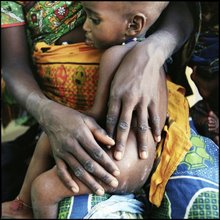
Flowers again go to the many Developing Countries (DCs) for progress in addressing major planks of the Millennium Development Goals (MDGs). Last year we recognized DCs collectively only in reference to improved access to potable drinking water. However, we now wish to expand (and amend) that accolade to include the following accomplishments achieved by many ahead of the 2015 target. Here are highlights, captured from a report published by one of us in late 2012
Flowers again go to the many Developing Countries (DCs) for progress in addressing major planks of the Millennium Development Goals (MDGs). Last year we recognized DCs collectively only in reference to improved access to potable drinking water. However, we now wish to expand (and amend) that accolade to include the following accomplishments achieved by many ahead of the 2015 target. Here are highlights, captured from a report published by one of us in late 2012
Reference: White F. What’s
New in Public Health? Med Princ Pract 2012;21:505-507 (DOI:
10.1159/000342566)
· * Extreme poverty is falling in every region and the poverty reduction
target has been met: the global
poverty rate at $1.25 a day fell to less than half the 1990 rate by 2012.
· * The target of halving the proportion of people without access to improved
water sources has been met: the
proportion using an improved source rose from 76% (1990) to 89 % (2010).
· * Improvements in the lives of urban dwellers exceeded the slum target: The share of
urban residents living in slums declined from 39% (2000) to 33% (2012).
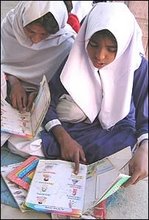
· * Parity in primary education between girls and boys has been achieved
globally: The gender
parity index now falls within the margin of error for 100.
· * Many countries made significant progress towards universal primary
education. Enrolment rates increased markedly
in sub-Saharan Africa, from 58% to 76% (1999-2010).
· * Child survival progress is gaining momentum. Despite
population growth, under-5 deaths worldwide fell from more than 12.0 million (1990)
to 7.6 million (2010).
· * Access to treatment for people living with HIV increased in all regions. At the end
of 2010, 6.5 million people were receiving antiretroviral therapy in developing
regions. The 2010 target of universal access, however, was not reached.
· * The world is on track to begin reversing the spread of tuberculosis. Globally,
incidence rates have fallen since 2002; projections suggest that the 1990 death
rate will halve by 2015.
· * Global malaria deaths have declined. Incidence decreased globally by 17% since 2000, while
associated mortality rates decreased by 25%.
The
fertilizer award in this category goes to Canada’s Conservative
government. For this there are many reasons,
from failure to participate meaningfully in global climate initiatives, to
withdrawal from the UN Convention to Combat Drought and Desertification, to
reneging on provisions supporting the health of refuges accepted into Canada.
However, for focus, we select just one: the merging of a once respected Canadian
International Development Agency (CIDA) into a new Department of Foreign
Affairs, Trade and Development. This has
rendered this once independent agency subservient to Canada’s trade interests.
The agency recently recommended reducing or ending aid to the Sudan because it
is not of strategic importance” t Canada. The report, entitled Reviewing CIDA’s
Bilateral Engagement, shows the federal government evaluated commercial opportunities
in dozens of developing countries to help determine how foreign aid should be
disbursed. Shame!
Reference: The
Globe and Mail, January 10th, 2014. http://www.theglobeandmail.com/news/politics/cida-recommends-cutting-sudan-aid-as-south-spirals-into-new-violence/article16276683/
3. Human Rights
We offer flowers to whistle-blower Edward Snowden, for revealing the extent of US National Security Agency’s electronic snooping on the private lives of innocent people in other countries (as well as its own). Surely this is nothing less than a complete sell-out of human dignity: its widespread acceptance in the US "homeland security" subculture is a wake-up call regarding the deterioration of common decency.
Worse, there is evidence of collusion by authorities in other countries (including Canada) even to the detriment of their own citizens. For a case study of a disabled Ontario woman wishing to take a package cruise out of New York, then denied entry to the US because of her history of "mental illness" (clinical depression) that no US "authority" should ever have had the privilege of knowing about, is revealing of how insidious, pervasive and inhumane this has become. For a review of this episode visit: http://www.thestar.com/news/gta/2013/11/29/access_to_canadian_health_files_by_us_border_agency_sparks_demands_for_inquiries.html
So who should we take reassurance from in this matter: defenders of the snooping trades (a growth industry), or advocates for human rights? Snowden's revelations have been enlightening. However, they do not stand alone: we can make our own observations and interpretations about a security subculture out of control.
At the other end of the spectrum, we confer a deposit of rather smelly fertilizer to the US National Security Agency and their bedfellows: obviously they all need to clean up their act!
"Global
Public Health - Ecological Foundations", published by Oxford
University Press (New York), , and illustrated at the top of the sidebar at
right, offers important new work by Franklin White, Lorann Stallones
and John M Last. Written for students of public health, development
studies and environmental studies, the book should also interest other readers seeking
a perspective on the global health and related environmental challenges that
face our planet.
ABOUT THE BOOK
With
an emphasis on ecological foundations, this book approaches public health
principles-history, foundations, topics, and applications-with a
community-oriented perspective. By achieving global reach through cooperative,
community-based interventions, this text illustrates that the practical
application of public health principles can help maintain the health of the
world's people.
Blending established wisdom with new perspectives, Global Public Health will stimulate better understanding of how the different streams of public health can work more synergistically to promote global health equity. It is a foundation for future public health measures to be built and to succeed.
Blending established wisdom with new perspectives, Global Public Health will stimulate better understanding of how the different streams of public health can work more synergistically to promote global health equity. It is a foundation for future public health measures to be built and to succeed.
Features
- Ecological
approach to public health
- Full global
scope, including developing countries
- Describes
integrative approaches that are locally applicable
- Community-centric
approach to public health
Table of Contents
Preface
1.
History, Aims and Methods of Public Health
2.
Scientific Basis of Public Health
3.
Philosophical and Ethical Foundations of Public Health
4.
Community Foundations of Public Health
5.
Health of Populations: health situation analysis & public health
surveillance
6.
An Integrated Approach to Disease Prevention and Control
7.
Air, Water and Food Safety and Security
8.
Public Health Organization and Function in Evolving Health Systems
9.
Global Ecology and Emerging Health Challenges
Epilogue
Reviews
"Global Public Health:
Ecological Foundations is stunning proof of the power of global thought and
focused scholarship. It is simultaneously ambitious in scope and simple in
approach, and the result is the definitive textbook for anyone studying public
health at any level. I warmed to this book from the first page and could not
put it down."
--
Hugh H. Tilson, MD, DrPH
Professor of Public Health Leadership, Epidemiology, and Health Policy, Gillings School of Public Health, University of North Carolina
Professor of Public Health Leadership, Epidemiology, and Health Policy, Gillings School of Public Health, University of North Carolina
"People across the globe are more connected now than ever before. This important new work by White, Stallones, and Last clearly articulates the power of this connectedness and the potential to improve health across the levels of an ecological framework. The authors effectively communicate the core principles of public health and relate these to a variety of critical global health issues."
--
Ross C. Brownson, PhD
Professor and co-director, Prevention Research Center, Washington University in St. Louis, St. Louis, Missouri
Professor and co-director, Prevention Research Center, Washington University in St. Louis, St. Louis, Missouri
For
additional details on authorship, and information on pricing, ordering and
shipping, visit Oxford University Press at: http://www.us.oup.com/us/catalog/general/subject/Medicine/EpidemiologyBiostatistics/?view=usa&sf=toc&ci=9780199751907
February 2013: New Textbook recognizes GUN VIOLENCE AS A PUBLIC HEALTH PROBLEM
February 2013: New Textbook recognizes GUN VIOLENCE AS A PUBLIC HEALTH PROBLEM
According to the US Centers for
Disease Control and Prevention, guns kill more than 31,000 people each year in
the U.S., including more than 11,000 homicides. The U.S. homicide rate is seven
times the average of other high-income countries.[1]
Yet, most public health textbooks from the
United States (there are exceptions) give minimal attention to gun violence.
For example, in the index of Public Health & Preventive Medicine (15th
edition, 2008), the most comprehensive public health textbook published in the
US, the word “gun” does not appear at all. By contrast, in the 12th edition
(1986), “gun” was allocated six index lines. Why this apparent reduction in the
higher educational recognition of a public health problem, when the problem
itself has grown 50% in the interim?
This
does not mean that the issue is going unrecognized in the US public health
community. To the contrary, on the heels of a deadly massacre of primary school
children in December (Newtown CT), on January 14th and 15th, the Johns Hopkins
University brought together more than 20 leaders in gun policy and
violence—representing the fields of law, medicine, public health, advocacy and
public safety—for the Summit on Reducing Gun Violence in America.
Within
weeks of the Summit, the Johns Hopkins University Press will publish the book, Reducing
Gun Violence in America: Informing Policy with Evidence and Analysis.
Collected for the first time in one volume, this reliable, empirical research
and legal analysis will inform the policy debate by helping lawmakers and
opinion leaders identify the policy changes that are most likely to reduce gun
violence in the U.S…. Copies of the book will be delivered to policymakers from
across the country, including members of Congress and the Administration.
In the meantime however, Oxford University Press has already published Global Public Health – Ecological Foundations, illustrated at the top of the sidebar at right (and see last month’s blog for details). This new text book includes a case study on gun control as a community work in progress in the US; the index makes explicit reference to gun control, the Brady Bill and the adversarial role of the NRA.
In the meantime however, Oxford University Press has already published Global Public Health – Ecological Foundations, illustrated at the top of the sidebar at right (and see last month’s blog for details). This new text book includes a case study on gun control as a community work in progress in the US; the index makes explicit reference to gun control, the Brady Bill and the adversarial role of the NRA.
This
month’s blog showcases a report extracted from the website of the Université de
Montréal, authors cited, to whom belongs full credit. We did so as a way of
asking whether the practice of beatification (third step towards sainthood), as
illustrated by Mother Teresa, might be standing in the way of the Catholic Church
moving forward to full acceptance of a literate thinking world, and thereby
impeding its good pastoral work in many local settings around the world. This
choice of blog topic is intended to support freedom of expression, with the
hope that the need for extensive reform in the Catholic church will indeed
follow the appointment of a new leader in Pope Francis. It is not intended to
diminish Catholicism as a faith. The
researchers conclude that her hallowed image (not supported by the facts) was
constructed, and that her beatification was orchestrated by an effective media
relations campaign.
Source: Mother Teresa: anything but a saint... UdeMNouvelles March 1, 2013 http://www.nouvelles.umontreal.ca/udem-news/news/20130301-mother-teresa-anything-but-a-saint.html
Note: On March 11, Argentine Cardinal Jorge Mario Bergoglio was elected pope. Son of an Italian immigrant, he is celebrated as the first from outside Europe to become pope in over a millennium; also, the first from the ascetic Franciscan Order to be so installed, he will be known as Pope Francis after Saint Francis of Assisi. It is hoped that he will lead the Catholic Church out of a wasteland of moral deficits, the most glaring being the sexual abuse of minors inflicted by priests in numerous countries.
Source: Mother Teresa: anything but a saint... UdeMNouvelles March 1, 2013 http://www.nouvelles.umontreal.ca/udem-news/news/20130301-mother-teresa-anything-but-a-saint.html
Note: On March 11, Argentine Cardinal Jorge Mario Bergoglio was elected pope. Son of an Italian immigrant, he is celebrated as the first from outside Europe to become pope in over a millennium; also, the first from the ascetic Franciscan Order to be so installed, he will be known as Pope Francis after Saint Francis of Assisi. It is hoped that he will lead the Catholic Church out of a wasteland of moral deficits, the most glaring being the sexual abuse of minors inflicted by priests in numerous countries.
April 2013:
CANADA MERGES INTERNATIONAL DEVELOPMENT WITH FOREIGN
AFFAIRS AND TRADE – Bold Vision or Policy Blunder?
As
noted in our fertilizer award in the International Development category, the merging
of a once-respected Canadian International Development Agency (CIDA) into a new
Department of Foreign Affairs, Trade and Development has rendered this once
independent agency subservient to Canada’s trade interests. Canada, under its current highly Conservative
government, seems ever more committed to shrinking its role in global
leadership. Announced March 22, CIDA, will be merged with foreign affairs and
trade into a newly named Department of Foreign Affairs, Trade and Development.
Rumours of CIDA's demise as a stand-alone department had been circulating since
its budget was drastically slashed in 2012. The decision to merge it with
foreign affairs and traded has attracted criticism from aid organizations and
opposition members alike. As stated in
the blog, Canada's reputation in the global development agenda is a big thing
to gamble. The proof will be in the pudding: let us now see whether Canada’s
international development performance will improve under this new regime, or
whether it will continue to lose its way on the world stage. The move requires
new legislation and no timeline has been put forward. Perhaps our
best hope for a more progressive country lies in the next federal election.
The Conservative Government of Canada, has shamed the nation in the eyes of many of
its citizens and the world at large, by withdrawing from a United Nations
treaty to combat drought and encroaching deserts mostly located in developing
countries. For this post, we drew from
the blog of Elizabeth May, Leader of the Green Party of Canada, which also drew
from a statement from the Honorable ralph Goodale, former Liberal Finance
Minister, among other notable commentators. Further:
“Canada’s
diplomatic corps is shocked. Former Ambassador to the United Nations, former
Deputy Minister of National Defence and victim of a terrorist kidnapping in
Mali, Robert Fowler, sent an email to the media. Calling our withdrawal from
the treaty ‘a departure from global citizenship,’ here’s what he said: ‘It (the Harper administration) has taken
climate-change denial, the abandonment of collective efforts to manage global
crises and disregard the pain and suffering of the peoples of sub-Saharan
Africa (among many others) to quite a different level.’Responding to
Foreign Minister John Baird’s defence that Canada won’t ‘go along to get
along,’ Fowler continued: ‘…Such
vainglorious nose-thumbing at the international community’s efforts to tame a
very present threat to hundreds of millions of the world’s poorest and most
desperate is nothing short of incomprehensible.’ Another former Ambassador to the United
Nations, Paul Heinbecker, agreed that the move was both inexplicable and bound
to confirm to the international community that Canada cared nothing for climate
action, nor for the fate of Africa. The UN itself was shocked. Noting that
Canada will now be the only nation on earth not part of the convention, it, in
typically understated diplomat-speak, called Canada’s decision ‘regrettable.’
June 2013:
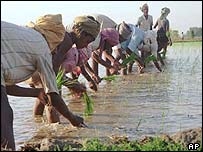
FOOD SYSTEMS FOR BETTER NUTRITION........ A Case Study
- System of Rice Intensification (SRI)
This
issue focused on two items: 1. A report recently released by the United
Nation’s Food and Agricultural Organization (FAO 2013), entitled “Food
systems for better nutrition” which notes that that improved food
systems can make food more affordable, diverse and nutritious. 2. A
Case Study of the System of Rice Intensification (SRI). The benefits of SRI use include: increased yield, water conservation,
reduced production costs, and increased income. However, it is unclear how much
better SRI is at delivering increased yield and other gains to rice farmers,
such as healthier soils, when compared with established recommended best
management practices for rice production. According to the IRRI,
"The flexibility in SRI’s definition of practices renders SRI a challenge
for evaluation and assessment of adoption."; this implies difficulty in
evaluation, with critics claiming a lack of details on methodology used in
trials, and few peer-reviewed publications.
This blog
draws attention to a 2012 world survey of the rule of law, which consistently
finds that the US ranks poorly relative to its peers (the bottom 20% of wealthy
nations) in term of equal protection under criminal law; in some categories the
US ranks below some developing countries such as Botswana and the Republic of Georgia.
The blog was written on the heels of
the Travon Martin case, in which a white vigilante (George Zimmerman) was
acquitted of killing a black teenager walking near his home, thus upholding a
controversial Florida “stand-your ground” law.
Around the world this was viewed by many as a travesty of justice, even
as “access to justice” is said to be a core American value. The lead prosecutor for the state of Florida declared
that theirs was “the best justice system in the world”.
This
issue lays out the mainstream terms used in this increasingly complex field of
humanitarian concern, and offer a selection of statistics on the dimensions of
the refugee movement globally. Our sources include Refugees International (RI),
a US based organization started in 1979 as a citizens’ movement to protect
Indochinese refugees. Since then, RI has expanded to become a leading advocacy
organization that provokes action from global leaders to resolve refugee
crises. RI does not accept government or UN funding. We select global trends
(2012) from the United Nations High Commissioner for Refugees (UNHCR)
publication on Displacement the New 21st Century Challenge, and we develop a
brief statement on “environmental refugees” from a National Geographic sources
(references cited below).
This
month we drew attention to a comprehensive review by Franklin White, on the
topic of “The Imperative of Public Health Education: A Global Perspective.”
Published in the peer reviewed
journal Medical Principles and Practice,
this full text article is available on-line free of charge as noted below:
Full
Reference and Link to article: White F. The Imperative of
Public Health Education: A Global Perspective. Med Princ Pract 2013 August 21 DOI: 10.1159/000354198
[Epub ahead of print] http://www.karger.com/Article/FullText/354198
In the USA,
the private sector has long dominated health care, yet has failed to meet the
health needs of ~50 million non-insured people, about 20% of the population.
The Patient Protection and Affordable Care Act (modeled after a system now in
place in Massachusetts brought in by former Republican Governor George Romney,
but dubbed “Obamacare” by political opponents), intends that everyone has
access.
Dramatic changes are taking place: under this legislation (to be fully phased in by 2020), the US will begin to close the gap on universality and other deficiencies will be addressed. The legislation was upheld by the Supreme Court on June 28, 2012, against challenges by numerous states and individuals and the National Federation of Independent Businesses. Nonetheless, even with this policy shift, the US will remain the only developed nation that depends predominantly on a private insurer, private provider entrepreneurial model. This acknowledged, the US system also contains substantial public sector elements that will continue to grow: Medicare for the elderly (a universal single payer system, providers not directly employed by government); a program called Medicaid to address essential health care for low-income families based on eligibility criteria, financed jointly by state and federal governments; Veteran’s Affairs health care (a single payer system, providers employed by the Department of Veterans Affairs, but not applied to persons in active service who are covered by private insurers under “Tricare” - an employer based insurance scheme).
The Patient Protection and Affordable Care Act (passed 2010) is too complex to address fully here. People of developed countries with equitable systems will find US barriers to health care access and/or affordability to be instructive, e.g., insurance companies deny coverage for pre-existing conditions – a practice to cease in 2014. Readers interested in further information on Act as upheld by the US Supreme Court, a summary of key features is available at:
Dramatic changes are taking place: under this legislation (to be fully phased in by 2020), the US will begin to close the gap on universality and other deficiencies will be addressed. The legislation was upheld by the Supreme Court on June 28, 2012, against challenges by numerous states and individuals and the National Federation of Independent Businesses. Nonetheless, even with this policy shift, the US will remain the only developed nation that depends predominantly on a private insurer, private provider entrepreneurial model. This acknowledged, the US system also contains substantial public sector elements that will continue to grow: Medicare for the elderly (a universal single payer system, providers not directly employed by government); a program called Medicaid to address essential health care for low-income families based on eligibility criteria, financed jointly by state and federal governments; Veteran’s Affairs health care (a single payer system, providers employed by the Department of Veterans Affairs, but not applied to persons in active service who are covered by private insurers under “Tricare” - an employer based insurance scheme).
The Patient Protection and Affordable Care Act (passed 2010) is too complex to address fully here. People of developed countries with equitable systems will find US barriers to health care access and/or affordability to be instructive, e.g., insurance companies deny coverage for pre-existing conditions – a practice to cease in 2014. Readers interested in further information on Act as upheld by the US Supreme Court, a summary of key features is available at:
Senate Democrats
http://dpc.senate.gov/healthreformbill/healthbill04.pdf
Wikipedia has also been updated on this topic: http://en.wikipedia.org/wiki/Patient_Protection_and_Affordable_Care_Act
November 2013: CANADA' CONSERVATIVE GOVERNMENT MUZZLES SCIENTISTS
This
issue reports on a survey commissioned by the Professional Institute of the
Public Service of Canada which found that 90% of federally employed scientists feel
they are not allowed to speak freely to the media about the work they do and
that, (if contesting) a departmental decision that could harm public health,
safety or the environment, nearly as many (86%) would face censure or
retaliation for doing so.
The
survey, the findings of which are included in a new report titled The Big
Chill, is the first extensive effort to gauge the scale and impact of
“muzzling” and political interference among federal scientists since Canada’s
Conservative government introduced communications policies requiring them to
seek approval before being interviewed by journalists. Information Commissioner
Suzanne Legault is currently conducting her own investigation of the policies,
which have been widely criticized for silencing scientists, suppressing
information critical or contradictory of government policy, and delaying
timely, vital information to the media and public.
December 2013: A DECADE OF SOCIAL ENTERPRISE Celebrating the 10th
Anniversary of Pacific Health & Development Sciences Inc. (PacificSci)
This posting
was a candid account of the experience of Pacific Health & Development
Sciences Inc., during its first 10 years of operation. During this period, PacificSci,
as a “business venture with a social purpose” has succeeded in delivering
on its mission: “seeking solutions to
health and social impacts of economic development”. Our “fourth sector”
model of social enterprise has facilitated flexibility, so that we, as
principals, can make choices we are comfortable with and motivated by
professionally.
AND for 2014… we wish you all A
HAPPY NEW YEAR!
We extend to readers our best wishes for 2014, with hopes that the global challenges of recent years will be better understood and more humanely managed going forward.
We extend to readers our best wishes for 2014, with hopes that the global challenges of recent years will be better understood and more humanely managed going forward.