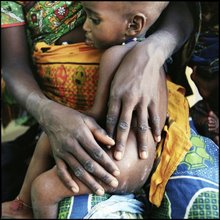
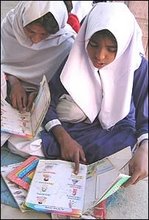
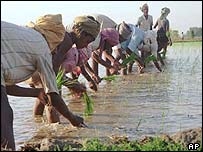
PREAMBLE: Under the auspices of the United Nations, from 20 to 22 September 2010, a Summit on the Millennium Development Goals (MDGs) will be held in New York. With only five years left until the 2015 deadline to achieve the MDGs, UN Secretary-General Ban Ki-Moon has called on world leaders to attend the summit to accelerate progress towards these goals, the overall aim of which is to reduce World Poverty. Visit the Summit website! http://www.un.org/en/mdg/summit2010/
Despite the dire need of over a billion people living in poverty around the world, the initial intentions behind the goals and efforts to showcase what had been achieved, it is increasingly clear that few if any of the MDGs will be achieved by the target year of 2015. Clearly there is a crying need for a strong reaffirmation with donor policies and resources to match.
Unfortunately, recent years have witnessed a track record littered with false promises and broken commitments and in some instances shallow comprehension of what is needed to resolve on the major issues underlying world poverty. All too often, “world leaders” have pandered to their domestic political bases rather than genuinely taking on these issues.
A case in point is Canada’s minority Conservative government whose leader Stephen Harper and fundamentalist colleagues ensured that this country’s commitment to address maternal and child health (MCH) excluded access to safe abortion, and made only weak provisions for the inclusion of family planning within Canadian funding commitments.
In fact, it is estimated that 20 million unsafe abortions occur around the world annually and that 70,000 of these result in the woman's death. Clearly there must be more emphasis on the provision of family planning, and removal of barriers to this practice and also quite obviously access to safe abortion, as a core element of a harm reduction strategy.
Harper’s approach to maternal health is in effect a northern echo of the Bush administration’s “global gag rule” (no funding for MCH unless abortion is specifically excluded), since repudiated by the Obama administration. Ironically, women in Canada long ago won the right to chose, so it is invidious that “Harper’s Canada” discriminates against these practices abroad.
There is still hope that Canada may amend this approach reasonably soon, with the return of a more compassionate philosophy. What is needed is to change the party in power, the only currently viable alternative being the Liberal Party of Canada, with (virtually guaranteed) support from all other parties: only the Conservatives (with little more than 30% public support) are holding up the need for enlightened policy.
We therefore endorse the following statement (Globe and Mail, Feb 2, 2010) made by the leader of that party, and of the official opposition Michael Ignatieff: “We want to make sure that women have access to all the contraceptive methods available to control their fertility because we don’t want to have women dying because of botched procedures, we don’t want to have women dying in misery.” This quote regains resonance in light of the looming MDG Summit next week in New York.
This example of Maternal and Child Health (MDG 5) is but one of the MDGs falling short of sufficient progress for any of them to be achieved by 2015 without an infusion of more genuine commitment by “world leaders” such as Mr Harper.
The eight MDGs are now listed for ease of reference:
Goal 1: Eradicate Extreme Poverty and Hunger
Goal 2: Achieve Universal Primary Education
Goal 3: Promote Gender Equality and Empower Women
Goal 4: Reduce Child Mortality
Goal 5: Improve Maternal Health
Goal 6: Combat HIV/AIDS, Malaria and other diseases.
Goal 7: Ensure Environmental Sustainability
Goal 8: Develop a Global Partnership of Development.
NOTE: This internationally agreed framework of 8 goals and 18 targets is complemented by 48 technical indicators to measure progress towards the Millennium Development Goals. These indicators have since been adopted by a consensus of experts from the United Nations, IMF, OECD and the World Bank.
As our feature for this issue, we present below a September 10, 2010 IPS Inter-Press Service report by Aprille Muscara (full reference below).
GLOBAL DEVELOPMENT BLUEPRINT REVEALS URGENT UPHILL BATTLE
By Aprille Muscara
UNITED NATIONS, Sep 10, 2010 (IPS) - A document outlining the U.N.'s strategy to achieve the Millennium Development Goals (MDGs) by 2015 was finalised Thursday after months of heated negotiations.
The text, titled "Keeping the Promise – United to Achieve the Millennium Development Goals", will be formally signed off on by world leaders at the upcoming MDG summit, which is to be held here from Sep. 20-22.
The final 27-page version, obtained by IPS, differs considerably from the 14-page "zero draft" base text from which member states inserted, amended and removed passages.
However, non-governmental organisations (NGOs) worry that the completed text, called an outcome document, falls short of the substantial action plan it was hoped to be and is instead a rehash of already-made promises and generalised commitments.
"This document lacks the adrenaline boost to accelerate the MDGs, and with only five years left, world leaders coming together in New York must commit to concrete actions that will ensure all people are lifted from poverty in our lifetime," said Emma Seery, a spokesperson for Oxfam International.
Over the years, NGOs and aid groups have advocated for a human rights-based approach to tackling the MDGs. A review of the document at different draft stages reveals the addition of key human rights language, such as inclusion of the right to development, the right to food, the right to health and the right to education.
"We recognize that the respect, promotion and protection of human rights is an integral part of effective work towards achieving the MDGs," the final document states.
But notably absent from the list is access to clean water and sanitation, which the U.N. in a resolution declared a basic human right in late July. The resolution proved to be a divisive one, however, with 41 countries, including the United States, Britain and Canada abstaining from the vote.
Although water and sanitation is not explicitly framed as a human right in the final outcome document, they appear frequently throughout as basic needs essential to achieving the MDGs.
Absent, as well, is the assertion "that gender equality is a basic human right, a fundamental value and an issue of social justice" – a statement that was inserted during the draft process but failed to make it through to the end. The final version reads: "We acknowledge the importance of gender equality and empowerment of women to achieve the MDGs."
Indeed, the evolution of the outcome document, which at one point ballooned to 38 pages, reflects a process of political wrangling over touchy wording. With its numerous additions and amendments, the final product is at once more specific in its language yet still general in its pledges.
Language on peace and security matters appears to have been especially contentious. For instance, references to "armed violence," present in the zero draft, and "transnational crime" and "trafficking in persons," introduced in subsequent drafts, as posing threats to the attainment of the MDGs have been removed entirely in favour of the more benign "conflict."
However, one instance of both "foreign occupation" and "terrorism" – new additions – as hindering achievement of the MDGs appear in the final version, reflecting a political compromise between the Group of 77, a coalition of developing countries, and the European Union and the United States.
In the final stages of ironing out problematic language, the E.U. and U.S. and the G77 were often on opposing sides in typical developed-developing, North-South fashion.
It is common practice, a U.N official told IPS, for the relevant parties to go to extremes in their proposed amendments in anticipation of having to make concessions.
Thus, the G77's insertions that claim the current global financial structure – from trade to aid – is "non- inclusive," "ineffective" and "inadequate" for developing countries were removed in place of more watered down wording stressing the need to further reform international financial systems.
A greater focus on the particular needs of the developing world, rural populations and specific mention of regional efforts by the global South in attaining the MDGs are also additions, reflecting G77 bargaining.
Meanwhile, the importance of parliaments, national ownership in developmental efforts and mutual accountability for commitments made towards achieving the MDGs suggest concessions made to the West.
Among the other numerous differences from the zero draft is an acknowledgement of the impact of the world financial crisis, volatile food and energy prices and humanitarian emergencies in stunting developmental gains. And of the eight goals, the document characterises maternal health, MDG5, as making the slowest progress. [Emphasis Added]
Also added is a litany of references to U.N. conventions, agreements and agencies, which serves to reinforce the commitments and goals made in those forums, but also highlights the world body's role in ensuring the accountability of governments.
To this end, the final document requests a "Special Event" to take place during the 68th session of the general assembly in 2013, two years shy of the deadline, to follow up on efforts made toward achieving the MDGs.
Ultimately, despite its acknowledgement of the uneven advances made thus far, the document reflects the urgent uphill battle left on the path to 2015.
"Progress on other MDGs is fragile and must be sustained to avoid reversal," it states.
Source: Muscara A. Development Blueprint Reveals Urgent Uphill Battle. IPS Inter-Press Service. Geneva Sept 10, 2010. http://www.ipsnews.net/news.asp?idnews=52788
Showing posts with label ABORTION. Show all posts
Showing posts with label ABORTION. Show all posts
Tuesday, 14 September 2010
Friday, 14 May 2010
MATERNAL MORTALITY – AN INTEGRITY TEST FOR POLITICIANS
PREAMBLE: One of the world’s most intractable public health problems is the high mortality of women due to pregnancy related causes. Over several decades (until recently), maternal mortality in developing countries appears to have been non-responsive to a range of interventions, perhaps because of inadequate intervention design or the inability to scale these to a level that can have impact on population health. In many countries, social and health policies that could facilitate the status of women, particularly in their right to make independent decisions with regard to their own health, have remained underdeveloped; it is of low priority in the world’s male-dominated political systems. Health services also have been inadequate to help lower maternal mortality: insufficient attention to prevention and inadequate access to treatment services of quality when critically needed.
Most donor countries recognize maternal health as a global public health priority. However, in Canada (under the regime of Conservative Prime Minister Stephen Harper), this global imperative is being sacrificed to partisan politics of the most ill-informed kind: it risks becoming a platform for the “religious right” to rail against the use of donor funds for abortion rather than to address in a holistic manner the most important needs of women that can assure improvement in their health.
Only last year, the administration of US President Barack Obama rescinded the global “gag order” of the preceding Bush regime, that required recipients of US aid – even in the realm of reproductive health – to deny access to safe abortion services if accepting US funds. This enlightened policy shift brings the US international development policy in line with that of the global community generally. It is ironic therefore that Canada – once a leader in this respect – appears to be taking a giant step backwards. Given the removal of access to safe abortions from the frame of reference, it is extremely doubtful that a recent Request for Proposals to guide the policy of the Canadian government in this regard, could attract anyone with a rigorous track record in this area of international health development.
Taking Africa as an example, as the recent "African Century" series of articles in the Globe and Mail (ref: May 11, 2010 issue) makes clear, more than 90% of Africans live in countries where abortion is restricted. It is legally prohibited in 14, while in others it is only permitted only to preserve the life or physical health of the woman. As a result, virtually all of the estimated 5.6 million abortions performed annually in Africa are unsafe, carrying with an unconscionable risk of complications and death.
Simply put, along with access to contraception, antenatal care, safe deliveries, reliable transportation to advanced care when this is urgently required (otherwise known as emergency obstetric care, which includes surgical intervention if needed as well as prompt treatment of post-partum infection and hemorrhage), access to safe abortion is part of any coherent plan to improve reproductive health and reduce maternal mortality. Knowing all this, and both the health and international development arms of the Canadian government surely should know this, to specifically and deliberately exclude funding of safe abortions in an aid package aimed at reducing maternal mortality would render the donor complicit in those deaths.
We labeled this issue “Maternal Mortality – an Integrity Test for Politicians” after realizing that many politicians are intellectually challenged by the technical nature of what is scientifically sound evidence regarding the nature of the problem at hand, and what works or doesn’t in addressing it. It is also an ethical test… in essence whether they (the ruling political party) are in it for cheap political gains among their home base, or whether higher reasoning will prevail in the interests of the health of millions of women around the world. Just how the G8 countries deal with this in their upcoming meetings will be a direct reflection of their collective political integrity. Based on public utterances to date, it seems like all the G8 countries except Canada may pass this test.
For the lead item of this month’s blog, we therefore attach below the polite but authoritative view of the Lancet on Canada’s G8 Leadership. This we follow by the first good news in many decades, that maternal mortality globally is finally being reduced.
CANADA'S G8 HEALTH LEADERSHIP
The Lancet May 8th, 2010
As a World Report in The Lancet today shows, Canada's pledge, as host of this year's G8 Summit, to make maternal and child health one of its key issues is moving forward. At a meeting in Halifax, Nova Scotia (April 27—28), the G8 development ministers agreed to back Canada's provisional set of principles to improve the health of women and children in developing nations.
Canada should be praised for making maternal and child health a priority issue for the G8. As an Article by Margaret Hogan and colleagues in today's issue shows, around 350 000 women die during childbirth every year. 9 million children younger than 5 years also die every year. Most of these deaths are preventable. Canada's health plan to address this situation is still thin on details but it promises to include training and support for frontline health workers; better nutrition and provision of micronutrients; treatment and prevention of diseases such as pneumonia, diarrhoea, malaria, and sepsis; screening and treatment for sexually transmitted diseases, including HIV/AIDS; family planning; immunisation; and clean water and sanitation.
However, a few key elements are missing from the framework. For example, there is no talk of emergency obstetric care. This omission is likely to be an oversight and should be rectified. Improving access to safe abortion services is also absent from the plan. Sadly, this omission is no accident, but a conscious decision by Canada's Conservative Government not to support groups that undertake abortions in developing countries.
This stance must change. 70 000 women die from unsafe abortions worldwide every year. The Canadian Government does not deprive women living in Canada from access to safe abortions; it is therefore hypocritical and unjust that it tries to do so abroad. Although the country's decision only affects a small number of developing countries where abortion is legal, bans on the procedure, which are detrimental to public health, should be challenged by the G8, not tacitly supported. Canada and the other G8 nations could show real leadership with a final maternal health plan that is based on sound scientific evidence and not prejudice.
Source: The Lancet, Volume 375, Issue 9726, Page 1580, 8 May 2010
SUMMARY: Maternal mortality for 181 countries, 1980—2008: a systematic analysis of progress towards Millennium Development Goal 5
(Note: Details of source and authorship given below)
Background: Maternal mortality remains a major challenge to health systems worldwide. Reliable information about the rates and trends in maternal mortality is essential for resource mobilisation, and for planning and assessment of progress towards Millennium Development Goal 5 (MDG 5), the target for which is a 75% reduction in the maternal mortality ratio (MMR) from 1990 to 2015. We assessed levels and trends in maternal mortality for 181 countries.
Methods: We constructed a database of 2651 observations of maternal mortality for 181 countries for 1980—2008, from vital registration data, censuses, surveys, and verbal autopsy studies. We used robust analytical methods to generate estimates of maternal deaths and the MMR for each year between 1980 and 2008. We explored the sensitivity of our data to model specification and show the out-of-sample predictive validity of our methods.
Findings: We estimated that there were 342 900 (uncertainty interval 302 100—394 300) maternal deaths worldwide in 2008, down from 526 300 (446 400—629 600) in 1980. The global MMR decreased from 422 (358—505) in 1980 to 320 (272—388) in 1990, and was 251 (221—289) per 100 000 livebirths in 2008. The yearly rate of decline of the global MMR since 1990 was 1•3% (1•0—1•5). During 1990—2008, rates of yearly decline in the MMR varied between countries, from 8•8% (8•7—14•1) in the Maldives to an increase of 5•5% (5•2—5•6) in Zimbabwe. More than 50% of all maternal deaths were in only six countries in 2008 (India, Nigeria, Pakistan, Afghanistan, Ethiopia, and the Democratic Republic of the Congo). In the absence of HIV, there would have been 281 500 (243 900—327 900) maternal deaths worldwide in 2008.
Interpretation: Substantial, albeit varied, progress has been made towards MDG 5. Although only 23 countries are on track to achieve a 75% decrease in MMR by 2015, countries such as Egypt, China, Ecuador, and Bolivia have been achieving accelerated progress.
Funding: Bill & Melinda Gates Foundation
Source: Hogan MC, Foreman KJ, Naghavi M, Ahn SY, Wang M, Makela SM, Lopez AD, Lozano R, Murray CJL. Maternal mortality for 181 countries, 1980—2008: a systematic analysis of progress towards Millennium Development Goal 5. The Lancet, 375, 9726, 1609 - 1623, 8 May 2010.
Most donor countries recognize maternal health as a global public health priority. However, in Canada (under the regime of Conservative Prime Minister Stephen Harper), this global imperative is being sacrificed to partisan politics of the most ill-informed kind: it risks becoming a platform for the “religious right” to rail against the use of donor funds for abortion rather than to address in a holistic manner the most important needs of women that can assure improvement in their health.
Only last year, the administration of US President Barack Obama rescinded the global “gag order” of the preceding Bush regime, that required recipients of US aid – even in the realm of reproductive health – to deny access to safe abortion services if accepting US funds. This enlightened policy shift brings the US international development policy in line with that of the global community generally. It is ironic therefore that Canada – once a leader in this respect – appears to be taking a giant step backwards. Given the removal of access to safe abortions from the frame of reference, it is extremely doubtful that a recent Request for Proposals to guide the policy of the Canadian government in this regard, could attract anyone with a rigorous track record in this area of international health development.
Taking Africa as an example, as the recent "African Century" series of articles in the Globe and Mail (ref: May 11, 2010 issue) makes clear, more than 90% of Africans live in countries where abortion is restricted. It is legally prohibited in 14, while in others it is only permitted only to preserve the life or physical health of the woman. As a result, virtually all of the estimated 5.6 million abortions performed annually in Africa are unsafe, carrying with an unconscionable risk of complications and death.
Simply put, along with access to contraception, antenatal care, safe deliveries, reliable transportation to advanced care when this is urgently required (otherwise known as emergency obstetric care, which includes surgical intervention if needed as well as prompt treatment of post-partum infection and hemorrhage), access to safe abortion is part of any coherent plan to improve reproductive health and reduce maternal mortality. Knowing all this, and both the health and international development arms of the Canadian government surely should know this, to specifically and deliberately exclude funding of safe abortions in an aid package aimed at reducing maternal mortality would render the donor complicit in those deaths.
We labeled this issue “Maternal Mortality – an Integrity Test for Politicians” after realizing that many politicians are intellectually challenged by the technical nature of what is scientifically sound evidence regarding the nature of the problem at hand, and what works or doesn’t in addressing it. It is also an ethical test… in essence whether they (the ruling political party) are in it for cheap political gains among their home base, or whether higher reasoning will prevail in the interests of the health of millions of women around the world. Just how the G8 countries deal with this in their upcoming meetings will be a direct reflection of their collective political integrity. Based on public utterances to date, it seems like all the G8 countries except Canada may pass this test.
For the lead item of this month’s blog, we therefore attach below the polite but authoritative view of the Lancet on Canada’s G8 Leadership. This we follow by the first good news in many decades, that maternal mortality globally is finally being reduced.
CANADA'S G8 HEALTH LEADERSHIP
The Lancet May 8th, 2010
As a World Report in The Lancet today shows, Canada's pledge, as host of this year's G8 Summit, to make maternal and child health one of its key issues is moving forward. At a meeting in Halifax, Nova Scotia (April 27—28), the G8 development ministers agreed to back Canada's provisional set of principles to improve the health of women and children in developing nations.
Canada should be praised for making maternal and child health a priority issue for the G8. As an Article by Margaret Hogan and colleagues in today's issue shows, around 350 000 women die during childbirth every year. 9 million children younger than 5 years also die every year. Most of these deaths are preventable. Canada's health plan to address this situation is still thin on details but it promises to include training and support for frontline health workers; better nutrition and provision of micronutrients; treatment and prevention of diseases such as pneumonia, diarrhoea, malaria, and sepsis; screening and treatment for sexually transmitted diseases, including HIV/AIDS; family planning; immunisation; and clean water and sanitation.
However, a few key elements are missing from the framework. For example, there is no talk of emergency obstetric care. This omission is likely to be an oversight and should be rectified. Improving access to safe abortion services is also absent from the plan. Sadly, this omission is no accident, but a conscious decision by Canada's Conservative Government not to support groups that undertake abortions in developing countries.
This stance must change. 70 000 women die from unsafe abortions worldwide every year. The Canadian Government does not deprive women living in Canada from access to safe abortions; it is therefore hypocritical and unjust that it tries to do so abroad. Although the country's decision only affects a small number of developing countries where abortion is legal, bans on the procedure, which are detrimental to public health, should be challenged by the G8, not tacitly supported. Canada and the other G8 nations could show real leadership with a final maternal health plan that is based on sound scientific evidence and not prejudice.
Source: The Lancet, Volume 375, Issue 9726, Page 1580, 8 May 2010
SUMMARY: Maternal mortality for 181 countries, 1980—2008: a systematic analysis of progress towards Millennium Development Goal 5
(Note: Details of source and authorship given below)
Background: Maternal mortality remains a major challenge to health systems worldwide. Reliable information about the rates and trends in maternal mortality is essential for resource mobilisation, and for planning and assessment of progress towards Millennium Development Goal 5 (MDG 5), the target for which is a 75% reduction in the maternal mortality ratio (MMR) from 1990 to 2015. We assessed levels and trends in maternal mortality for 181 countries.
Methods: We constructed a database of 2651 observations of maternal mortality for 181 countries for 1980—2008, from vital registration data, censuses, surveys, and verbal autopsy studies. We used robust analytical methods to generate estimates of maternal deaths and the MMR for each year between 1980 and 2008. We explored the sensitivity of our data to model specification and show the out-of-sample predictive validity of our methods.
Findings: We estimated that there were 342 900 (uncertainty interval 302 100—394 300) maternal deaths worldwide in 2008, down from 526 300 (446 400—629 600) in 1980. The global MMR decreased from 422 (358—505) in 1980 to 320 (272—388) in 1990, and was 251 (221—289) per 100 000 livebirths in 2008. The yearly rate of decline of the global MMR since 1990 was 1•3% (1•0—1•5). During 1990—2008, rates of yearly decline in the MMR varied between countries, from 8•8% (8•7—14•1) in the Maldives to an increase of 5•5% (5•2—5•6) in Zimbabwe. More than 50% of all maternal deaths were in only six countries in 2008 (India, Nigeria, Pakistan, Afghanistan, Ethiopia, and the Democratic Republic of the Congo). In the absence of HIV, there would have been 281 500 (243 900—327 900) maternal deaths worldwide in 2008.
Interpretation: Substantial, albeit varied, progress has been made towards MDG 5. Although only 23 countries are on track to achieve a 75% decrease in MMR by 2015, countries such as Egypt, China, Ecuador, and Bolivia have been achieving accelerated progress.
Funding: Bill & Melinda Gates Foundation
Source: Hogan MC, Foreman KJ, Naghavi M, Ahn SY, Wang M, Makela SM, Lopez AD, Lozano R, Murray CJL. Maternal mortality for 181 countries, 1980—2008: a systematic analysis of progress towards Millennium Development Goal 5. The Lancet, 375, 9726, 1609 - 1623, 8 May 2010.


Subscribe to:
Posts (Atom)