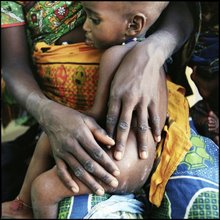
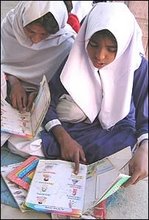
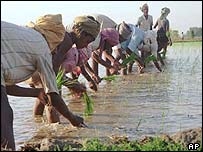
WASHINGTON, June 30, 2009. On the eve of the 20th anniversary of World Population Day, the World Bank and the United Nations Population Fund (UNFPA) warned that family planning and other reproductive health programs vital to poor women had fallen off the development radar of many low-income and donor country governments and international aid agencies.
These programs, they said, were vital to boost women’s economic and social well-being, especially during the current global economic crisis, and to reduce endemic poverty and high numbers of maternal and infant deaths.
”The global economic downturn has taken a wrecking ball to growth and development in poor countries worldwide, and has become a development emergency for women because invariably they’re the first to suffer when economic crises strike”, said Joy Phumaphi, Vice President for Human Development at the World Bank, and a former Health Minister for Botswana. “Even before this crisis began, family planning and reproductive health had fallen off the radar of low-income countries, aid donors, and development agencies with the result that we’ve lost precious time in helping women get access to these vital health services, and helping countries get on a faster track to reducing poverty.”
Delivering a keynote address at the World Bank to mark the 20th anniversary of World Population Day, UNFPA Executive Director Thoraya Obaid said that investing in women was a smart choice during a time of global economic crisis and cutbacks in health budgets worldwide.
“The sad and shocking truth is that maternal mortality represents the largest health inequity in the world, and of all the Millennium Development Goals, MDG 5 to improve maternal health is lagging the farthest behind. And with the financial crisis and the reduction in budgets for health, this goal will be even harder to realize. It is not a lack of knowledge that is hindering progress; it is a lack of political will to protect the health and rights of women.”
New preliminary World Bank figures show that while official global developmentaid for health soared from US $2.9 billion in 1995 to US $14.1 billion in 2007,roughly a five-fold increase in 12 years, aid for population and reproductive health had increased much more modestly during the same period, from $901 million in 1995 to $1.9 billion in 2007. In the 35 highest-fertility countries in Africa, Asia, and the Middle East, aid for women's family planning and reproductive programs started at $150 million in 1995 and increased to $432 million in 2007, while overall aid for health in these 35 countries went from $915 million in 1995 to $4.9 billion in 2007. Support for population and reproductive health programs has significantly declined as a percentage of overall health aid, from about 30 percent in 1994 to 12 percent in 2008.
According to UNFPA, more than 500,000 women die each year during pregnancy and childbirth from mostly preventable and treatable medical problems. For every woman who dies, another 20 women suffer injuries and disabilities that can last a lifetime and rob them of livelihoods and physical well-being. Of all regions, Africa has the world’s highest rates of maternal mortality, at least 100 times those in developed countries.
Also speaking at the World Bank on behalf of the Obama Administration, Margaret Pollack, Acting Deputy Assistant Secretary, Bureau of Population, Refugees, and Migration, U.S. Department of State, said that falling birth rates cannot be achieved through better health programs alone and that better education for girls, equal economic opportunities for women, and fewer households living below the poverty line are also vital.
"We have seen time and time again that investing in women is an investment in families, communities, and societies. It is, in other words, an investment in our future. The United States is engaged and committed, and we look forward to working in partnership to ensure a world in which women are healthy, respected, and their rights are protected."
During the second half of the 20th century, world population more than doubled to reach 6 billion, an astonishing 3 billion increase in population in just 40 years. Although this rate has now slowed to 1.2 percent a year, an additional 75 million people are being added every year this decade. The world’s population could reach up to 9 billion by 2050, with the majority likely to live in the world’s poorest countries.
A recent World Bank report, Population Issues in the 21st Century: The Role of the World Bank, notes that family size can also greatly affect women’s jobs in the workplace. One cross-national survey suggests that the percentage of women in the labor force is directly related to national birth rates. For example, in Bolivia, there were strong links between women using contraception and having jobs outside of the home. In the Philippines, the average income growth for women with 1-3 pregnancies was twice that of women who had been pregnant more than seven times. The globe’s highest birth rates are found in Sub-Saharan Africa, where average fertility remains above five children per woman.
”The low status of women often poses a barrier because in many societies, women lack the power to make their own decisions about using contraceptives or using other reproductive healthcare”, says Joy Phumaphi of the World Bank. “Educating girls, improving economic opportunities for women, while giving them control over the design, management, and oversight of reproductive health programs, are very important ways to encourage better access to these essential health programs.”
Source: Press Release No: 2009/450/HD Washington, June 30, 2009.
For further information: World Bank Contact in Washington: Phil Hay (202) 473-1796 Cell (202) 409 2909 phay@worldbank.org UNFPA Contact in New York: Omar Gharzeddine (212) 297-5028 gharzeddine@unfpa.org
Showing posts with label UNFPA. Show all posts
Showing posts with label UNFPA. Show all posts
Tuesday, 14 July 2009
Tuesday, 15 April 2008
SEX RATIOS DESTABLIZING IN ASIA
PREAMBLE: “Sex ratio” (SR) refers to the ratio of males to females (M:F) in a population. Due to higher life expectancy of females in most populations, SRs tends to decline across adult age groups. Values for the world population are: overall 1.01; at birth 1.06; under 15 years still 1.06; 15-64 = 1.03; and >65 years = 0.79.
We are focusing on this topic because dramatic shifts in sex ratio are taking place in some parts of the world that reveal cultural preferences and social practices favoring the birth/survival of one sex over the other (more often favoring males over females). Other factors influencing the sex ratio of societies include: changing composition by ethnicity and race; civil unrest or warfare; large-scale immigration e.g., male labourers unable to travel with their families; ecological factors eg contaminants in environment; variables affecting mother’s health eg social status, smoking, nutrition, access to support networks.
Our main source for this issue is an analysis carried out by the United Nations Population Fund (UNFPA) which we have summarized below. Further below, we offer a brief commentary, and some focused observations pertaining to India and China.
Feature Report: SEX RATIO IMBALANCES IN ASIA: TRENDS, CONSEQUENCES AND POLICY RESPONSES.
Asia’s population dynamics in recent decades reveal an alarming increase in the sex ratio (SR) within local populations. The ratio at birth (SRB) started to increase in East Asia from 1980-85, and in South-Central Asia from 1985-90, while elsewhere in Asia, SRBs remained relatively constant. In some regions, the SRB exceeds 1.30 e.g., Guangdong and Hainan in China. There are also variations in SR levels within each country in Asia, as well as between religious, ethnic and socio-economic groups; these have been well studied in India. Since, generally, the SR overall has remained relatively stable in Asia, the growing contribution of the younger generation to the growing SR imbalance has offset the opposite progress in SR being made by adults, among which mortality improvements have particularly benefited the female population.
The rise in SRB is linked to the introduction of pre-natal sex selection in many Asian countries following the arrival of ultrasound and amniocentesis technologies in the late 1970s. The deeply rooted preference for sons in Asia is related to a long list of demand factors such as social customs, marriage costs, old-age support, leading parents across cultures and geographic locations to decide against allowing a girl to live, even before her birth. Indeed, if the continent’s overall SR was the same as elsewhere in the world, in 2005 Asia’s population would have included almost 163 million more women and girls.
The ramifications of such an imbalance will continue for decades. While men of marriageable age will suddenly find a dramatic shortage of potential brides, it is girls and women of all ages who will truly feel the brunt of this dynamic, with forecasted increases in gender-based violence, trafficking, discrimination and general vulnerability of women and girls. The main question now concerns the intensity and tempo of the sex-ratio transition in relation to spontaneous social and economic changes, and to government actions. These are, to a large extent, the dimensions that will determine the severity of the crisis, and the overall number of men, women, boys and girls affected.
Key Conclusions:
• The sex ratios of Asian countries are in various phases of transition.
• Gender discrimination, son preference and the resultant unequal status of women and
girls have contributed to an in increasing demand for sex-selection services.
• In many regions, several generations will be affected by a severe marriage squeeze,
regardless of what is done today.
• Initiatives taken today will shape Asian societies in which future generations will live.
The Way Forward:
• Improve monitoring of trends and differentials in SRB and related discriminatory behaviours.
• Coordinate research on the harmful impact of imbalanced SRs already observed in Asia.
• Make eliminating sex selection an immediate priority for government and civil-society
organizations.
• Facilitate sharing of policy experiences across regions and countries in Asia.
• Develop strategies and interventions for greater engagement and accountability by
men and boys in confronting violence against women (including sex selection) and for promoting gender equality, women’s sexual and reproductive health and rights.
Reference: Sex-ratio Imbalance in Asia: Trends, Consequences and Policy Responses. Executive Summary of Regional Analysis. 4th Asia Pacific Conference on Reproductive and Sexual Health and Rights. Oct 29-31, 2007 Hyderabad, India. UNFPA.
http://www.unfpa.org/gender/docs/studies/summaries/reg_exe_summary.pdf
COMMENTARY: Although many factors influence sex ratios, women’s education is the most powerful factor in reducing son preference. Educated women are less likely to prefer sons over daughters, and highly educated women even less so. Women’s exposure to primary-level schooling reduces son preference, and exposure to secondary-level education or higher is even more profound. Moreover, how many women are educated matters: women in villages with higher levels of female literacy are less likely to prefer sons than women in villages where most women are illiterate. Greater exposure to media is associated with weaker son preference, even after controlling for education and wealth.
India [1]: One of the biggest concerns in India with regard to son preference is that decades of policy efforts have not achieved positive change, and worsening sex ratios indicate a deteriorating situation. Most government policy related to son preference has focused on reducing sex-selective abortion, but it also important to address the underlying parental motivation. One important source for policy inspiration on this issue would be to better understand the motivations and social norms of women and communities who do not express son preference. Attention needs to be focused also on what is happening to surviving girls i.e., their health and nutritional discrimination. A specific category of surviving girls is much more vulnerable than the rest - girls with older sisters.
China [2]: Chinese authorities have pledged tough measures to control fetus-gender testing and sex-selective abortions, warning that people who illegally test the gender of fetuses and perform sex-selective abortions or who kill, abandon or injure infant girls or ill-treat their mothers, will be severely punished. Medical procedures that use ultra-sound technology to check fetal health will be more closely supervised. In an attempt to halt the growing imbalance, a "Care for Girls" campaign was launched nationwide in 2000 to promote gender equality. Cash incentives are offered to girl-only families in the countryside. Authorities also pledged to continue the 33-year-old family planning policy, as the country still faces huge challenges from a growing population. Formulated in the early 1970s, the family planning policy encourages late marriages and late childbearing, and limits most urban couples to one child and most rural couples to two. The policy is credited with preventing 400 million births but faces a challenge in rural regions, where the traditional preference for male heirs has not changed. The authorities promised to continue to improve family planning services in rural areas and help girl-only families.
References:
1. Son Preference and Daughter Neglect in India. What happens to Living Girls? Rohini Pande and Anju Malhotra. 2006 International Center for Research on Women.
http://www.icrw.org/docs/2006_son-preference.pdf
2. Rising sex-ratio imbalance ‘a danger’. Xinhua, China Daily. Updated: 2007-01-23 07:16. http://www.chinadaily.com.cn/china/2007-01/23/content_789821.htm
We are focusing on this topic because dramatic shifts in sex ratio are taking place in some parts of the world that reveal cultural preferences and social practices favoring the birth/survival of one sex over the other (more often favoring males over females). Other factors influencing the sex ratio of societies include: changing composition by ethnicity and race; civil unrest or warfare; large-scale immigration e.g., male labourers unable to travel with their families; ecological factors eg contaminants in environment; variables affecting mother’s health eg social status, smoking, nutrition, access to support networks.
Our main source for this issue is an analysis carried out by the United Nations Population Fund (UNFPA) which we have summarized below. Further below, we offer a brief commentary, and some focused observations pertaining to India and China.
Feature Report: SEX RATIO IMBALANCES IN ASIA: TRENDS, CONSEQUENCES AND POLICY RESPONSES.
Asia’s population dynamics in recent decades reveal an alarming increase in the sex ratio (SR) within local populations. The ratio at birth (SRB) started to increase in East Asia from 1980-85, and in South-Central Asia from 1985-90, while elsewhere in Asia, SRBs remained relatively constant. In some regions, the SRB exceeds 1.30 e.g., Guangdong and Hainan in China. There are also variations in SR levels within each country in Asia, as well as between religious, ethnic and socio-economic groups; these have been well studied in India. Since, generally, the SR overall has remained relatively stable in Asia, the growing contribution of the younger generation to the growing SR imbalance has offset the opposite progress in SR being made by adults, among which mortality improvements have particularly benefited the female population.
The rise in SRB is linked to the introduction of pre-natal sex selection in many Asian countries following the arrival of ultrasound and amniocentesis technologies in the late 1970s. The deeply rooted preference for sons in Asia is related to a long list of demand factors such as social customs, marriage costs, old-age support, leading parents across cultures and geographic locations to decide against allowing a girl to live, even before her birth. Indeed, if the continent’s overall SR was the same as elsewhere in the world, in 2005 Asia’s population would have included almost 163 million more women and girls.
The ramifications of such an imbalance will continue for decades. While men of marriageable age will suddenly find a dramatic shortage of potential brides, it is girls and women of all ages who will truly feel the brunt of this dynamic, with forecasted increases in gender-based violence, trafficking, discrimination and general vulnerability of women and girls. The main question now concerns the intensity and tempo of the sex-ratio transition in relation to spontaneous social and economic changes, and to government actions. These are, to a large extent, the dimensions that will determine the severity of the crisis, and the overall number of men, women, boys and girls affected.
Key Conclusions:
• The sex ratios of Asian countries are in various phases of transition.
• Gender discrimination, son preference and the resultant unequal status of women and
girls have contributed to an in increasing demand for sex-selection services.
• In many regions, several generations will be affected by a severe marriage squeeze,
regardless of what is done today.
• Initiatives taken today will shape Asian societies in which future generations will live.
The Way Forward:
• Improve monitoring of trends and differentials in SRB and related discriminatory behaviours.
• Coordinate research on the harmful impact of imbalanced SRs already observed in Asia.
• Make eliminating sex selection an immediate priority for government and civil-society
organizations.
• Facilitate sharing of policy experiences across regions and countries in Asia.
• Develop strategies and interventions for greater engagement and accountability by
men and boys in confronting violence against women (including sex selection) and for promoting gender equality, women’s sexual and reproductive health and rights.
Reference: Sex-ratio Imbalance in Asia: Trends, Consequences and Policy Responses. Executive Summary of Regional Analysis. 4th Asia Pacific Conference on Reproductive and Sexual Health and Rights. Oct 29-31, 2007 Hyderabad, India. UNFPA.
http://www.unfpa.org/gender/docs/studies/summaries/reg_exe_summary.pdf
COMMENTARY: Although many factors influence sex ratios, women’s education is the most powerful factor in reducing son preference. Educated women are less likely to prefer sons over daughters, and highly educated women even less so. Women’s exposure to primary-level schooling reduces son preference, and exposure to secondary-level education or higher is even more profound. Moreover, how many women are educated matters: women in villages with higher levels of female literacy are less likely to prefer sons than women in villages where most women are illiterate. Greater exposure to media is associated with weaker son preference, even after controlling for education and wealth.
India [1]: One of the biggest concerns in India with regard to son preference is that decades of policy efforts have not achieved positive change, and worsening sex ratios indicate a deteriorating situation. Most government policy related to son preference has focused on reducing sex-selective abortion, but it also important to address the underlying parental motivation. One important source for policy inspiration on this issue would be to better understand the motivations and social norms of women and communities who do not express son preference. Attention needs to be focused also on what is happening to surviving girls i.e., their health and nutritional discrimination. A specific category of surviving girls is much more vulnerable than the rest - girls with older sisters.
China [2]: Chinese authorities have pledged tough measures to control fetus-gender testing and sex-selective abortions, warning that people who illegally test the gender of fetuses and perform sex-selective abortions or who kill, abandon or injure infant girls or ill-treat their mothers, will be severely punished. Medical procedures that use ultra-sound technology to check fetal health will be more closely supervised. In an attempt to halt the growing imbalance, a "Care for Girls" campaign was launched nationwide in 2000 to promote gender equality. Cash incentives are offered to girl-only families in the countryside. Authorities also pledged to continue the 33-year-old family planning policy, as the country still faces huge challenges from a growing population. Formulated in the early 1970s, the family planning policy encourages late marriages and late childbearing, and limits most urban couples to one child and most rural couples to two. The policy is credited with preventing 400 million births but faces a challenge in rural regions, where the traditional preference for male heirs has not changed. The authorities promised to continue to improve family planning services in rural areas and help girl-only families.
References:
1. Son Preference and Daughter Neglect in India. What happens to Living Girls? Rohini Pande and Anju Malhotra. 2006 International Center for Research on Women.
http://www.icrw.org/docs/2006_son-preference.pdf
2. Rising sex-ratio imbalance ‘a danger’. Xinhua, China Daily. Updated: 2007-01-23 07:16. http://www.chinadaily.com.cn/china/2007-01/23/content_789821.htm


Subscribe to:
Posts (Atom)