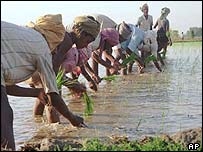
PREAMBLE: World hunger spiked sharply in 2009, significantly worsening an already disappointing trend in global food security since 1996. The combination of food and economic crises has pushed the number of hungry people worldwide to historic levels.
This issue gives space to the text of a report published in the International Monetary Fund on-line bulletin: Finance & Development, March 2010, Vol 47, No 1.. The report, entitled “Hunger on the Rise” was developed by David Dawe and Denis Drechsler, based on The State of Food Insecurity in the World, published by the Food and Agriculture Organization of the United Nations (FAO) in 2009 (see below for full citations).
OVER A BILLION HUNGRY PEOPLE
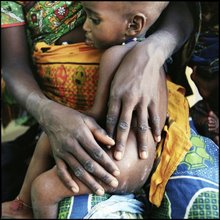
The Food and Agriculture Organization of the United Nations (FAO) estimates that 1.02 billion people were undernourished in 2009—about 100 million more than in 2008. As a result, reaching the World Food Summit target and the Millennium Development Goal for hunger reduction looks increasingly out of reach.
Poor harvests are not to blame. The FAO estimates that total cereal production in 2009 was only slightly below the record high set in 2008. Instead, the increase in hunger is mainly a result of poor people’s inability to afford the food that is produced. Many drew down savings during the food price crisis and have now lost jobs as a result of the global economic crisis.
Food prices increased considerably in developing countries during the 2006–08 world food crisis and were still high when the economic crisis started. Domestic prices of staple foods were typically 17% higher at the end of 2008 than two years earlier, after adjusting for inflation. This seriously hurt the purchasing power of poor consumers, who often spend 40% of their income on staple foods.
Thus, the global economic crisis hit developing countries at a very bad time. It further reduced access to food by lowering employment opportunities, remittances from abroad, development aid, foreign direct investment, and export opportunities.
How can hunger be eliminated? Improving world food security calls for both measures for immediate relief and more fundamental structural changes. In the short term, safety nets and social protection programs must be improved to reach those most in need.
In the medium and long term, the structural solution to hunger lies in increasing agricultural productivity to increase incomes and produce food at lower cost, especially in poor countries. The importance of longer-term measures is evidenced by the unacceptably high number of people who did not get enough to eat before the crises and are likely to remain hungry even after the food and economic crises have passed. In addition, these measures must be coupled with better governance and institutions at all levels.
Source: Dawe D, Drechsler D. Hunger on the Rise, available online at: http://www.imf.org/external/pubs/ft/fandd/2010/03/picture.htm
Text material attributed to the following source: The State of Food Insecurity in the World Economic crises – impacts and lessons learned, FAO Food and Agriculture Organization of the United Nations, Rome, 2009 is available from PDF [61p.] at: ftp://ftp.fao.org/docrep/fao/012/i0876e/i0876e.pdf
Showing posts with label Global Poverty. Show all posts
Showing posts with label Global Poverty. Show all posts
Sunday, 14 March 2010
Wednesday, 15 April 2009
GLOBAL ECONOMIC CRISIS AND THE MILLENNIUM DEVELOPMENT GOALS
PREAMBLE: For this issue we have selected a recent UN News Release that addresses global consequences of the greed and corruption in the financial industry. While almost all people have been affected by the economic crisis, the World Bank states that the crisis is set to drive 53 million more people into poverty in 2009, seriously threatening the prospect of achieving the Millennium Development Goals.
ECONOMIC CRISIS TO DRIVE MILLIONS INTO POVERTY IN 2009
13 February 2009 – The spreading global economic crisis is set to trap up to 53 million more people in poverty in developing countries this year on top of the 130-155 million driven into poverty in 2008 by soaring food and fuel prices, bringing the total of those living on less than $2 a day to over 1.5 billion, according to the World Bank.
The new forecast highlights the serious threat to achieving the United Nation's Millennium Development Goals (MDGs), which aim to slash poverty, hunger, infant and maternal mortality, and lack of access to health care and education, all by 2015. Preliminary estimates for 2009 to 2015 forecast that an average 200,000 to 400,000 more children a year may die if the crisis persists, making a total of 1.4 to 2.8 million over the period.
“The global economic crisis threatens to become a human crisis in many developing countries unless they can take targeted measures to protect vulnerable people in their communities,” World Bank President Robert B. Zoellick said on the eve of the Group of Seven (G7) finance ministers' meeting of leading industrial countries in Rome on Saturday, which he will attend.
“While much of the world is focused on bank rescues and stimulus packages, we should not forget that poor people in developing countries are far more exposed if their economies falter. This is a global crisis requiring a global solution. The needs of poor people in developing countries must be on the table.”
New estimates for 2009 suggest that lower economic growth rates will trap 46 million more people on less than $1.25 a day than was expected prior to the crisis, for a total of an extra 53 million trapped on less than $2 a day, on top of the 1.37 billion before the current crises.
A World Bank policy note issued in the run up to the G7 meeting reports that almost 40 per cent of 107 developing countries were highly exposed to the effects of the crisis and the remainder were moderately exposed, with less than 10 percent facing little risk.
It is critical for exposed countries to finance job creation, delivery of essential services and infrastructure, and safety net programmes for the vulnerable, according to the note, entitled The Global Economic Crisis: Assessing Vulnerability with a Poverty Lens.
Yet three quarters of these countries cannot raise funds domestically or internationally to finance programmes to curb the effects of the downturn. One quarter of them also lack the institutional capacity to expand spending to protect vulnerable groups. The note urges financial support in the form of grants and low or zero interest loans for these countries.
Mr. Zoellick recently called for the establishment of a Vulnerability Fund in which each developed country would devote 0.7 per cent of its stimulus package to aid poorer countries set up safety net programmes, invest in infrastructure, and support small and medium-sized enterprises and microfinance institutions.
Source: UN News Service. http://www.un.org/apps/news/story.asp?NewsID=29897&Cr=financial&Cr1=crisis
ECONOMIC CRISIS TO DRIVE MILLIONS INTO POVERTY IN 2009
13 February 2009 – The spreading global economic crisis is set to trap up to 53 million more people in poverty in developing countries this year on top of the 130-155 million driven into poverty in 2008 by soaring food and fuel prices, bringing the total of those living on less than $2 a day to over 1.5 billion, according to the World Bank.
The new forecast highlights the serious threat to achieving the United Nation's Millennium Development Goals (MDGs), which aim to slash poverty, hunger, infant and maternal mortality, and lack of access to health care and education, all by 2015. Preliminary estimates for 2009 to 2015 forecast that an average 200,000 to 400,000 more children a year may die if the crisis persists, making a total of 1.4 to 2.8 million over the period.
“The global economic crisis threatens to become a human crisis in many developing countries unless they can take targeted measures to protect vulnerable people in their communities,” World Bank President Robert B. Zoellick said on the eve of the Group of Seven (G7) finance ministers' meeting of leading industrial countries in Rome on Saturday, which he will attend.
“While much of the world is focused on bank rescues and stimulus packages, we should not forget that poor people in developing countries are far more exposed if their economies falter. This is a global crisis requiring a global solution. The needs of poor people in developing countries must be on the table.”
New estimates for 2009 suggest that lower economic growth rates will trap 46 million more people on less than $1.25 a day than was expected prior to the crisis, for a total of an extra 53 million trapped on less than $2 a day, on top of the 1.37 billion before the current crises.
A World Bank policy note issued in the run up to the G7 meeting reports that almost 40 per cent of 107 developing countries were highly exposed to the effects of the crisis and the remainder were moderately exposed, with less than 10 percent facing little risk.
It is critical for exposed countries to finance job creation, delivery of essential services and infrastructure, and safety net programmes for the vulnerable, according to the note, entitled The Global Economic Crisis: Assessing Vulnerability with a Poverty Lens.
Yet three quarters of these countries cannot raise funds domestically or internationally to finance programmes to curb the effects of the downturn. One quarter of them also lack the institutional capacity to expand spending to protect vulnerable groups. The note urges financial support in the form of grants and low or zero interest loans for these countries.
Mr. Zoellick recently called for the establishment of a Vulnerability Fund in which each developed country would devote 0.7 per cent of its stimulus package to aid poorer countries set up safety net programmes, invest in infrastructure, and support small and medium-sized enterprises and microfinance institutions.
Source: UN News Service. http://www.un.org/apps/news/story.asp?NewsID=29897&Cr=financial&Cr1=crisis


Monday, 15 September 2008
THE SOCIAL DETERMINANTS OF HEALTH
PREAMBLE: The final report of the WHO Commission on the Social Determinants of Health was released in late August, and may provide a unifying basis for all public health initiatives around the world, whether this be in relation to unfinished agendas such as the provision of potable water, sanitation and hygiene education or to the newer challenges such as the burgeoning impact of non-communicable diseases and the lack of universal access to health care in many countries. The report speaks to the human condition and the need for action on inequities as a leadership priority; this applies to all countries virtually without exception.
INEQUITIES KILLING PEOPLE ON A GRAND SCALE
A child born in a Glasgow, Scotland suburb can expect a life 28 years shorter than another living only 13 kilometres away. A girl in Lesotho is likely to live 42 years less than another in Japan. In Sweden, the risk of a woman dying during pregnancy and childbirth is 1 in 17 400; in Afghanistan, the odds are 1 in 8. Biology does not explain any of this. Instead, the differences between - and within - countries result from the social environment where people are born, live, grow, work and age.
These "social determinants of health" have been the focus of a three-year investigation by an eminent group of policy makers, academics, former heads of state and former ministers of health. Together, they comprise the World Health Organization's Commission on the Social Determinants of Health. The Commission presented its findings to the WHO Director-General Dr Margaret Chan.
"(The) toxic combination of bad policies, economics, and politics is, in large measure responsible for the fact that a majority of people in the world do not enjoy the good health that is biologically possible," the Commissioners write in Closing the Gap in a Generation: Health Equity through Action on the Social Determinants of Health. "Social injustice is killing people on a grand scale."
"Health inequity really is a matter of life and death," said Dr Chan today while welcoming the Report and congratulating the Commission. "But health systems will not naturally gravitate towards equity. Unprecedented leadership is needed that compels all actors, including those beyond the health sector, to examine their impact on health. Primary health care, which integrates health in all of government's policies, is the best framework for doing so."
Sir Michael Marmot, Commission Chair said: “Central to the Commission’s recommendations is creating the conditions for people to be empowered, to have freedom to lead flourishing lives. Nowhere is lack of empowerment more obvious than in the plight of women in many parts of the world. Health suffers as a result. Following our recommendations would dramatically improve the health and life chances of billions of people.”
Inequities Within Countries
Health inequities – unfair, unjust and avoidable causes of ill health – have long been measured between countries but the Commission documents "health gradients" within countries as well. For example:
Life expectancy for Indigenous Australian males is shorter by 17 years than all other Australian males.
Maternal mortality is 3–4 times higher among the poor compared to the rich in Indonesia. The difference in adult mortality between least and most deprived neighbourhoods in the UK is more than 2.5 times.
Child mortality in the slums of Nairobi is 2.5 times higher than in other parts of the city. A baby born to a Bolivian mother with no education has 10% chance of dying, while one born to a woman with at least secondary education has a 0.4% chance.
In the United States, 886 202 deaths would have been averted between 1991 and 2000 if mortality rates between white and African Americans were equalized. (This contrasts to 176 633 lives saved in the US by medical advances in the same period.)
In Uganda the death rate of children under 5 years in the richest fifth of households is 106 per 1000 live births but in the poorest fifth of households in Uganda it is even worse – 192 deaths per 1000 live births – that is nearly a fifth of all babies born alive to the poorest households destined to die before they reach their fifth birthday. Set this against an average death rate for under fives in high income countries of 7 deaths per 1000.
The Commission found evidence that demonstrates in general the poor are worse off than those less deprived, but they also found that the less deprived are in turn worse than those with average incomes, and so on. This slope linking income and health is the social gradient, and is seen everywhere – not just in developing countries, but all countries, including the richest. The slope may be more or less steep in different countries, but the phenomenon is universal.
Wealth is Not Necessarily a Determinant
Economic growth is raising incomes in many countries but increasing national wealth alone does not necessarily increase national health. Without equitable distribution of benefits, national growth can even exacerbate inequities.
While there has been enormous increase in global wealth, technology and living standards in recent years, the key question is how it is used for fair distribution of services and institution-building especially in low-income countries. In 1980, the richest countries with 10% of the population had a gross national income 60 times that of the poorest countries with 10% of the world's population. After 25 years of globalization, this difference increased to 122, reports the Commission. Worse, in the last 15 years, the poorest quintile in many low-income countries have shown a declining share in national consumption.
Wealth alone does not have to determine the health of a nation's population. Some low-income countries such as Cuba, Costa Rica, China, state of Kerala in India and Sri Lanka have achieved levels of good health despite relatively low national incomes. But, the Commission points out, wealth can be wisely used. Nordic countries, for example, have followed policies that encouraged equality of benefits and services, full employment, gender equity and low levels of social exclusion. This, said the Commission, is an outstanding example of what needs to be done everywhere.
Solutions from Beyond the Health Sector
Much of the work to redress health inequities lies beyond the health sector. According to the Commission's report, "Water-borne diseases are not caused by a lack of antibiotics but by dirty water, and by the political, social, and economic forces that fail to make clean water available to all; heart disease is caused not by a lack of coronary care units but by lives people lead, which are shaped by the environments in which they live; obesity is not caused by moral failure on the part of individuals but by the excess availability of high-fat and high-sugar foods." Consequently, the health sector – globally and nationally – needs to focus attention on addressing the root causes of inequities in health.
“We rely too much on medical interventions as a way of increasing life expectancy” explained Sir Michael. “A more effective way of increasing life expectancy and improving health would be for every government policy and programme to be assessed for its impact on health and health equity; to make health and health equity a marker for government performance.”
Recommendations
Based on this compelling evidence, the Commission makes three overarching recommendations to tackle the "corrosive effects of inequality of life chances":
Improve daily living conditions, including the circumstances in which people are born, grow, live, work and age.
Tackle the inequitable distribution of power, money and resources – the structural drivers of those conditions – globally, nationally and locally.
Measure and understand the problem and assess the impact of action.
Improving Daily Living Conditions:
Improving daily living conditions begins at the start of life. The Commission recommends that countries set up an interagency mechanism to ensure effective collaboration and coherent policy between all sectors for early childhood development, and aim to provide early childhood services to all of their young citizens. Investing in early childhood development provides one of the best ways to reduce health inequities. Evidence shows that investment in the education of women pays for itself many times over.
Billions of people live without adequate shelter and clean water. The Commission's report pays particular attention to the increasing numbers of people who live in urban slums, and the impact of urban governance on health. The Commission joins other voices in calling for a renewed effort to ensure water, sanitation and electricity for all, as well as better urban planning to address the epidemic of chronic disease.
Health systems also have an important role to play. While the Commission report shows how the health sector can not reduce health inequities on its own, providing universal coverage and ensuring a focus on equity throughout health systems are important steps.
The report also highlights how over 100 million people are impoverished due to paying for health care – a key contributor to health inequity. The Commission thus calls for health systems to be based on principles of equity, disease prevention and health promotion with universal coverage, based on primary health care.
Equitable Distribution of Resources:
Enacting the recommendations of the Commission to improve daily living conditions will also require tackling the inequitable distribution of resources. This requires far-reaching and systematic action.
The report foregrounds a range of recommendations aimed at ensuring fair financing, corporate social responsibility, gender equity and better governance. These include using health equity as an indicator of government performance and overall social development, the widespread use of health equity impact assessments, ensuring that rich countries honour their commitment to provide 0.7% of their GNP as aid, strengthening legislation to prohibit discrimination by gender and improving the capacity for all groups in society to participate in policy-making with space for civil society to work unencumbered to promote and protect political and social rights. At the global level, the Commission recommends that health equity should be a core development goal and that a social determinants of health framework should be used to monitor progress.
Commit to Measurement:
The Commission also highlights how implementing any of the above recommendations requires measurement of the existing problem of health inequity (where in many countries adequate data does not exist) and then monitoring the impact on health equity of the proposed interventions. To do this will require firstly investing in basic vital registration systems which have seen limited progress in the last thirty years. There is also a great need for training of policy-makers, health workers and workers in other sectors to understand the need for and how to act on the social determinants of health.
While more research is needed, enough is known for policy makers to initiate action. The feasibility of action is indicated in the change that is already occurring. Egypt has shown a remarkable drop in child mortality from 235 to 33 per 1000 in 30 years. Greece and Portugal reduced their child mortality from 50 per 1000 births to levels nearly as low as Japan, Sweden, and Iceland. Cuba achieved more than 99% coverage of its child development services in 2000. But trends showing improved health are not foreordained. In fact, without attention health can decline rapidly.
Is this feasible?:
The Commission has already inspired and supported action in many parts of the world. Brazil, Canada, Chile, Iran, Kenya, Mozambique, Sri Lanka, Sweden, and the UK have become 'country partners' on the basis of their commitment to make progress on the social determinants of health equity and are already developing policies across governments to tackle them. These examples show that change is possible through political will. There is a long way to go, but the direction is set, say the Commissioners, the path clear.
Source: Adapted from Press Release Aug 28. World Health Organization. Geneva http://www.who.int/mediacentre/news/releases/2008/pr29/en/index.html
Full details are available on the website at http://www.who.int/social_determinants/final_report/en/index.html The Executive Summary (40 pages) may be downloaded at http://www.who.int/social_determinants/final_report/csdh_finalreport_2008_execsumm.pdf
INEQUITIES KILLING PEOPLE ON A GRAND SCALE
A child born in a Glasgow, Scotland suburb can expect a life 28 years shorter than another living only 13 kilometres away. A girl in Lesotho is likely to live 42 years less than another in Japan. In Sweden, the risk of a woman dying during pregnancy and childbirth is 1 in 17 400; in Afghanistan, the odds are 1 in 8. Biology does not explain any of this. Instead, the differences between - and within - countries result from the social environment where people are born, live, grow, work and age.
These "social determinants of health" have been the focus of a three-year investigation by an eminent group of policy makers, academics, former heads of state and former ministers of health. Together, they comprise the World Health Organization's Commission on the Social Determinants of Health. The Commission presented its findings to the WHO Director-General Dr Margaret Chan.
"(The) toxic combination of bad policies, economics, and politics is, in large measure responsible for the fact that a majority of people in the world do not enjoy the good health that is biologically possible," the Commissioners write in Closing the Gap in a Generation: Health Equity through Action on the Social Determinants of Health. "Social injustice is killing people on a grand scale."
"Health inequity really is a matter of life and death," said Dr Chan today while welcoming the Report and congratulating the Commission. "But health systems will not naturally gravitate towards equity. Unprecedented leadership is needed that compels all actors, including those beyond the health sector, to examine their impact on health. Primary health care, which integrates health in all of government's policies, is the best framework for doing so."
Sir Michael Marmot, Commission Chair said: “Central to the Commission’s recommendations is creating the conditions for people to be empowered, to have freedom to lead flourishing lives. Nowhere is lack of empowerment more obvious than in the plight of women in many parts of the world. Health suffers as a result. Following our recommendations would dramatically improve the health and life chances of billions of people.”
Inequities Within Countries
Health inequities – unfair, unjust and avoidable causes of ill health – have long been measured between countries but the Commission documents "health gradients" within countries as well. For example:
Life expectancy for Indigenous Australian males is shorter by 17 years than all other Australian males.
Maternal mortality is 3–4 times higher among the poor compared to the rich in Indonesia. The difference in adult mortality between least and most deprived neighbourhoods in the UK is more than 2.5 times.
Child mortality in the slums of Nairobi is 2.5 times higher than in other parts of the city. A baby born to a Bolivian mother with no education has 10% chance of dying, while one born to a woman with at least secondary education has a 0.4% chance.
In the United States, 886 202 deaths would have been averted between 1991 and 2000 if mortality rates between white and African Americans were equalized. (This contrasts to 176 633 lives saved in the US by medical advances in the same period.)
In Uganda the death rate of children under 5 years in the richest fifth of households is 106 per 1000 live births but in the poorest fifth of households in Uganda it is even worse – 192 deaths per 1000 live births – that is nearly a fifth of all babies born alive to the poorest households destined to die before they reach their fifth birthday. Set this against an average death rate for under fives in high income countries of 7 deaths per 1000.
The Commission found evidence that demonstrates in general the poor are worse off than those less deprived, but they also found that the less deprived are in turn worse than those with average incomes, and so on. This slope linking income and health is the social gradient, and is seen everywhere – not just in developing countries, but all countries, including the richest. The slope may be more or less steep in different countries, but the phenomenon is universal.
Wealth is Not Necessarily a Determinant
Economic growth is raising incomes in many countries but increasing national wealth alone does not necessarily increase national health. Without equitable distribution of benefits, national growth can even exacerbate inequities.
While there has been enormous increase in global wealth, technology and living standards in recent years, the key question is how it is used for fair distribution of services and institution-building especially in low-income countries. In 1980, the richest countries with 10% of the population had a gross national income 60 times that of the poorest countries with 10% of the world's population. After 25 years of globalization, this difference increased to 122, reports the Commission. Worse, in the last 15 years, the poorest quintile in many low-income countries have shown a declining share in national consumption.
Wealth alone does not have to determine the health of a nation's population. Some low-income countries such as Cuba, Costa Rica, China, state of Kerala in India and Sri Lanka have achieved levels of good health despite relatively low national incomes. But, the Commission points out, wealth can be wisely used. Nordic countries, for example, have followed policies that encouraged equality of benefits and services, full employment, gender equity and low levels of social exclusion. This, said the Commission, is an outstanding example of what needs to be done everywhere.
Solutions from Beyond the Health Sector
Much of the work to redress health inequities lies beyond the health sector. According to the Commission's report, "Water-borne diseases are not caused by a lack of antibiotics but by dirty water, and by the political, social, and economic forces that fail to make clean water available to all; heart disease is caused not by a lack of coronary care units but by lives people lead, which are shaped by the environments in which they live; obesity is not caused by moral failure on the part of individuals but by the excess availability of high-fat and high-sugar foods." Consequently, the health sector – globally and nationally – needs to focus attention on addressing the root causes of inequities in health.
“We rely too much on medical interventions as a way of increasing life expectancy” explained Sir Michael. “A more effective way of increasing life expectancy and improving health would be for every government policy and programme to be assessed for its impact on health and health equity; to make health and health equity a marker for government performance.”
Recommendations
Based on this compelling evidence, the Commission makes three overarching recommendations to tackle the "corrosive effects of inequality of life chances":
Improve daily living conditions, including the circumstances in which people are born, grow, live, work and age.
Tackle the inequitable distribution of power, money and resources – the structural drivers of those conditions – globally, nationally and locally.
Measure and understand the problem and assess the impact of action.
Improving Daily Living Conditions:
Improving daily living conditions begins at the start of life. The Commission recommends that countries set up an interagency mechanism to ensure effective collaboration and coherent policy between all sectors for early childhood development, and aim to provide early childhood services to all of their young citizens. Investing in early childhood development provides one of the best ways to reduce health inequities. Evidence shows that investment in the education of women pays for itself many times over.
Billions of people live without adequate shelter and clean water. The Commission's report pays particular attention to the increasing numbers of people who live in urban slums, and the impact of urban governance on health. The Commission joins other voices in calling for a renewed effort to ensure water, sanitation and electricity for all, as well as better urban planning to address the epidemic of chronic disease.
Health systems also have an important role to play. While the Commission report shows how the health sector can not reduce health inequities on its own, providing universal coverage and ensuring a focus on equity throughout health systems are important steps.
The report also highlights how over 100 million people are impoverished due to paying for health care – a key contributor to health inequity. The Commission thus calls for health systems to be based on principles of equity, disease prevention and health promotion with universal coverage, based on primary health care.
Equitable Distribution of Resources:
Enacting the recommendations of the Commission to improve daily living conditions will also require tackling the inequitable distribution of resources. This requires far-reaching and systematic action.
The report foregrounds a range of recommendations aimed at ensuring fair financing, corporate social responsibility, gender equity and better governance. These include using health equity as an indicator of government performance and overall social development, the widespread use of health equity impact assessments, ensuring that rich countries honour their commitment to provide 0.7% of their GNP as aid, strengthening legislation to prohibit discrimination by gender and improving the capacity for all groups in society to participate in policy-making with space for civil society to work unencumbered to promote and protect political and social rights. At the global level, the Commission recommends that health equity should be a core development goal and that a social determinants of health framework should be used to monitor progress.
Commit to Measurement:
The Commission also highlights how implementing any of the above recommendations requires measurement of the existing problem of health inequity (where in many countries adequate data does not exist) and then monitoring the impact on health equity of the proposed interventions. To do this will require firstly investing in basic vital registration systems which have seen limited progress in the last thirty years. There is also a great need for training of policy-makers, health workers and workers in other sectors to understand the need for and how to act on the social determinants of health.
While more research is needed, enough is known for policy makers to initiate action. The feasibility of action is indicated in the change that is already occurring. Egypt has shown a remarkable drop in child mortality from 235 to 33 per 1000 in 30 years. Greece and Portugal reduced their child mortality from 50 per 1000 births to levels nearly as low as Japan, Sweden, and Iceland. Cuba achieved more than 99% coverage of its child development services in 2000. But trends showing improved health are not foreordained. In fact, without attention health can decline rapidly.
Is this feasible?:
The Commission has already inspired and supported action in many parts of the world. Brazil, Canada, Chile, Iran, Kenya, Mozambique, Sri Lanka, Sweden, and the UK have become 'country partners' on the basis of their commitment to make progress on the social determinants of health equity and are already developing policies across governments to tackle them. These examples show that change is possible through political will. There is a long way to go, but the direction is set, say the Commissioners, the path clear.
Source: Adapted from Press Release Aug 28. World Health Organization. Geneva http://www.who.int/mediacentre/news/releases/2008/pr29/en/index.html
Full details are available on the website at http://www.who.int/social_determinants/final_report/en/index.html The Executive Summary (40 pages) may be downloaded at http://www.who.int/social_determinants/final_report/csdh_finalreport_2008_execsumm.pdf
Monday, 1 October 2007
IS CLIMATE CHANGE AN ACT OF AGRESSION?
PREAMBLE: In this issue we abstract an article carried by The Economist (on-line edition Sept 24th, 2007). The article reported on Ugandan President, Yoweri Museveni's declaration that climate change is an act of aggression by the rich world against the world’s poor. We also note, on the same topic, the following statement from the Church World Service (CWS): "The issue for CWS is how climate change frames development and justice", said Rajyashri Waghray, who directs education and advocacy for the CWS.
For stark contrast we note Canada’s uncertain posture, now quoted from a Globe and Mail Editorial of September 26: “Prime Minister Stephen Harper’s progress from a climate-change skeptic to an environmental convert has been a perplexing odyssey. After a half-hearted attempt to tackle greenhouse-gas emissions late last year, his Conservative government hurriedly introduced new regulations and incentives, which made a good start in fostering reductions. Earlier…(in September), in Australia, he even announced his personal commitment to ‘careful environmental stewardship’. That seemed heartfelt. Now it is fair to question the sincerity of that conversion. On… (Sept 24), at a UN climate change conference aimed at saving the Kyoto Protocol, Mr Harper announced that Canada had asked to join a rival climate-change pact, the Asia-Pacific Partnership. The six members of that pact include nations that have refused to ratify the protocol, such as the United States, and others among the world’s worst polluters, such as India and China. Together they account for nearly half of all greenhouse gas emissions”.
And now The Economist’s discussion of the Ugandan Prime Minister’s proposition, and their assessment of the situation and implications in Africa...
CLIMATE CHANGE AS AN ACT OF AGGRESSION
At a recent African Union summit, Uganda's president, Yoweri Museveni, declared climate change an act of aggression by the rich world against the world’s poor. Indeed, if predictions of the UN's Intergovernmental Panel on Climate Change (IPCC) hold true, climate change may have a graver effect on Africa than on any other continent. One may well ask…Why should the poorest die for the continued excesses of the richest?
According to The Economist, the IPCC's most recent regional report raises the spectre of rising mortality. It predicts a minimum 2.5°C increase in temperature in Africa by 2030; drylands bordering deserts may get drier, wetlands bordering rainforests may get wetter. The panel suggests the supply of food in Africa will be “severely compromised” by climate change, with crop yields in danger of collapsing in some countries.
In the drylands, water may become a critical issue. Soaring temperatures and erratic rainfall may dry up surface water. Between 75m and 250m Africans, out of the 800m or so now living in sub-Saharan Africa, may be short of water. The soil will hold less moisture, bore-holes will become contaminated, and women and girls will have to walk ever greater distances to fetch water. Vegetative cover will recede. The IPCC guesses that 600,000 square kilometres (232,000 square miles) of cultivable land may be ruined.
Warming may also hurt animal habitats and biodiversity. More algae in freshwater lakes will hit fishing. The glaciers of Uganda's Rwenzori mountains, of Tanzania's Kilimanjaro and of Kenya's eponymous mountain may disappear; only 7 of the 18 glaciers recorded on Mount Kenya in 1900 still remain. At the same time, a likely rise in sea levels may threaten the coastal infrastructure of northern Egypt, the Gambia, the Gulf of Guinea and Senegal.
There are two caveats to this gloomy scenario: 1) some parts of Africa may benefit from climate change. Increased rainfall in highland areas in eastern Africa could, for example, be beneficial. 2) though climate-change models have improved, they have been unreliable in Africa; the detail is guesswork.
Still, states The Economist, some scientists think that climate change may be even crueler to parts of Africa than the IPCC predicts. The important point, they say, is not the degree of warming but the continent's vulnerability to it. A University of Pretoria study estimates that Africa might lose $25 billion in crop failure due to rising temperatures and another $4 billion from less rain. The already impoverished drylands would suffer most. Some cite the war in Sudan's Darfur region as proof of the damage done by climate change, soil erosion and overpopulation.
Unfortunately, in the opinion of The Economist, few African leaders have grasped the scale of the challenge... Most oil-producers have squandered their bonanza. Nigeria has failed to plan for how to stem the dreadful pollution in its oil-producing Delta region or to prevent desertification tearing at the fabric of its dry Muslim north. South Africa is only just beginning to own up to its coal addiction. Uganda's Mr Museveni is fighting off a rare insurrection from his supporters against plans to turn a piece of Ugandan rainforest over to farming. The World Meteorological Organisation says that weather-data collection in Africa has recently got worse, just as the need for accurate figures has grown; many of the automatic weather stations it helped set up have fallen into disrepair. The African Union has done little to sound the climate-change alarm.
Kenya's president, Mwai Kibaki, says that Africa should “join hands” with its friends in the rich world over climate change. He wants more carbon-trading projects to come to Africa; so far, most have gone to Asia. His advisers admit that Mr Kibaki's ambitious plan to turn Kenya into an industrial country by 2020 worries environmentalists, but say that reforestation, thermal power and better management of water and grazing would, if they materialized, offset the damage.
Africa emits far less carbon than other continents, so its recently faster-growing economies do not gravely menace its environment. Some rich-country consumers, however, want to punish African countries for air freighting northwards some of their produce, from flowers to wine.
Hardier new varieties of staple crops, drip irrigation schemes and technologies such as solar power should help Africa adapt to climate change. But so can simple shifts in policy. For instance, a government decision in Burkina Faso to let farmers own the trees on their land has increased the country's tree cover.
The Economist’s conclusion: As the G8 rich countries are failing so far to fulfill the promises they made in 2005 to boost aid to Africa, the continent should not expect much new money to protect the environment. In the short run, Africa's own politicians need to take a lead, even if the people most culpable for the damage done by climate change live elsewhere.
Sources:
. Church World Service and partners prepare to act on climate change. May 2, 2007. http://www.churchworldservice.org/Educ_Advo/news/2007/climatechange.html
. Globe and Mail. Lead Editorial. Sept 26, 2007.
. Economist.com. Global Warming in Africa – drying up and flooding out. Sept 24, 2007. http://www.economist.com/world/africa/displaystory.cfm?story_id=9163426
COMMENT: What is important about the contrasting viewpoints presented, from those of President Museveni, to the Church World Service, The Economist, to the anti-Kyoto stance of Prime Minister Harper and the Asian-Pacific partnership, is that ultimately they highlight climate change as an ethical issue that almost inevitably will come up as a focus for discussion at the UN negotiations on climate change scheduled for Bali in December.
For stark contrast we note Canada’s uncertain posture, now quoted from a Globe and Mail Editorial of September 26: “Prime Minister Stephen Harper’s progress from a climate-change skeptic to an environmental convert has been a perplexing odyssey. After a half-hearted attempt to tackle greenhouse-gas emissions late last year, his Conservative government hurriedly introduced new regulations and incentives, which made a good start in fostering reductions. Earlier…(in September), in Australia, he even announced his personal commitment to ‘careful environmental stewardship’. That seemed heartfelt. Now it is fair to question the sincerity of that conversion. On… (Sept 24), at a UN climate change conference aimed at saving the Kyoto Protocol, Mr Harper announced that Canada had asked to join a rival climate-change pact, the Asia-Pacific Partnership. The six members of that pact include nations that have refused to ratify the protocol, such as the United States, and others among the world’s worst polluters, such as India and China. Together they account for nearly half of all greenhouse gas emissions”.
And now The Economist’s discussion of the Ugandan Prime Minister’s proposition, and their assessment of the situation and implications in Africa...
CLIMATE CHANGE AS AN ACT OF AGGRESSION
At a recent African Union summit, Uganda's president, Yoweri Museveni, declared climate change an act of aggression by the rich world against the world’s poor. Indeed, if predictions of the UN's Intergovernmental Panel on Climate Change (IPCC) hold true, climate change may have a graver effect on Africa than on any other continent. One may well ask…Why should the poorest die for the continued excesses of the richest?
According to The Economist, the IPCC's most recent regional report raises the spectre of rising mortality. It predicts a minimum 2.5°C increase in temperature in Africa by 2030; drylands bordering deserts may get drier, wetlands bordering rainforests may get wetter. The panel suggests the supply of food in Africa will be “severely compromised” by climate change, with crop yields in danger of collapsing in some countries.
In the drylands, water may become a critical issue. Soaring temperatures and erratic rainfall may dry up surface water. Between 75m and 250m Africans, out of the 800m or so now living in sub-Saharan Africa, may be short of water. The soil will hold less moisture, bore-holes will become contaminated, and women and girls will have to walk ever greater distances to fetch water. Vegetative cover will recede. The IPCC guesses that 600,000 square kilometres (232,000 square miles) of cultivable land may be ruined.
Warming may also hurt animal habitats and biodiversity. More algae in freshwater lakes will hit fishing. The glaciers of Uganda's Rwenzori mountains, of Tanzania's Kilimanjaro and of Kenya's eponymous mountain may disappear; only 7 of the 18 glaciers recorded on Mount Kenya in 1900 still remain. At the same time, a likely rise in sea levels may threaten the coastal infrastructure of northern Egypt, the Gambia, the Gulf of Guinea and Senegal.
There are two caveats to this gloomy scenario: 1) some parts of Africa may benefit from climate change. Increased rainfall in highland areas in eastern Africa could, for example, be beneficial. 2) though climate-change models have improved, they have been unreliable in Africa; the detail is guesswork.
Still, states The Economist, some scientists think that climate change may be even crueler to parts of Africa than the IPCC predicts. The important point, they say, is not the degree of warming but the continent's vulnerability to it. A University of Pretoria study estimates that Africa might lose $25 billion in crop failure due to rising temperatures and another $4 billion from less rain. The already impoverished drylands would suffer most. Some cite the war in Sudan's Darfur region as proof of the damage done by climate change, soil erosion and overpopulation.
Unfortunately, in the opinion of The Economist, few African leaders have grasped the scale of the challenge... Most oil-producers have squandered their bonanza. Nigeria has failed to plan for how to stem the dreadful pollution in its oil-producing Delta region or to prevent desertification tearing at the fabric of its dry Muslim north. South Africa is only just beginning to own up to its coal addiction. Uganda's Mr Museveni is fighting off a rare insurrection from his supporters against plans to turn a piece of Ugandan rainforest over to farming. The World Meteorological Organisation says that weather-data collection in Africa has recently got worse, just as the need for accurate figures has grown; many of the automatic weather stations it helped set up have fallen into disrepair. The African Union has done little to sound the climate-change alarm.
Kenya's president, Mwai Kibaki, says that Africa should “join hands” with its friends in the rich world over climate change. He wants more carbon-trading projects to come to Africa; so far, most have gone to Asia. His advisers admit that Mr Kibaki's ambitious plan to turn Kenya into an industrial country by 2020 worries environmentalists, but say that reforestation, thermal power and better management of water and grazing would, if they materialized, offset the damage.
Africa emits far less carbon than other continents, so its recently faster-growing economies do not gravely menace its environment. Some rich-country consumers, however, want to punish African countries for air freighting northwards some of their produce, from flowers to wine.
Hardier new varieties of staple crops, drip irrigation schemes and technologies such as solar power should help Africa adapt to climate change. But so can simple shifts in policy. For instance, a government decision in Burkina Faso to let farmers own the trees on their land has increased the country's tree cover.
The Economist’s conclusion: As the G8 rich countries are failing so far to fulfill the promises they made in 2005 to boost aid to Africa, the continent should not expect much new money to protect the environment. In the short run, Africa's own politicians need to take a lead, even if the people most culpable for the damage done by climate change live elsewhere.
Sources:
. Church World Service and partners prepare to act on climate change. May 2, 2007. http://www.churchworldservice.org/Educ_Advo/news/2007/climatechange.html
. Globe and Mail. Lead Editorial. Sept 26, 2007.
. Economist.com. Global Warming in Africa – drying up and flooding out. Sept 24, 2007. http://www.economist.com/world/africa/displaystory.cfm?story_id=9163426
COMMENT: What is important about the contrasting viewpoints presented, from those of President Museveni, to the Church World Service, The Economist, to the anti-Kyoto stance of Prime Minister Harper and the Asian-Pacific partnership, is that ultimately they highlight climate change as an ethical issue that almost inevitably will come up as a focus for discussion at the UN negotiations on climate change scheduled for Bali in December.
Subscribe to:
Comments (Atom)