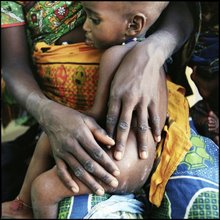
PREAMBLE: World hunger spiked sharply in 2009, significantly worsening an already disappointing trend in global food security since 1996. The combination of food and economic crises has pushed the number of hungry people worldwide to historic levels.
This issue gives space to the text of a report published in the International Monetary Fund on-line bulletin: Finance & Development, March 2010, Vol 47, No 1.. The report, entitled “Hunger on the Rise” was developed by David Dawe and Denis Drechsler, based on The State of Food Insecurity in the World, published by the Food and Agriculture Organization of the United Nations (FAO) in 2009 (see below for full citations).
OVER A BILLION HUNGRY PEOPLE
The Food and Agriculture Organization of the United Nations (FAO) estimates that 1.02 billion people were undernourished in 2009—about 100 million more than in 2008. As a result, reaching the World Food Summit target and the Millennium Development Goal for hunger reduction looks increasingly out of reach.
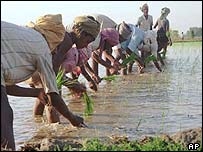
Poor harvests are not to blame. The FAO estimates that total cereal production in 2009 was only slightly below the record high set in 2008. Instead, the increase in hunger is mainly a result of poor people’s inability to afford the food that is produced. Many drew down savings during the food price crisis and have now lost jobs as a result of the global economic crisis.
Food prices increased considerably in developing countries during the 2006–08 world food crisis and were still high when the economic crisis started. Domestic prices of staple foods were typically 17% higher at the end of 2008 than two years earlier, after adjusting for inflation. This seriously hurt the purchasing power of poor consumers, who often spend 40% of their income on staple foods.
Thus, the global economic crisis hit developing countries at a very bad time. It further reduced access to food by lowering employment opportunities, remittances from abroad, development aid, foreign direct investment, and export opportunities.
How can hunger be eliminated? Improving world food security calls for both measures for immediate relief and more fundamental structural changes. In the short term, safety nets and social protection programs must be improved to reach those most in need.
In the medium and long term, the structural solution to hunger lies in increasing agricultural productivity to increase incomes and produce food at lower cost, especially in poor countries. The importance of longer-term measures is evidenced by the unacceptably high number of people who did not get enough to eat before the crises and are likely to remain hungry even after the food and economic crises have passed. In addition, these measures must be coupled with better governance and institutions at all levels.
Source: Dawe D, Drechsler D. Hunger on the Rise, available online at: http://www.imf.org/external/pubs/ft/fandd/2010/03/picture.htm
Text material attributed to the following source: The State of Food Insecurity in the World Economic crises – impacts and lessons learned, FAO Food and Agriculture Organization of the United Nations, Rome, 2009 is available from PDF [61p.] at: ftp://ftp.fao.org/docrep/fao/012/i0876e/i0876e.pdf
Showing posts with label economic crisis. Show all posts
Showing posts with label economic crisis. Show all posts
Sunday, 14 March 2010
Wednesday, 15 April 2009
GLOBAL ECONOMIC CRISIS AND THE MILLENNIUM DEVELOPMENT GOALS
PREAMBLE: For this issue we have selected a recent UN News Release that addresses global consequences of the greed and corruption in the financial industry. While almost all people have been affected by the economic crisis, the World Bank states that the crisis is set to drive 53 million more people into poverty in 2009, seriously threatening the prospect of achieving the Millennium Development Goals.
ECONOMIC CRISIS TO DRIVE MILLIONS INTO POVERTY IN 2009
13 February 2009 – The spreading global economic crisis is set to trap up to 53 million more people in poverty in developing countries this year on top of the 130-155 million driven into poverty in 2008 by soaring food and fuel prices, bringing the total of those living on less than $2 a day to over 1.5 billion, according to the World Bank.
The new forecast highlights the serious threat to achieving the United Nation's Millennium Development Goals (MDGs), which aim to slash poverty, hunger, infant and maternal mortality, and lack of access to health care and education, all by 2015. Preliminary estimates for 2009 to 2015 forecast that an average 200,000 to 400,000 more children a year may die if the crisis persists, making a total of 1.4 to 2.8 million over the period.
“The global economic crisis threatens to become a human crisis in many developing countries unless they can take targeted measures to protect vulnerable people in their communities,” World Bank President Robert B. Zoellick said on the eve of the Group of Seven (G7) finance ministers' meeting of leading industrial countries in Rome on Saturday, which he will attend.
“While much of the world is focused on bank rescues and stimulus packages, we should not forget that poor people in developing countries are far more exposed if their economies falter. This is a global crisis requiring a global solution. The needs of poor people in developing countries must be on the table.”
New estimates for 2009 suggest that lower economic growth rates will trap 46 million more people on less than $1.25 a day than was expected prior to the crisis, for a total of an extra 53 million trapped on less than $2 a day, on top of the 1.37 billion before the current crises.
A World Bank policy note issued in the run up to the G7 meeting reports that almost 40 per cent of 107 developing countries were highly exposed to the effects of the crisis and the remainder were moderately exposed, with less than 10 percent facing little risk.
It is critical for exposed countries to finance job creation, delivery of essential services and infrastructure, and safety net programmes for the vulnerable, according to the note, entitled The Global Economic Crisis: Assessing Vulnerability with a Poverty Lens.
Yet three quarters of these countries cannot raise funds domestically or internationally to finance programmes to curb the effects of the downturn. One quarter of them also lack the institutional capacity to expand spending to protect vulnerable groups. The note urges financial support in the form of grants and low or zero interest loans for these countries.
Mr. Zoellick recently called for the establishment of a Vulnerability Fund in which each developed country would devote 0.7 per cent of its stimulus package to aid poorer countries set up safety net programmes, invest in infrastructure, and support small and medium-sized enterprises and microfinance institutions.
Source: UN News Service. http://www.un.org/apps/news/story.asp?NewsID=29897&Cr=financial&Cr1=crisis
ECONOMIC CRISIS TO DRIVE MILLIONS INTO POVERTY IN 2009
13 February 2009 – The spreading global economic crisis is set to trap up to 53 million more people in poverty in developing countries this year on top of the 130-155 million driven into poverty in 2008 by soaring food and fuel prices, bringing the total of those living on less than $2 a day to over 1.5 billion, according to the World Bank.
The new forecast highlights the serious threat to achieving the United Nation's Millennium Development Goals (MDGs), which aim to slash poverty, hunger, infant and maternal mortality, and lack of access to health care and education, all by 2015. Preliminary estimates for 2009 to 2015 forecast that an average 200,000 to 400,000 more children a year may die if the crisis persists, making a total of 1.4 to 2.8 million over the period.
“The global economic crisis threatens to become a human crisis in many developing countries unless they can take targeted measures to protect vulnerable people in their communities,” World Bank President Robert B. Zoellick said on the eve of the Group of Seven (G7) finance ministers' meeting of leading industrial countries in Rome on Saturday, which he will attend.
“While much of the world is focused on bank rescues and stimulus packages, we should not forget that poor people in developing countries are far more exposed if their economies falter. This is a global crisis requiring a global solution. The needs of poor people in developing countries must be on the table.”
New estimates for 2009 suggest that lower economic growth rates will trap 46 million more people on less than $1.25 a day than was expected prior to the crisis, for a total of an extra 53 million trapped on less than $2 a day, on top of the 1.37 billion before the current crises.
A World Bank policy note issued in the run up to the G7 meeting reports that almost 40 per cent of 107 developing countries were highly exposed to the effects of the crisis and the remainder were moderately exposed, with less than 10 percent facing little risk.
It is critical for exposed countries to finance job creation, delivery of essential services and infrastructure, and safety net programmes for the vulnerable, according to the note, entitled The Global Economic Crisis: Assessing Vulnerability with a Poverty Lens.
Yet three quarters of these countries cannot raise funds domestically or internationally to finance programmes to curb the effects of the downturn. One quarter of them also lack the institutional capacity to expand spending to protect vulnerable groups. The note urges financial support in the form of grants and low or zero interest loans for these countries.
Mr. Zoellick recently called for the establishment of a Vulnerability Fund in which each developed country would devote 0.7 per cent of its stimulus package to aid poorer countries set up safety net programmes, invest in infrastructure, and support small and medium-sized enterprises and microfinance institutions.
Source: UN News Service. http://www.un.org/apps/news/story.asp?NewsID=29897&Cr=financial&Cr1=crisis


Wednesday, 15 October 2008
GLOBAL ECONOMIC CRISIS, FINANCIAL REFORMS & "THE BROWN DOCTRINE"
PREAMBLE: Over the past month, the world has faced an unprecedented near-collapse of its banking systems. The crisis is not over yet, and – it may fairly be stated – is due to a combination of poor political leadership in the United States (asleep at the wheel) and a combination of greed, negligence and corruption in its financial industry. This of course does not take the inaction and practices of other countries off the hook, as consequential national and global failures are documented extensively elsewhere, especially in Europe. Clearly, no country (rich or poor) has been spared, and it will take many years for individuals, families, communities and societies as a whole to recover from this crisis of greed, neglect and incompetence.
Perhaps needless to say, the necessities of life and the social fabric of all countries e.g, health and educational systems along with secure food supply, clothing and shelter depend on integrity in our financial systems. Trust must be restored in those systems.
Out of this morass some good has come in the leadership of UK Prime Minister Gordon Brown. He has put forward a 5 point plan which appears to have galvanized the world financial community around new principles, thereby giving some hope for the rest of us.
Implicit in the “Brown Doctrine” is an analysis of what is so seriously wrong with the world financial order. It forms a clear case for supra-national supervision of international finance, which clearly cannot any longer be left to the caprices of any one country.
The key features of the Brown Doctrine now follow, extracted from a media report.
Reference: Saunders D. The man who saved the world banking system. Globe and Mail Oct 15, 2008.
THE BROWN DOCTRINE
British Prime Minister Gordon Brown outlined a five-point program yesterday (October 14, 2008) to reform the world’s financial system. He hopes the principles will be the basis of a new set of global institutions to replace those that have governed international finance since 1944.
Transparency: Banks must fully disclose key information globally, not just nationally. Accounting standards will have to become international, and they must extend to the credit-insurance market, which has been heavily criticized.
Integrity: A worldwide effort is needed to end conflicts of interest, such as those involving rating agencies that receive fees from the firms they rate. Worldwide limits also need to be placed on pay and bonuses in banks, so that they reflect actual results and are no longer able to distort business practices.
Responsibility: All members of company boards must hold full responsibility for the company’s risk, and must not be able to walk away from their institutions. This will require international supervision.
Tighter Regulation: To create “a system with solvency and liquidity”, there must be “adequate protection through the economic cycle” to prevent speculators from distorting markets when they are rising and sort positions from having undue impacts when markets are falling.
New Institutions: The new system of banking cooperation will need “a new international financial architecture for the Global Age”. New institutions will provide “an effective global early warning system for the world economy, to alert us to the risks at hand”, and “globally accepted standards of regulation” and the cross-border supervision of global corporations.
Source: Saunders D. The man who saved the world banking system. Globe and Mail Oct 15, 2008.
Perhaps needless to say, the necessities of life and the social fabric of all countries e.g, health and educational systems along with secure food supply, clothing and shelter depend on integrity in our financial systems. Trust must be restored in those systems.
Out of this morass some good has come in the leadership of UK Prime Minister Gordon Brown. He has put forward a 5 point plan which appears to have galvanized the world financial community around new principles, thereby giving some hope for the rest of us.
Implicit in the “Brown Doctrine” is an analysis of what is so seriously wrong with the world financial order. It forms a clear case for supra-national supervision of international finance, which clearly cannot any longer be left to the caprices of any one country.
The key features of the Brown Doctrine now follow, extracted from a media report.
Reference: Saunders D. The man who saved the world banking system. Globe and Mail Oct 15, 2008.
THE BROWN DOCTRINE
British Prime Minister Gordon Brown outlined a five-point program yesterday (October 14, 2008) to reform the world’s financial system. He hopes the principles will be the basis of a new set of global institutions to replace those that have governed international finance since 1944.
Transparency: Banks must fully disclose key information globally, not just nationally. Accounting standards will have to become international, and they must extend to the credit-insurance market, which has been heavily criticized.
Integrity: A worldwide effort is needed to end conflicts of interest, such as those involving rating agencies that receive fees from the firms they rate. Worldwide limits also need to be placed on pay and bonuses in banks, so that they reflect actual results and are no longer able to distort business practices.
Responsibility: All members of company boards must hold full responsibility for the company’s risk, and must not be able to walk away from their institutions. This will require international supervision.
Tighter Regulation: To create “a system with solvency and liquidity”, there must be “adequate protection through the economic cycle” to prevent speculators from distorting markets when they are rising and sort positions from having undue impacts when markets are falling.
New Institutions: The new system of banking cooperation will need “a new international financial architecture for the Global Age”. New institutions will provide “an effective global early warning system for the world economy, to alert us to the risks at hand”, and “globally accepted standards of regulation” and the cross-border supervision of global corporations.
Source: Saunders D. The man who saved the world banking system. Globe and Mail Oct 15, 2008.
Subscribe to:
Posts (Atom)