LATE BREAKER: For a thought-provoking critical analysis of what the Bhutto assassination on December 27 means for Pakistan and the "war on terror", see the new addition in our sidebar.
PREAMBLE: This issue also completes our first full year of blogging. Drawing from topics covered during the year, we offer below: overviews views on three major issues for humankind, followed by paraphrases from our monthly themes in 2007.
THREE LEADING ISSUES FROM 2007: Flowers or Fertilizer?
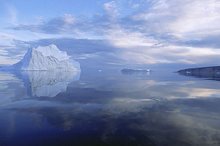
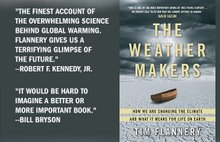
1. GLOBAL STEWARDSHIP: In our view, the lead issue here is Climate Change (May, October), which is already displacing some of the world’s vulnerable populations, and ultimately threatening life on this planet. This is followed closely by global food security (February) and displacement by rich countries of grain for use as automotive fuel, thereby creating pressure on its use in food in developing countries, and even the price of food in developed ones, impacting on access and affordability. Flowers: to the European Community for its global leadership on climate. Fertilizer: To Canada’s Conservative government which has set the world’s worst example of procrastination on climate.
Note: At the recently concluded UN Climate Summit in Bali, Canada received a “Fossil Award” for its dismal performance on addressing climate change, while the tactics adopted by our Conservative government to undermine the developing global consensus on the need for binding targets now were described by numerous observers as "hypocritical" and “deceitful”.
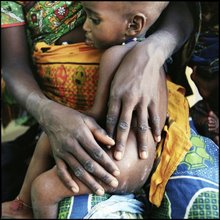
2. INTERNATIONAL DEVELOPMENT: Viewed broadly, we consider the leading issue here to be Maternal & Child Health (April, November). The determinants include gender inequality, global poverty, and insufficient policy and program development at all levels. Even in developed western countries this is an issue: taking our own country Canada as an example, the “new” Conservative government’s reneged on the Kelowna Accord to improve conditions for aboriginals, and failed to ensure an adequate child care platform (March, April). Further, with the exception of the Nordic nations, official development assistance from wealthy developed countries is still far less than targets agreed decades ago. Flowers: Norway, whose 4.7 million people already contribute almost $4 billion a year to aid developing countries ($850 for each Norwegan man, woman and child). Fertilizer: The powerful G7 nations for allocating proportionally less Gross National Income (GNI) for international development: 0.30%, compared with .50% for non-G7 nations.
3. HUMAN RIGHTS ABUSES: Still topping the list continues to be the War in Iraq (January, August). Primary responsibility is shared between the Bush and Blair regimes (not equally) for promoting false rumours of weapons of mass destruction, unsupported by UN inspections led by Hans Blix. While insurgents share responsibility for the mayhem and catastrophe, the end results include over half a million Iraqis killed (a genocide?), massive numbers of refugees, and the undermining of Geneva Conventions that were born out of the worst excesses of World War 2. Flowers: Pastor Martin Niemoller (1892-1984). Fertilizer: George Bush (most dangerous US President in history).
Historical Notes:
1) For a revealing 2003 interview of Hans Blix, visit: http://www.truthout.org/docs_03/041203A.shtml
2) For an October 2006 update on JHU estimates of Iraqi deaths: http://www.jhsph.edu/publichealthnews/press_releases/2006/burnham_iraq_2006.html
2007 AS WE RECORDED IT:
January: PEACE, SECURITY, HEALTH & HUMAN RIGHTS: In our first issue of 2007, we took note of the incoming UN Secretary General Ban Ki-moon, acknowledging the immense contribution of former Secretary-General Kofi Annan, focused on war and peace in the Middle East, and completed the transfer of reports and commentaries from our News & Reports site (as announced in our December 2006 posting).
February: GLOBAL FOOD SECURITY – A MATTER OF SURVIVAL: In 1996, the World Food Summit set a target to halve the number of undernourished people by 2015. However, in 2007, it appears unlikely that this target will be met. This issue focused on the conflict between grain for fuel or for food, the stalled Doha round, and food security.
March: COLONIZED MINORITIES IN DEVELOPED COUNTRIES: Colonized racial, cultural or religious minorities exist throughout the world, within powerful societies eg., Tibet in China, Japan's Ainu, India's Dalits, Amerindian enclaves in the Caribbean, tribal minorities in Africa, Boznian Muslims, the Kurds of Iraq, others in all continents and among the Pacific islands. The issues apply to several economically advanced western countries where it is sometimes said that one may find “3rd world conditions in 1st world settings”. Because these countries claim leadership for human rights, they also must live up to these principles.
April: EARLY CHILD DEVELOPMENT – POLICY SHIFTS, GLOBAL VIEWPOINTS, AND THE EVIDENCE BASE: This issue focused on Canadian policy shifts of global interest. Sadly, Canada’s reputation for enlightened social policy is being undermined by a neo-conservative ideology. Over a million Canadian children live in poverty and cannot access child care. In support of child-friendly interventions, we included evidence reviewed by the US-based RAND Corporation showing that childhood intervention programs yield benefits in behavior, educational progression and attainment, delinquency and crime, and labor market success, among other domains.
May: CLIMATE CHANGE, KYOTO ACCORD, EUROPE RESPONDS & CANADA REMAINS CHALLENGED: The European Community (EU) takes Climate Change seriously, and is making progress towards its Kyoto targets. On April 26, 2007, Canada’s Conservative government released its first “climate-change plan”. Despite Canada leading the world in reducing ozone destroying chlorofluoro-carbons (Montreal Protocol 1987), signing the Kyoto Protocol (1997), and hosting its ratification (2005), this plan is incapable of meeting Canada’s Kyoto targets. Ranked 27th of 29 by the OECD on Greenhouse Gas (GHG) emissions, Canada remains among the most environmentally delinquent industrialized countries.
June: OFFICIAL DEVELOPMENT ASSISTANCE & GLOBAL HEALTH TRENDS: This issue reviews the vexing issue of development assistance from wealthy developed countries such as Canada, references a report on global social and economic trends, then selects reports from a discipline essential to understanding global health trends: Health Situation Analysis. Selected examples included Africa, the State of the World Children, and Projections of Mortality and Burden of Disease to 2030.
July: CELEBRATING THE AFRICAN MEDICAL AND RESEARCH FOUNDATION: In 1957, three surgeons in Kenya had a vision that could revolutionize health care in Africa. They launched a Flying Doctor Service (FDS). Over the next 5 decades, men set foot on the moon, satellites explored our solar system, the universe was probed with powerful orbital telescopes, robots explored the surface of Mars, and shuttles began servicing an international space station. In the meantime, with poverty and ill-health still pervading the planet, FDS became Africa’s largest indigenous health organization: the African Medical and Research Foundation.
August: FIRST THEY CAME... VIGNETTES IN THE DISMANTLING OF DEMOCRATIC MYTHS: In this issue we offered a selection of extracts from reputable sources that focus on the disastrous trajectory of the current US administration in undermining the beliefs that underpin western democracies. We dedicate the issue to Pastor Martin Niemoller (1892–1984), whose famous poem “First they came…” about the inactivity of German intellectuals during the Nazi rise to power and the subsequent purging of their chosen targets, group by group, most devastatingly to German Jews.
September: THIRD WORLD AID TO FIRST WORLD COUNTRIES: This issue featured the "brain drain" from sub-Saharan Africa, citing a report from Juan Ramos of ProCOR (website listed in sidebar). Practical responses re examined: striving for better compensation for indigenous health professionals, attention to policies that determine recruitment and retention of health professions in low income countries, fixing the ethics of western firms that raid poor countries to meet the service demands of rich ones, and finding ways to compensate third world "donor" countries for their loss of human resources. Through official inaction, "first world" countries benefit from a massive subsidy from the "third world", equal to the direct and indirect costs of their investment in this health human resource, and the opportunity costs entailed by its loss.
October: IS CLIMATE CHANGE AN ACT OF AGRESSION?: In this issue we abstracted an article carried by The Economist (on-line Sept 24th, 2007) that reported on Ugandan President, Yoweri Museveni's declaration that climate change is an act of aggression by the rich world against the world’s poor. We also noted a statement from the Church World Service (CWS): "The issue... is how climate change frames development and justice", said Rajyashri Waghray, CWS director, education & advocacy.
For stark contrast we noted Canada’s uncertain posture, quoting from a Globe and Mail Editorial (September 26): “Prime Minister Stephen Harper’s progress from a climate-change skeptic to an environmental convert has been a perplexing odyssey. After a half-hearted attempt to tackle greenhouse-gas emissions late last year, his Conservative government hurriedly introduced new regulations and incentives, which made a good start in fostering reductions. Earlier…(in September), in Australia, he even announced his personal commitment to ‘careful environmental stewardship’. That seemed heartfelt. Now it is fair to question the sincerity of that conversion. On… (Sept 24), at a UN climate change conference aimed at saving the Kyoto Protocol, Mr Harper announced that Canada had asked to join a rival climate-change pact, the Asia-Pacific Partnership. The six members of that pact include nations that have refused to ratify the protocol, such as the United States, and others among the world’s worst polluters, such as India and China. Together they account for nearly half of all greenhouse gas emissions”.
November: MATERNAL MORTALITY: WHAT DO SOUTH ASIA, THE UNITED STATES, AND AFRICA SHARE?: Maternal Mortality represents the largest rich-poor disparity tracked by the World Health Organization. On the heels of a study released by the United Nations (UN), the Women Deliver Global Conference in London, 18-20 October, assessed high levels of maternal mortality round the world. Little progress has been made in reducing maternal deaths in many countries. Areas of major focus were South Asia, parts of Africa, and even the United States, as it lags the developed world in its maternal health performance. The conference was supported by non-governmental, intergovernmental and development agencies as well as private sector and philanthropic entities aiming to create the political will to improve the health of pregnant mothers and their children, and to strengthen health systems around the world to prevent the deaths during pregnancy or childbirth of "one woman every minute of every day ".
“The eradication of poverty and hunger… cannot be achieved if questions of population and reproductive health are not addressed”. Kofi Annan
HOLIDAY GREETINGS: We extend to readers our best wishes for the holiday season and the New Year. We hope you found our selections during 2007 thought provoking and factually informative, and that you will continue to monitor this report.
Showing posts with label Colonized minorities. Show all posts
Showing posts with label Colonized minorities. Show all posts
Saturday, 15 December 2007
Thursday, 1 March 2007
Global and Local Perspectives on Colonized Minorities in Developed Countries
PREAMBLE: Colonized racial, cultural or religious minorities exist throughout the world, and are to be found nested within powerful societies. For examples, consider Tibet now within China, the Ainu of Japan, the Dalits of India, Amerindian enclaves in the Caribbean, tribal minorities in Africa, Boznian Muslims in former Yugoslavia, the Kurds of Iraq, others in all continents and among the Pacific islands. In choosing to highlight the situation of indigenous minorities in western industrialized countries, our example is Canada only because this is our home base. The issues here apply to several economically advanced western countries where it is sometimes said that one may find “3rd world conditions in 1st world settings”. Because these countries claim leadership for human rights, they also must live up to these principles.
[For a flavour of Canadian politics, scan column at right.]
GLOBAL PERSPECTIVE ON COLONIZED MINORITIES
“Continuing disparities between the health of indigenous people and the non-indigenous settlers of Australia, Canada, New Zealand and the United States … is a matter of major concern within each country. In each country the legacies of colonial dispossession, land alienation, forcible relocation, suppression of indigenous cultural practices, values and beliefs, loss of language, disruption of families, violations of indigenous inherent sovereignty and right to self-determination, treaties, international law and indigenous cultural law, and other factors, have resulted in indigenous peoples experiencing a deplorable health status compared to non-indigenous settlers.”
Source: International Network of Indigenous Health Knowledge and Development http://www.inihkd.org/ Accessed Feb 4, 2007
LOCAL PERSPECTIVES - CANADA’S FIRST NATIONS PEOPLE
Education: 44% of Aboriginal people aged 20-24 lack high school education, compared to 19% for Canada as a whole. Only 23% of Aboriginals aged 18-29 had completed post secondary education, compared to 43% in the rest of Canada.
Health: Infant mortality 20% higher than Canada; Type 2 diabetes 3 times more frequent; Suicide 3 to 11 times more frequent.
Housing: On-reserve, the estimated shortage is 20 to 35,000 units, and growing by 2,200 units per year. Off-reserve, the housing need is 76% higher than non-Aboriginal households. In northern Canada, housing needs are 130% higher.
Economic Opportunities: The unemployment rate among Aboriginal peoples is 19.1%,; the national rate is 7.4%. On reserves, unemployment is about 29%. Median employment income is two-thirds of the average for non-Aboriginal Canadians.
Reference: Government of Canada - Background information for the Kelowna Accord.http://www.pco.gc.ca/default.asp?Language=E&Page=archivemartin&Sub=newscommuniques&Doc=news_release_20051125_661_e.htm
The KELOWNA ACCORD – a 2-Act Play or a 3-Act Play?
“Act 1”– A New Beginning
The Kelowna Accord (Nov 25, 2005) seemingly bound the Canadian government, provincial governments, and Canada’s First Nations to invest $5.1 billion over 5 years to close the gap between Aboriginal and other Canadians in education, health, housing and opportunities.[1] An operational plan contained 5-year targets over 10-years to ensure focused and accountable actions. Former Prime Minister Paul Martin acknowledged the Assembly of First Nations for taking the important step of proposing the establishment of a First Nations Auditor General and an Ombudsman.[2] He stated: "With this plan, we have made an important step forward in honouring our commitment to close the gap in the quality of life that now exists between Aboriginal peoples and other Canadians."[1]
“Act 2” - Another Broken Promise
Despite this promising start, on gaining power in January 2006, a new minority federal Conservative government (receiving only 36% of the popular vote) reneged, ostensibly because the Accord had not yet found its way into the federal budget, the election having intervened. Their own budget (despite a big surplus) cut the initiative by 80%, the residue going to a limited number of programs and housing provisions. Reflecting public opinion across the country, mostly favouring the Accord, the BC First Nations Leadership Council released an open letter to Prime Minister Stephen Harper, Hon. Jim Flaherty, Minister of Finance and Hon. Jim Prentice, Minister of Indian Affairs and Northern Development.[3] B.C. provincial Premier Gordon Campbell, at an inter-ministerial meeting, stated: "… the least that any Canadian can expect is when a government makes a commitment of resources, that those resources are going to flow."[4]
“Act 3” – Will there be one?
The Harper government will launch a new federal budget on March 19. Although there have been no statements to indicate a change in thinking that would reflect renewed respect for the Accord, this may be the last real opportunity for the “new” government to act in good faith towards it.
References: 1. Privy Council Office. Government of Canada. Press Release Nov 25, 2006http://www.pco.gc.ca/default.asp?Language=E&Page=archivemartin&Sub=newscommuniques&Doc=news_release_20051125_661_e.htm
2. Patterson LL. Aboriginal roundtable to Kelowna Accord: policy negotiations 2004-5. May 2006 http://www.parl.gc.ca/information/library/PRBpubs/prb0604-e.htm
3. Union of BC Indian Chiefs. Open Letter to Prime Minister Stephen Harper, Hon. Jim Flaherty, Minister of Finance and Hon. Jim Prentice, Minister of Indian Affairs and Northern Development. May 4, 2006. http://www.ubcic.bc.ca/files/PDF/FNLC_NR_2006FedBudget_openletter.pdf
4. Aboriginal leaders seek to revive Kelowna Accord. Canadian Press. July 26 2006 . http://www.ctv.ca/servlet/ArticleNews/story/CTVNews/20060725/aboriginal_mtg_060725/20060726?hub=Canada&s_name=
EDITORIAL COMMENT: Although our "new" government (when viewed from a politically Conservative perspective) may well have the best interests of Canada at heart, there is no doubt that the initial excuse not to implement the Kelowna Accord is no longer valid. About to launch a new budget in March, with a massive surplus in hand (thanks to a continuing strong economy), if the Conservatives do not now address the intent of the Accord at proper scale, this will confirm a steady drift to the political right, consistent with odd examples of out-dated thinking expressed on behalf of this regime (see: review of Canadian political flavours in column at right). It is therefore both timely and critical for Stephen Harper to show leadership on the situation facing aboriginal Canadians, and to emerge from the current policy fog as a Prime Minister for all Canadians. We will monitor the situation and comment further after the budget.
[For a flavour of Canadian politics, scan column at right.]
GLOBAL PERSPECTIVE ON COLONIZED MINORITIES
“Continuing disparities between the health of indigenous people and the non-indigenous settlers of Australia, Canada, New Zealand and the United States … is a matter of major concern within each country. In each country the legacies of colonial dispossession, land alienation, forcible relocation, suppression of indigenous cultural practices, values and beliefs, loss of language, disruption of families, violations of indigenous inherent sovereignty and right to self-determination, treaties, international law and indigenous cultural law, and other factors, have resulted in indigenous peoples experiencing a deplorable health status compared to non-indigenous settlers.”
Source: International Network of Indigenous Health Knowledge and Development http://www.inihkd.org/ Accessed Feb 4, 2007
LOCAL PERSPECTIVES - CANADA’S FIRST NATIONS PEOPLE
Education: 44% of Aboriginal people aged 20-24 lack high school education, compared to 19% for Canada as a whole. Only 23% of Aboriginals aged 18-29 had completed post secondary education, compared to 43% in the rest of Canada.
Health: Infant mortality 20% higher than Canada; Type 2 diabetes 3 times more frequent; Suicide 3 to 11 times more frequent.
Housing: On-reserve, the estimated shortage is 20 to 35,000 units, and growing by 2,200 units per year. Off-reserve, the housing need is 76% higher than non-Aboriginal households. In northern Canada, housing needs are 130% higher.
Economic Opportunities: The unemployment rate among Aboriginal peoples is 19.1%,; the national rate is 7.4%. On reserves, unemployment is about 29%. Median employment income is two-thirds of the average for non-Aboriginal Canadians.
Reference: Government of Canada - Background information for the Kelowna Accord.http://www.pco.gc.ca/default.asp?Language=E&Page=archivemartin&Sub=newscommuniques&Doc=news_release_20051125_661_e.htm
The KELOWNA ACCORD – a 2-Act Play or a 3-Act Play?
“Act 1”– A New Beginning
The Kelowna Accord (Nov 25, 2005) seemingly bound the Canadian government, provincial governments, and Canada’s First Nations to invest $5.1 billion over 5 years to close the gap between Aboriginal and other Canadians in education, health, housing and opportunities.[1] An operational plan contained 5-year targets over 10-years to ensure focused and accountable actions. Former Prime Minister Paul Martin acknowledged the Assembly of First Nations for taking the important step of proposing the establishment of a First Nations Auditor General and an Ombudsman.[2] He stated: "With this plan, we have made an important step forward in honouring our commitment to close the gap in the quality of life that now exists between Aboriginal peoples and other Canadians."[1]
“Act 2” - Another Broken Promise
Despite this promising start, on gaining power in January 2006, a new minority federal Conservative government (receiving only 36% of the popular vote) reneged, ostensibly because the Accord had not yet found its way into the federal budget, the election having intervened. Their own budget (despite a big surplus) cut the initiative by 80%, the residue going to a limited number of programs and housing provisions. Reflecting public opinion across the country, mostly favouring the Accord, the BC First Nations Leadership Council released an open letter to Prime Minister Stephen Harper, Hon. Jim Flaherty, Minister of Finance and Hon. Jim Prentice, Minister of Indian Affairs and Northern Development.[3] B.C. provincial Premier Gordon Campbell, at an inter-ministerial meeting, stated: "… the least that any Canadian can expect is when a government makes a commitment of resources, that those resources are going to flow."[4]
“Act 3” – Will there be one?
The Harper government will launch a new federal budget on March 19. Although there have been no statements to indicate a change in thinking that would reflect renewed respect for the Accord, this may be the last real opportunity for the “new” government to act in good faith towards it.
References: 1. Privy Council Office. Government of Canada. Press Release Nov 25, 2006http://www.pco.gc.ca/default.asp?Language=E&Page=archivemartin&Sub=newscommuniques&Doc=news_release_20051125_661_e.htm
2. Patterson LL. Aboriginal roundtable to Kelowna Accord: policy negotiations 2004-5. May 2006 http://www.parl.gc.ca/information/library/PRBpubs/prb0604-e.htm
3. Union of BC Indian Chiefs. Open Letter to Prime Minister Stephen Harper, Hon. Jim Flaherty, Minister of Finance and Hon. Jim Prentice, Minister of Indian Affairs and Northern Development. May 4, 2006. http://www.ubcic.bc.ca/files/PDF/FNLC_NR_2006FedBudget_openletter.pdf
4. Aboriginal leaders seek to revive Kelowna Accord. Canadian Press. July 26 2006 . http://www.ctv.ca/servlet/ArticleNews/story/CTVNews/20060725/aboriginal_mtg_060725/20060726?hub=Canada&s_name=
EDITORIAL COMMENT: Although our "new" government (when viewed from a politically Conservative perspective) may well have the best interests of Canada at heart, there is no doubt that the initial excuse not to implement the Kelowna Accord is no longer valid. About to launch a new budget in March, with a massive surplus in hand (thanks to a continuing strong economy), if the Conservatives do not now address the intent of the Accord at proper scale, this will confirm a steady drift to the political right, consistent with odd examples of out-dated thinking expressed on behalf of this regime (see: review of Canadian political flavours in column at right). It is therefore both timely and critical for Stephen Harper to show leadership on the situation facing aboriginal Canadians, and to emerge from the current policy fog as a Prime Minister for all Canadians. We will monitor the situation and comment further after the budget.


Subscribe to:
Posts (Atom)