LATE BREAKER: For a thought-provoking critical analysis of what the Bhutto assassination on December 27 means for Pakistan and the "war on terror", see the new addition in our sidebar.
PREAMBLE: This issue also completes our first full year of blogging. Drawing from topics covered during the year, we offer below: overviews views on three major issues for humankind, followed by paraphrases from our monthly themes in 2007.
THREE LEADING ISSUES FROM 2007: Flowers or Fertilizer?
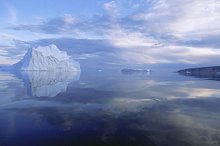
1. GLOBAL STEWARDSHIP: In our view, the lead issue here is Climate Change (May, October), which is already displacing some of the world’s vulnerable populations, and ultimately threatening life on this planet. This is followed closely by global food security (February) and displacement by rich countries of grain for use as automotive fuel, thereby creating pressure on its use in food in developing countries, and even the price of food in developed ones, impacting on access and affordability. Flowers: to the European Community for its global leadership on climate. Fertilizer: To Canada’s Conservative government which has set the world’s worst example of procrastination on climate.
Note: At the recently concluded UN Climate Summit in Bali, Canada received a “Fossil Award” for its dismal performance on addressing climate change, while the tactics adopted by our Conservative government to undermine the developing global consensus on the need for binding targets now were described by numerous observers as "hypocritical" and “deceitful”.
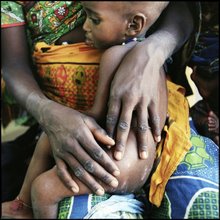
2. INTERNATIONAL DEVELOPMENT: Viewed broadly, we consider the leading issue here to be Maternal & Child Health (April, November). The determinants include gender inequality, global poverty, and insufficient policy and program development at all levels. Even in developed western countries this is an issue: taking our own country Canada as an example, the “new” Conservative government’s reneged on the Kelowna Accord to improve conditions for aboriginals, and failed to ensure an adequate child care platform (March, April). Further, with the exception of the Nordic nations, official development assistance from wealthy developed countries is still far less than targets agreed decades ago. Flowers: Norway, whose 4.7 million people already contribute almost $4 billion a year to aid developing countries ($850 for each Norwegan man, woman and child). Fertilizer: The powerful G7 nations for allocating proportionally less Gross National Income (GNI) for international development: 0.30%, compared with .50% for non-G7 nations.
3. HUMAN RIGHTS ABUSES: Still topping the list continues to be the War in Iraq (January, August). Primary responsibility is shared between the Bush and Blair regimes (not equally) for promoting false rumours of weapons of mass destruction, unsupported by UN inspections led by Hans Blix. While insurgents share responsibility for the mayhem and catastrophe, the end results include over half a million Iraqis killed (a genocide?), massive numbers of refugees, and the undermining of Geneva Conventions that were born out of the worst excesses of World War 2. Flowers: Pastor Martin Niemoller (1892-1984). Fertilizer: George Bush (most dangerous US President in history).
Historical Notes:
1) For a revealing 2003 interview of Hans Blix, visit: http://www.truthout.org/docs_03/041203A.shtml
2) For an October 2006 update on JHU estimates of Iraqi deaths: http://www.jhsph.edu/publichealthnews/press_releases/2006/burnham_iraq_2006.html
2007 AS WE RECORDED IT:
January: PEACE, SECURITY, HEALTH & HUMAN RIGHTS: In our first issue of 2007, we took note of the incoming UN Secretary General Ban Ki-moon, acknowledging the immense contribution of former Secretary-General Kofi Annan, focused on war and peace in the Middle East, and completed the transfer of reports and commentaries from our News & Reports site (as announced in our December 2006 posting).
February: GLOBAL FOOD SECURITY – A MATTER OF SURVIVAL: In 1996, the World Food Summit set a target to halve the number of undernourished people by 2015. However, in 2007, it appears unlikely that this target will be met. This issue focused on the conflict between grain for fuel or for food, the stalled Doha round, and food security.
March: COLONIZED MINORITIES IN DEVELOPED COUNTRIES: Colonized racial, cultural or religious minorities exist throughout the world, within powerful societies eg., Tibet in China, Japan's Ainu, India's Dalits, Amerindian enclaves in the Caribbean, tribal minorities in Africa, Boznian Muslims, the Kurds of Iraq, others in all continents and among the Pacific islands. The issues apply to several economically advanced western countries where it is sometimes said that one may find “3rd world conditions in 1st world settings”. Because these countries claim leadership for human rights, they also must live up to these principles.
April: EARLY CHILD DEVELOPMENT – POLICY SHIFTS, GLOBAL VIEWPOINTS, AND THE EVIDENCE BASE: This issue focused on Canadian policy shifts of global interest. Sadly, Canada’s reputation for enlightened social policy is being undermined by a neo-conservative ideology. Over a million Canadian children live in poverty and cannot access child care. In support of child-friendly interventions, we included evidence reviewed by the US-based RAND Corporation showing that childhood intervention programs yield benefits in behavior, educational progression and attainment, delinquency and crime, and labor market success, among other domains.
May: CLIMATE CHANGE, KYOTO ACCORD, EUROPE RESPONDS & CANADA REMAINS CHALLENGED: The European Community (EU) takes Climate Change seriously, and is making progress towards its Kyoto targets. On April 26, 2007, Canada’s Conservative government released its first “climate-change plan”. Despite Canada leading the world in reducing ozone destroying chlorofluoro-carbons (Montreal Protocol 1987), signing the Kyoto Protocol (1997), and hosting its ratification (2005), this plan is incapable of meeting Canada’s Kyoto targets. Ranked 27th of 29 by the OECD on Greenhouse Gas (GHG) emissions, Canada remains among the most environmentally delinquent industrialized countries.
June: OFFICIAL DEVELOPMENT ASSISTANCE & GLOBAL HEALTH TRENDS: This issue reviews the vexing issue of development assistance from wealthy developed countries such as Canada, references a report on global social and economic trends, then selects reports from a discipline essential to understanding global health trends: Health Situation Analysis. Selected examples included Africa, the State of the World Children, and Projections of Mortality and Burden of Disease to 2030.
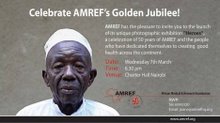
July: CELEBRATING THE AFRICAN MEDICAL AND RESEARCH FOUNDATION: In 1957, three surgeons in Kenya had a vision that could revolutionize health care in Africa. They launched a Flying Doctor Service (FDS). Over the next 5 decades, men set foot on the moon, satellites explored our solar system, the universe was probed with powerful orbital telescopes, robots explored the surface of Mars, and shuttles began servicing an international space station. In the meantime, with poverty and ill-health still pervading the planet, FDS became Africa’s largest indigenous health organization: the African Medical and Research Foundation.
August: FIRST THEY CAME... VIGNETTES IN THE DISMANTLING OF DEMOCRATIC MYTHS: In this issue we offered a selection of extracts from reputable sources that focus on the disastrous trajectory of the current US administration in undermining the beliefs that underpin western democracies. We dedicate the issue to Pastor Martin Niemoller (1892–1984), whose famous poem “First they came…” about the inactivity of German intellectuals during the Nazi rise to power and the subsequent purging of their chosen targets, group by group, most devastatingly to German Jews.
September: THIRD WORLD AID TO FIRST WORLD COUNTRIES: This issue featured the "brain drain" from sub-Saharan Africa, citing a report from Juan Ramos of ProCOR (website listed in sidebar). Practical responses re examined: striving for better compensation for indigenous health professionals, attention to policies that determine recruitment and retention of health professions in low income countries, fixing the ethics of western firms that raid poor countries to meet the service demands of rich ones, and finding ways to compensate third world "donor" countries for their loss of human resources. Through official inaction, "first world" countries benefit from a massive subsidy from the "third world", equal to the direct and indirect costs of their investment in this health human resource, and the opportunity costs entailed by its loss.
October: IS CLIMATE CHANGE AN ACT OF AGRESSION?: In this issue we abstracted an article carried by The Economist (on-line Sept 24th, 2007) that reported on Ugandan President, Yoweri Museveni's declaration that climate change is an act of aggression by the rich world against the world’s poor. We also noted a statement from the Church World Service (CWS): "The issue... is how climate change frames development and justice", said Rajyashri Waghray, CWS director, education & advocacy.
For stark contrast we noted Canada’s uncertain posture, quoting from a Globe and Mail Editorial (September 26): “Prime Minister Stephen Harper’s progress from a climate-change skeptic to an environmental convert has been a perplexing odyssey. After a half-hearted attempt to tackle greenhouse-gas emissions late last year, his Conservative government hurriedly introduced new regulations and incentives, which made a good start in fostering reductions. Earlier…(in September), in Australia, he even announced his personal commitment to ‘careful environmental stewardship’. That seemed heartfelt. Now it is fair to question the sincerity of that conversion. On… (Sept 24), at a UN climate change conference aimed at saving the Kyoto Protocol, Mr Harper announced that Canada had asked to join a rival climate-change pact, the Asia-Pacific Partnership. The six members of that pact include nations that have refused to ratify the protocol, such as the United States, and others among the world’s worst polluters, such as India and China. Together they account for nearly half of all greenhouse gas emissions”.
November: MATERNAL MORTALITY: WHAT DO SOUTH ASIA, THE UNITED STATES, AND AFRICA SHARE?: Maternal Mortality represents the largest rich-poor disparity tracked by the World Health Organization. On the heels of a study released by the United Nations (UN), the Women Deliver Global Conference in London, 18-20 October, assessed high levels of maternal mortality round the world. Little progress has been made in reducing maternal deaths in many countries. Areas of major focus were South Asia, parts of Africa, and even the United States, as it lags the developed world in its maternal health performance. The conference was supported by non-governmental, intergovernmental and development agencies as well as private sector and philanthropic entities aiming to create the political will to improve the health of pregnant mothers and their children, and to strengthen health systems around the world to prevent the deaths during pregnancy or childbirth of "one woman every minute of every day ".
“The eradication of poverty and hunger… cannot be achieved if questions of population and reproductive health are not addressed”. Kofi Annan
HOLIDAY GREETINGS: We extend to readers our best wishes for the holiday season and the New Year. We hope you found our selections during 2007 thought provoking and factually informative, and that you will continue to monitor this report.
Showing posts with label security. Show all posts
Showing posts with label security. Show all posts
Saturday, 15 December 2007
Monday, 1 January 2007
Peace, Security, Health & Human Rights
PREAMBLE: In our first issue of 2007, we take note of the new UN Secretary General, focus on war and peace in the Middle East, and complete the transfer of reports and commentaries from our News & Reports site (as announced in our December posting).
KOFI ANNAN ADMINISTERS OATH OF OFFICE TO SUCCESSOR Statement by Secretary-General-Designate (synopsis)
United Nations Secretary-General-designate Ban Ki-moon, of South Korea, stood before the world’s nations mindful of the oath he had just taken and that the sentiments, loyalty, discretion and conscience, together with the principles of the Charter, would be his watchwords as he carried out his duties. He told Mr. Annan: “Your courage and vision have inspired the world” and stated that "by strengthening the three pillars of the UN, security, development and human rights, the UN family could build a more peaceful and prosperous world for future generations."
December 14, 2006 http://www.maximsnews.com/1006mnundecember29333.htm
FOCUS ON IRAQ & PALESTINE .............................................
THE HUMAN COST OF THE WAR IN IRAQ: A survey led by the Bloomberg School of Public Health, Johns Hopkins University, reveals that approximately 600,000 people have been killed in violence that began with the US invasion of Iraq in March 2003. http://www.stat.columbia.edu/~gelman/stuff_for_blog/iraq1.pdf
PRESIDENT FORD DISAGREED ON THE INVASION: In an embargoed 2004 interview (publishable only after his death on December 26, 2006) Ford revealed that he believed that President Bush, Vice President Cheney and Secretary Rumsfeld erred in justifying the war as one aimed at eliminating Saddam Hussein’s weapons of mass destruction and said he would have pushed alternatives, such as sanctions, much more vigorously.
http://www.washingtonpost.com/wp-dyn/content/article/2006/12/27/AR2006122701558.html
INVESTORS PROFIT: War is a disaster, but not for Lockheed Martin (LM). The world’s largest arms merchant (F-16 fighters, Patriot missiles, radar, satellites) turns mayhem into money. For the first 9 months of 2006, revenues rose 7% to $28.78 billion and profit jumped 43% to $1.8 billion (US taxpayers foot the bill), creating shock and awe on Wall Street. Like other firms that profit from conflict, LM claims “We are a company that values ethics, integrity, teamwork, and pursues superior performance”.
Adapted from: John Heinzl, Globe and Mail, December 30, 2006.
Book Review: PALESTINE - PEACE NOT APARTHEID: This book offers a critical analysis of the crisis in Palestine and Israel. It is unique, coming as it does from the 2002 Nobel Peace Prize awardee, former US President Jimmy Carter, who states: "Peace will come to Israel and the Middle East only when the Israeli government is willing to comply with international law, with the Roadmap for Peace, with official American policy, with the wishes of a majority of its own citizens - and honor its own previous commitments - by accepting its legal borders. All Arab neighbors must pledge to honor Israel's right to live in peace under these conditions." Highly recommended. For negative views, visit: http://blog.washingtonpost.com/worldopinionroundup/2006/12/jimmy_carter_palestinian_sympa.html
CAN INTERNATIONAL PUBLIC HEALTH LAW HELP PREVENT WAR? This question was posed during the lead up to the invasion of Iraq, in the belief that prevention of war (the ultimate violence) is one of the most critical steps mankind can make to protect public health. Given the serious potential for future premeditated wars in our times, there is value in revisiting this idea: http://www.who.int/bulletin/volumes/81/3/Letter0303.pdf
FOCUS ON AFRICA .............................................
A TASTE OF REALITY - African Medical and Research Foundation (AMREF): For Africa's health realities, offers a Film Catalogue with such titles as: Gulu, TV-Slum, Speak Africa, Baba Mandela, & Big Brother AIDS. To access AMREF, winner of the 2005 Gates Award for Global Health, see AMREF’s link in column at right (Recommended Global Links).
Book Review: COMMISSION ON AFRICA REPORT: This report, chaired by Tony Blair, calls for G8 nations to end extreme poverty in the world's most desperate continent. Reference: Our Common Interest - The Commission for Africa: an argument. Penguin 2005. For the full report and background document visit the relevant link in column at right.
Book Review: BODY COUNT: Not to be confused with a novel of this title, this documents how the Bush Administration, allied with the Christian Right, joined the Vatican to promote abstinence as the preferred strategy for the HIV/AIDS pandemic, and how some African leaders fell in line, denying life-saving drugs while drug companies moved to protect patent rights and profits. Reference: Peter Gill. Body Count - how they turned AIDS into a catastrophe. Profile Books. London 2006. ISBN-10 1 86197 923 1.
COMMENTARIES .....................................................
MAKING MARKETS WORK FOR THE POOR - CARE Canada's Approach: While a strong civil society and public sector infrastructures are essential for social development, international cooperation increasingly embraces stimulation of a vibrant private sector. Visit the relevant link in column at right.
FIRST WORLD CONCERNS - GDP: A POOR MEASUREMENT OF GROWTH: GDP, widely imagined to measure prosperity, is misleading as it does not reflect wealth disparities, and may rise even as fortunes of middle and lower income people falter.
http://www.sightline.org/publications/enewsletters/CSNews/CS_10_05_economy
THANKS FOR VISITING PacificSci GLOBAL PERSPECTIVES!


Subscribe to:
Posts (Atom)