FROM a Great Canadian and World Statesman

"A great gulf... has... opened between man's material advance and his social and moral progress, a gulf in which he may one day be lost if it is not closed or narrowed..." Lester B Pearson http://nobelprize.org/nobel_prizes/peace/laureates/1957/pearson-lecture.html
Showing posts with label policy. Show all posts

Sunday, 15 September 2013

New Publication: A GLOBAL REVIEW OF PUBLIC HEALTH EDUCATION & CAPACITY BUILDING

PREAMBLE: This month we bring to your attention a comprehensive review by Franklin White, on the topic of “The Imperative of Public Health Education: A Global Perspective.”  

Published in the peer reviewed journal Medical Principles and Practice, this full text article is available on-line free of charge at http://www.karger.com/Article/FullText/354198

The abstract as published on PubMed (US National Library of Medicine), now follows:

ABSTRACT:  White F. The Imperative of Public Health Education: A Global Perspective. Med Princ Pract 2013 August 21 [Epub ahead of print] 

This review positions public health as an endeavour that requires a high order of professionalism in addressing the health of populations; this requires investment in an educational capacity that is designed to meet this need. In the global context, the field has evolved enormously over the past half century, supported by institutions such as the World Bank, the World Health Organization and the Institute of Medicine. Operational structures are formulated by strategic principles, with educational and career pathways guided by competency frameworks, all requiring modulation according to local, national and global realities. Talented and well-motivated individuals are attracted by its multidisciplinary and transdisciplinary environment, and the opportunity to achieve interventions that make real differences to people's lives. The field is globally competitive and open to many professional backgrounds based on merit. Its competencies correspond with assessments of population needs, and the ways in which strategies and services are formulated. Thus, its educational planning is needs-based and evidence-driven. This review explores four public health education levels: graduate, undergraduate, continuing professional education and promotion of health literacy for general populations. The emergence of accreditation schemes is examined, focusing on their relative merits and legitimate international variations. The role of relevant research policies is recognized, along with the need to foster professional and institutional networks in all regions of the world. It is critically important for the health of populations that nations assess their public health human resource needs and develop their ability to deliver this capacity, and not depend on other countries to supply it. © 2013 S. Karger AG, Basel.

Full Reference and Link to article: White F. The Imperative of Public Health Education: A Global Perspective. Med Princ Pract 2013 August 21 DOI: 10.1159/000354198 [Epub ahead of print] http://www.karger.com/Article/FullText/354198

Note: One of the most comprehensive reviews of its type (15 journal pages), its observations should be of relevance to institutional capacity building for public health education in all global regions. Citing over 70 references, the work is a by-product of reviews carried out in support of public health educational development at Kuwait University; it also draws insights from an extensive international career in public health (see Wikipedia entry for Franklin White: http://en.wikipedia.org/wiki/Franklin_White).

Thursday, 14 August 2008

SELECTED WEB RESOURCES ON GLOBAL HEALTH with an acknowledgement to ProCOR

PREAMBLE: This issue highlights some of the work of an organization we respect for its efforts to bring together a virtual community of health professionals from around the world. ProCOR is devoted to examining health and related social issues of relevance to developing countries, with particular reference to cardiovascular diseases. ProCor's monthly "Resource Update" (edited by Juan Ramos) highlights relevant materials. A recent Resource Update on ProCOR listed a number of websites that offer valuable information about health and/or health resources around the world. The following are selected from this list in order to further disseminate ProCOR’s efforts in this regard, as well as to draw attention to the health communications work of ProCOR:

For more information about ProCOR itself, visit their website at: http://www.procor.org/ For other sites that we regularly recommend, see column at right for “Recommended Global Links”.

- SELECTED WEB RESOURCES ON GLOBAL HEALTH -
African Network for Health Knowledge Management and Communication: Agency that explores harnessing modern information and communication technologies (ICTs) for community health and development in Africa. http://www.afriafya.org/

Books for Africa: Organization that distributes medical and nursing textbooks to 18 African countries. http://www.booksforafrica.org/

Challenges and successes in reducing health disparities - Workshop summary: Textbook summary of a workshop on challenges and successes in reducing health disparities held on 31 July 2007 in St. Louis, Missouri, USA. Entire textbook is available free online. National Academies Press, 2008. http://books.nap.edu/catalog.php?record_id=12154

Community guide to environmental health: Illustrated guide on global crisis in environmental health for health promoters, development workers, educators, activists, and community leaders in rural or urban settings. Materials from the book are available for free download. www.hesperian.org/projects_inProgress_communityGuide.php

Global Health Action: Open access journal of hands-on approaches to global public health challenges. Umeå Centre for Global Health Research. www.co-action.net/journals/gha

Global Smokefree Partnership: Multi-partner initiative to promote effective smoke-free policies worldwide. Helps advocates access evidence, request assistance, and take action in support of smoke-free policies. http://www.globalsmokefree.com/

Growth report - Strategies for sustained growth and inclusive development: Report examining how developing countries can achieve fast, sustained, and equitable growth. International Bank for Reconstruction and Development, 2008. PDF (10.3 MB): www.growthcommission.org/storage/cgdev/documents/Report/GrowthReportfull.pdf

Health and Human Rights: Open access international journal dedicated to advancing health as an issue of fundamental human rights and social justice. http://www.hhrjournal.org/

HIFA2015 website: Advocacy and knowledge-sharing network of 1500 members from 110 countries with the shared goal: Every person worldwide will have access to an informed healthcare provider by 2015. Email discussion group archives available at www.dgroups.org/groups/hifa2015. http://www.hifa2015.org/

International Fruit and Vegetable Alliance: Global alliance that supports efforts to increase intake of fruit and vegetables worldwide. Provides a toolkit for starting a "5 a day" program. http://www.ifava.org/

International research community on multimorbidity: Electronic network focused on research questions relevant to international communication on multimorbidity in primary care. www.med.usherbrooke.ca/cirmo

Libraries, literacy, and poverty reduction - A key to African development: Paper outlining affordable and achievable library strategies for poor communities to promote development. Book Aid International, 2006. PDF (302 KB): www.bookaid.org/resources/downloads/advocacy/Libraries_Literacy_Poverty_Reduction.pdf

MobileActive strategy guide #2: Using mobile phones in advocacy campaignsGuide offering strategies, case studies, lessons learned, and a how-to section for advocacy organizations using mobile phones to advance their causes. Encourages the adoption of mobile phones by NGOs to build constituent lists, influence political causes, and raise money. MobileActive, 2007. PDF (955 KB): http://mobileactive.org/files/MobileActiveGuide2_0.pdf

Primary health care for older people: A participatory study in 5 Asian countriesStudy report on healthy ageing and access to quality primary health care services. Focuses on improving stroke and diabetes management. HelpAge International, 2008.www.helpage.org/News/Latestnews/G61d

Scientists without Borders: Initiative to mobilize and coordinate science-based efforts that improve the quality of life in the developing world. Website homepage provides options for low- or high-bandwidth connection. New York Academy of Sciences. http://scientistswithoutborders.nyas.org/default.aspx

Sharing Knowledge Handbook 2: Handbook for men and women working in villages, towns, and rural areas who wish to transform their communities through information sharing. Oxfam Horn of Africa Capacity Building Program, 2004.www.oxfam.ca/news-and-publications/publications-and-reports/sharing-knowledge-handbook-2

SimIns health financing policy tool 2.1: Computerized tool to aid in health financing policy decisions. Projects health expenditure and funding for a 10-year time period; evaluates feasibility of alternative mixes of financing sources, including social health insurance, community-based health insurance, and government budget lines. WHO, 2008.www.who.int/health_financing/tools/simins

Thomas McKeown, meet Fidel Castro: Physicians, population health and the Cuban paradox: Open access article about Cuba's "first world" population health status despite a minimal economic base. Healthcare Policy/Politiques de Santé 2008; 3(4): 21-32http://www.longwoods.com/product.php?productid=19916

World Diabetes Day materials: Materials for World Diabetes Day, 14 November 2008, available for free download. International Diabetes Federation, 2008.www.worlddiabetesday.org/materials

Monday, 1 January 2007

Peace, Security, Health & Human Rights

PREAMBLE: In our first issue of 2007, we take note of the new UN Secretary General, focus on war and peace in the Middle East, and complete the transfer of reports and commentaries from our News & Reports site (as announced in our December posting).

 KOFI ANNAN ADMINISTERS OATH OF OFFICE TO SUCCESSOR Statement by Secretary-General-Designate (synopsis)
United Nations Secretary-General-designate Ban Ki-moon, of South Korea, stood before the world’s nations mindful of the oath he had just taken and that the sentiments, loyalty, discretion and conscience, together with the principles of the Charter, would be his watchwords as he carried out his duties. He told Mr. Annan: “Your courage and vision have inspired the world” and stated that "by strengthening the three pillars of the UN, security, development and human rights, the UN family could build a more peaceful and prosperous world for future generations."
December 14, 2006 http://www.maximsnews.com/1006mnundecember29333.htm

 FOCUS ON IRAQ & PALESTINE .............................................

THE HUMAN COST OF THE WAR IN IRAQ: A survey led by the Bloomberg School of Public Health, Johns Hopkins University, reveals that approximately 600,000 people have been killed in violence that began with the US invasion of Iraq in March 2003. http://www.stat.columbia.edu/~gelman/stuff_for_blog/iraq1.pdf

PRESIDENT FORD DISAGREED ON THE INVASION: In an embargoed 2004 interview (publishable only after his death on December 26, 2006) Ford revealed that he believed that President Bush, Vice President Cheney and Secretary Rumsfeld erred in justifying the war as one aimed at eliminating Saddam Hussein’s weapons of mass destruction and said he would have pushed alternatives, such as sanctions, much more vigorously.
http://www.washingtonpost.com/wp-dyn/content/article/2006/12/27/AR2006122701558.html

INVESTORS PROFIT: War is a disaster, but not for Lockheed Martin (LM). The world’s largest arms merchant (F-16 fighters, Patriot missiles, radar, satellites) turns mayhem into money. For the first 9 months of 2006, revenues rose 7% to $28.78 billion and profit jumped 43% to $1.8 billion (US taxpayers foot the bill), creating shock and awe on Wall Street. Like other firms that profit from conflict, LM claims “We are a company that values ethics, integrity, teamwork, and pursues superior performance”.
Adapted from: John Heinzl, Globe and Mail, December 30, 2006.

Book Review: PALESTINE - PEACE NOT APARTHEID: This book offers a critical analysis of the crisis in Palestine and Israel. It is unique, coming as it does from the 2002 Nobel Peace Prize awardee, former US President Jimmy Carter, who states: "Peace will come to Israel and the Middle East only when the Israeli government is willing to comply with international law, with the Roadmap for Peace, with official American policy, with the wishes of a majority of its own citizens - and honor its own previous commitments - by accepting its legal borders. All Arab neighbors must pledge to honor Israel's right to live in peace under these conditions." Highly recommended. For negative views, visit: http://blog.washingtonpost.com/worldopinionroundup/2006/12/jimmy_carter_palestinian_sympa.html

CAN INTERNATIONAL PUBLIC HEALTH LAW HELP PREVENT WAR? This question was posed during the lead up to the invasion of Iraq, in the belief that prevention of war (the ultimate violence) is one of the most critical steps mankind can make to protect public health. Given the serious potential for future premeditated wars in our times, there is value in revisiting this idea: http://www.who.int/bulletin/volumes/81/3/Letter0303.pdf

 FOCUS ON AFRICA .............................................

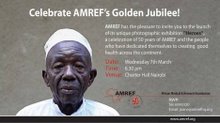
A TASTE OF REALITY - African Medical and Research Foundation (AMREF): For Africa's health realities, offers a Film Catalogue with such titles as: Gulu, TV-Slum, Speak Africa, Baba Mandela, & Big Brother AIDS. To access AMREF, winner of the 2005 Gates Award for Global Health, see AMREF’s link in column at right (Recommended Global Links).

Book Review: COMMISSION ON AFRICA REPORT: This report, chaired by Tony Blair, calls for G8 nations to end extreme poverty in the world's most desperate continent. Reference: Our Common Interest - The Commission for Africa: an argument. Penguin 2005. For the full report and background document visit the relevant link in column at right.

Book Review: BODY COUNT: Not to be confused with a novel of this title, this documents how the Bush Administration, allied with the Christian Right, joined the Vatican to promote abstinence as the preferred strategy for the HIV/AIDS pandemic, and how some African leaders fell in line, denying life-saving drugs while drug companies moved to protect patent rights and profits. Reference: Peter Gill. Body Count - how they turned AIDS into a catastrophe. Profile Books. London 2006. ISBN-10 1 86197 923 1.

 COMMENTARIES .....................................................

MAKING MARKETS WORK FOR THE POOR - CARE Canada's Approach: While a strong civil society and public sector infrastructures are essential for social development, international cooperation increasingly embraces stimulation of a vibrant private sector. Visit the relevant link in column at right.

FIRST WORLD CONCERNS - GDP: A POOR MEASUREMENT OF GROWTH: GDP, widely imagined to measure prosperity, is misleading as it does not reflect wealth disparities, and may rise even as fortunes of middle and lower income people falter.
http://www.sightline.org/publications/enewsletters/CSNews/CS_10_05_economy

THANKS FOR VISITING PacificSci GLOBAL PERSPECTIVES!

INSPIRATIONAL WELCOME ............................... from T.S.Eliot's "Little Gidding"

If you came this way From the place you would come from... It would be the same at the end of the journey... If you came, not knowing what you came for, It would be the same... And what you thought you came for Is only a shell, a husk of meaning... From which the purpose breaks only when it is fulfilled If at all.