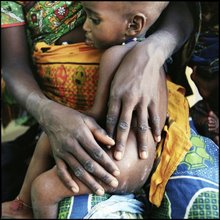
PREAMBLE: Diarrhoea remains the second leading cause of death among children under five globally, surpassed only by pneumonia, the most common cause. Nearly one in five child deaths – about 1.5 million each year – is due to diarrhoea. It kills more young children than AIDS, malaria and measles combined.
PacificSci wishes to draw attention to a recently released joint report from UNICEF and WHO that addresses this perennial global pandemic. Diarrhoeal disease, no longer a scourge in developed countries, attracts comparatively little attention from the international donor community, when compared with conditions such as HIV/AIDS, TB and malaria. And today, the media spotlight has shifted to H1N1 influenza, with little sense of proportionality in terms of continuing real disease burdens globally.
Acknowledgement: The material used in this edition of Global Perspectives is drawn almost verbatim from the Executive Summary of the joint UNICEF/WHO report, as referenced below.
THE REPORT:
In 2006, the United Nations Children’s Fund (UNICEF) and the World Health Organization (WHO) issued a report highlighting the most common cause of death among children (Pneumonia: The Forgotten Killer of Children). The purpose was to raise the profile of that neglected disease. This new report is written with the same intent – to focus attention on the prevention and management of diarrhoeal diseases as central to improving child survival. Together, pneumonia and diarrhoea are responsible for an estimated 40 per cent of all child deaths around the world each year.
There are lessons to be learned from past experience. An international commitment to tackle childhood diarrhoea in the 1970s and 1980s resulted in a major reduction in child deaths. This came about largely through the scaling up of oral rehydration therapy, coupled with programmes to educate caregivers on its appropriate use. But these efforts lost momentum as the world turned its attention to other global emergencies. Today, only 39 per cent of children with diarrhoea in developing countries receive the recommended treatment, and limited trend data suggest that there has been little progress since 2000.
This report examines the latest available information on the burden and distribution of childhood diarrhoea. It also analyses how well countries are doing in making available key interventions proven to reduce its toll. Most importantly, it lays out a new strategy for diarrhoea control, one that is based on interventions drawn from different sectors that have demonstrated potential to save children’s lives. It sets out a 7-point plan that includes a treatment package to reduce childhood diarrhoea deaths, as well as a prevention package to make a lasting reduction in the diarrhoea burden in the medium to long term.
New aspects of this approach include vaccinations for rotavirus, which is estimated to cause about 40 per cent of hospital admissions due to diarrhea among children under five worldwide.3 In terms of community-wide sanitation, new approaches to increase demand to stop open defecation have proven more effective than previous strategies. It has been estimated that 88 per cent of diarrhoeal deaths worldwide are attributable to unsafe water, inadequate sanitation and poor hygiene.
Actions needed to take interventions to scale
In many countries, progress has been made in the delivery or promotion of several of these interventions, particularly vitamin A supplementation and exclusive breastfeeding. However, a substantial reduction in the diarrhoea burden will require greater emphasis on the following actions:
■ Ensure wide availability of low-osmolarity ORS and zinc, which could have a profound impact on child deaths from diarrhoea if scaled up immediately. Possible strategies to increase their uptake and availability could include the development of smaller ORS packets and flavoured formulas, as well as delivering zinc and low-osmolarity ORS together in diarrhoea treatment kits.
■ Include rotavirus vaccine in national immunization programmes worldwide, which was recently recommended by the World Health Organization.
A 7-point plan for comprehensive diarrhoea control is outlined immediately below: two (#1 and #2) elements are contained with a treatment package”, while five (#3 to #7) are contained within a prevention package.
Treatment Package
The treatment package focuses on two main elements, as outlined in a 2004 joint statement from UNICEF and WHO: 1) fluid replacement to prevent dehydration and 2) zinc treatment. Oral rehydration therapy – which has been heralded as one of the most important medical advances of the 20th century – is the cornerstone of fluid replacement.
New aspects of this approach include low-osmolarity oral rehydration salts (ORS), which are more effective at replacing fluids than the original ORS formulation, and zinc treatment, which decreases diarrhea severity and duration. Important additional components of the package are continued feeding, including breastfeeding, during diarrhoea episodes and the use of appropriate fluids available in the home if ORS are not available, along with increased fluids in general.
Prevention Package
The prevention package highlights five main elements that require a concerted approach in their implementation. The package includes: 3) rotavirus and measles vaccinations, 4) promotion of early and exclusive breastfeeding and vitamin A supplementation, 5) promotion of handwashing with soap, 6) improved water supply quantity and quality, including treatment and safe storage of household water, and 7) community-wide sanitation promotion.
Key strategic elements include:■ Develop and implement behaviour change interventions, such as face-to-face counselling, to encourage exclusive breastfeeding.
■ Ensure sustained high levels of vitamin A supplementation, such as by combining its delivery, where effective, with other high-impact health and nutrition interventions.
■ Apply results of existing consumer research on how to motivate people to wash their hands with soap to increase this beneficial and cost-effective health practice. Handwashing with soap has been shown to reduce the incidence of diarrhoeal disease by over 40 per cent.
■ Adopt household water treatment and safe storage systems, such as chlorination and
filtration, in both development and emergency situations to support reductions in the number of diarrhoea cases.
■ Implement approaches that increase demand to stop community-wide open defecation. As with handwashing, the new approach employs behavioural triggers, such as pride, shame and disgust, to motivate action, and leads to greater ownership and sustainability of programmes.
The report states: “We know what works to immediately reduce deaths from childhood diarrhoea. We also know what actions will make a lasting contribution to reducing the toll of diarrhoeal diseases for years to come. But strengthened efforts on both fronts must begin right away.”
The following actions are needed to take the 7-point plan to scale:
■ Mobilize and allocate resources for diarrhea control.
■ Reinstate diarrhoea prevention and treatment as a cornerstone of community-based primary health care.
■ Ensure that low-osmolarity ORS and zinc are adopted as policy in all countries.
■ Reach every child with effective interventions.
■ Accelerate the provision of basic water and sanitation services.
■ Use innovative strategies to increase the adoption of proven measures against diarrhoea.
■ Change behaviours through community involvement, education and health-promotion activities.
■ Make health systems work to control diarrhoea.
■ Monitor progress at all levels, and make the results count.
■ Make the prevention and treatment of diarrhea everybody’s business.
The Executive Summary to the report concludes with the statement that "There is no better time than now. Political momentum is building to address the leading causes of child deaths, including pneumonia and diarrhoea, to achieve measurable gains in child survival. The year 2008 marked the 30th anniversary of the Alma- Ata Declaration, with reinvigorated calls to focus on primary health care. Lessening the burden of childhood diarrhoea fits squarely with this emphasis, and is essential for achieving Millennium Development Goal 4: reduce child mortality, whose target date is now only six years away."
SOURCE: Executive Summary. Diarrhoea :Why children are still dying and what can be done. The United Nations Children’s Fund (UNICEF)/World Health Organization (WHO), 2009. http://whqlibdoc.who.int/publications/2009/9789241598415_eng.pdf
Showing posts with label primary health care. Show all posts
Showing posts with label primary health care. Show all posts
Thursday, 15 October 2009
Thursday, 14 August 2008
SELECTED WEB RESOURCES ON GLOBAL HEALTH with an acknowledgement to ProCOR
PREAMBLE: This issue highlights some of the work of an organization we respect for its efforts to bring together a virtual community of health professionals from around the world. ProCOR is devoted to examining health and related social issues of relevance to developing countries, with particular reference to cardiovascular diseases. ProCor's monthly "Resource Update" (edited by Juan Ramos) highlights relevant materials. A recent Resource Update on ProCOR listed a number of websites that offer valuable information about health and/or health resources around the world. The following are selected from this list in order to further disseminate ProCOR’s efforts in this regard, as well as to draw attention to the health communications work of ProCOR:
For more information about ProCOR itself, visit their website at: http://www.procor.org/ For other sites that we regularly recommend, see column at right for “Recommended Global Links”.
- SELECTED WEB RESOURCES ON GLOBAL HEALTH -
African Network for Health Knowledge Management and Communication: Agency that explores harnessing modern information and communication technologies (ICTs) for community health and development in Africa. http://www.afriafya.org/
Books for Africa: Organization that distributes medical and nursing textbooks to 18 African countries. http://www.booksforafrica.org/
Challenges and successes in reducing health disparities - Workshop summary: Textbook summary of a workshop on challenges and successes in reducing health disparities held on 31 July 2007 in St. Louis, Missouri, USA. Entire textbook is available free online. National Academies Press, 2008. http://books.nap.edu/catalog.php?record_id=12154
Community guide to environmental health: Illustrated guide on global crisis in environmental health for health promoters, development workers, educators, activists, and community leaders in rural or urban settings. Materials from the book are available for free download. www.hesperian.org/projects_inProgress_communityGuide.php
Global Health Action: Open access journal of hands-on approaches to global public health challenges. Umeå Centre for Global Health Research. www.co-action.net/journals/gha
Global Smokefree Partnership: Multi-partner initiative to promote effective smoke-free policies worldwide. Helps advocates access evidence, request assistance, and take action in support of smoke-free policies. http://www.globalsmokefree.com/
Growth report - Strategies for sustained growth and inclusive development: Report examining how developing countries can achieve fast, sustained, and equitable growth. International Bank for Reconstruction and Development, 2008. PDF (10.3 MB): www.growthcommission.org/storage/cgdev/documents/Report/GrowthReportfull.pdf
Health and Human Rights: Open access international journal dedicated to advancing health as an issue of fundamental human rights and social justice. http://www.hhrjournal.org/
HIFA2015 website: Advocacy and knowledge-sharing network of 1500 members from 110 countries with the shared goal: Every person worldwide will have access to an informed healthcare provider by 2015. Email discussion group archives available at www.dgroups.org/groups/hifa2015. http://www.hifa2015.org/
International Fruit and Vegetable Alliance: Global alliance that supports efforts to increase intake of fruit and vegetables worldwide. Provides a toolkit for starting a "5 a day" program. http://www.ifava.org/
International research community on multimorbidity: Electronic network focused on research questions relevant to international communication on multimorbidity in primary care. www.med.usherbrooke.ca/cirmo
Libraries, literacy, and poverty reduction - A key to African development: Paper outlining affordable and achievable library strategies for poor communities to promote development. Book Aid International, 2006. PDF (302 KB): www.bookaid.org/resources/downloads/advocacy/Libraries_Literacy_Poverty_Reduction.pdf
MobileActive strategy guide #2: Using mobile phones in advocacy campaignsGuide offering strategies, case studies, lessons learned, and a how-to section for advocacy organizations using mobile phones to advance their causes. Encourages the adoption of mobile phones by NGOs to build constituent lists, influence political causes, and raise money. MobileActive, 2007. PDF (955 KB): http://mobileactive.org/files/MobileActiveGuide2_0.pdf
Primary health care for older people: A participatory study in 5 Asian countriesStudy report on healthy ageing and access to quality primary health care services. Focuses on improving stroke and diabetes management. HelpAge International, 2008.www.helpage.org/News/Latestnews/G61d
Scientists without Borders: Initiative to mobilize and coordinate science-based efforts that improve the quality of life in the developing world. Website homepage provides options for low- or high-bandwidth connection. New York Academy of Sciences. http://scientistswithoutborders.nyas.org/default.aspx
Sharing Knowledge Handbook 2: Handbook for men and women working in villages, towns, and rural areas who wish to transform their communities through information sharing. Oxfam Horn of Africa Capacity Building Program, 2004.www.oxfam.ca/news-and-publications/publications-and-reports/sharing-knowledge-handbook-2
SimIns health financing policy tool 2.1: Computerized tool to aid in health financing policy decisions. Projects health expenditure and funding for a 10-year time period; evaluates feasibility of alternative mixes of financing sources, including social health insurance, community-based health insurance, and government budget lines. WHO, 2008.www.who.int/health_financing/tools/simins
Thomas McKeown, meet Fidel Castro: Physicians, population health and the Cuban paradox: Open access article about Cuba's "first world" population health status despite a minimal economic base. Healthcare Policy/Politiques de Santé 2008; 3(4): 21-32http://www.longwoods.com/product.php?productid=19916
World Diabetes Day materials: Materials for World Diabetes Day, 14 November 2008, available for free download. International Diabetes Federation, 2008.www.worlddiabetesday.org/materials
For more information about ProCOR itself, visit their website at: http://www.procor.org/ For other sites that we regularly recommend, see column at right for “Recommended Global Links”.
- SELECTED WEB RESOURCES ON GLOBAL HEALTH -
African Network for Health Knowledge Management and Communication: Agency that explores harnessing modern information and communication technologies (ICTs) for community health and development in Africa. http://www.afriafya.org/
Books for Africa: Organization that distributes medical and nursing textbooks to 18 African countries. http://www.booksforafrica.org/
Challenges and successes in reducing health disparities - Workshop summary: Textbook summary of a workshop on challenges and successes in reducing health disparities held on 31 July 2007 in St. Louis, Missouri, USA. Entire textbook is available free online. National Academies Press, 2008. http://books.nap.edu/catalog.php?record_id=12154
Community guide to environmental health: Illustrated guide on global crisis in environmental health for health promoters, development workers, educators, activists, and community leaders in rural or urban settings. Materials from the book are available for free download. www.hesperian.org/projects_inProgress_communityGuide.php
Global Health Action: Open access journal of hands-on approaches to global public health challenges. Umeå Centre for Global Health Research. www.co-action.net/journals/gha
Global Smokefree Partnership: Multi-partner initiative to promote effective smoke-free policies worldwide. Helps advocates access evidence, request assistance, and take action in support of smoke-free policies. http://www.globalsmokefree.com/
Growth report - Strategies for sustained growth and inclusive development: Report examining how developing countries can achieve fast, sustained, and equitable growth. International Bank for Reconstruction and Development, 2008. PDF (10.3 MB): www.growthcommission.org/storage/cgdev/documents/Report/GrowthReportfull.pdf
Health and Human Rights: Open access international journal dedicated to advancing health as an issue of fundamental human rights and social justice. http://www.hhrjournal.org/
HIFA2015 website: Advocacy and knowledge-sharing network of 1500 members from 110 countries with the shared goal: Every person worldwide will have access to an informed healthcare provider by 2015. Email discussion group archives available at www.dgroups.org/groups/hifa2015. http://www.hifa2015.org/
International Fruit and Vegetable Alliance: Global alliance that supports efforts to increase intake of fruit and vegetables worldwide. Provides a toolkit for starting a "5 a day" program. http://www.ifava.org/
International research community on multimorbidity: Electronic network focused on research questions relevant to international communication on multimorbidity in primary care. www.med.usherbrooke.ca/cirmo
Libraries, literacy, and poverty reduction - A key to African development: Paper outlining affordable and achievable library strategies for poor communities to promote development. Book Aid International, 2006. PDF (302 KB): www.bookaid.org/resources/downloads/advocacy/Libraries_Literacy_Poverty_Reduction.pdf
MobileActive strategy guide #2: Using mobile phones in advocacy campaignsGuide offering strategies, case studies, lessons learned, and a how-to section for advocacy organizations using mobile phones to advance their causes. Encourages the adoption of mobile phones by NGOs to build constituent lists, influence political causes, and raise money. MobileActive, 2007. PDF (955 KB): http://mobileactive.org/files/MobileActiveGuide2_0.pdf
Primary health care for older people: A participatory study in 5 Asian countriesStudy report on healthy ageing and access to quality primary health care services. Focuses on improving stroke and diabetes management. HelpAge International, 2008.www.helpage.org/News/Latestnews/G61d
Scientists without Borders: Initiative to mobilize and coordinate science-based efforts that improve the quality of life in the developing world. Website homepage provides options for low- or high-bandwidth connection. New York Academy of Sciences. http://scientistswithoutborders.nyas.org/default.aspx
Sharing Knowledge Handbook 2: Handbook for men and women working in villages, towns, and rural areas who wish to transform their communities through information sharing. Oxfam Horn of Africa Capacity Building Program, 2004.www.oxfam.ca/news-and-publications/publications-and-reports/sharing-knowledge-handbook-2
SimIns health financing policy tool 2.1: Computerized tool to aid in health financing policy decisions. Projects health expenditure and funding for a 10-year time period; evaluates feasibility of alternative mixes of financing sources, including social health insurance, community-based health insurance, and government budget lines. WHO, 2008.www.who.int/health_financing/tools/simins
Thomas McKeown, meet Fidel Castro: Physicians, population health and the Cuban paradox: Open access article about Cuba's "first world" population health status despite a minimal economic base. Healthcare Policy/Politiques de Santé 2008; 3(4): 21-32http://www.longwoods.com/product.php?productid=19916
World Diabetes Day materials: Materials for World Diabetes Day, 14 November 2008, available for free download. International Diabetes Federation, 2008.www.worlddiabetesday.org/materials


Sunday, 1 July 2007
CELEBRATING THE AFRICAN MEDICAL AND RESEARCH FOUNDATION (AMREF)
PREAMBLE: On cloudless nights in 1957, children lay on their backs searching for a small red object traversing the sky: the Soviets had launched “sputnik”, the world’s first satellite. Although this also led to accelerating the “space race” and intensifying the “cold war”, imaginations everywhere were captivated by our common primordial fantasy: reaching for the stars. In the same year, three surgeons in Kenya, Michael Wood, Archibald McIndoe and Thomas Rees had a vision that could revolutionize health care in Africa. Sharing in the romance of Africa, its needs, its potential and sense of destiny, they launched a Flying Doctor Service. Over the next 5 decades, men set foot on the moon, satellites explored our solar system, the universe probed was probed with powerful orbital telescopes, robots explored the surface of Mars, and shuttles began servicing an international space station. In the meantime, what began as the Flying Doctor Service became Africa’s largest indigenous health organization: the African Medical and Research Foundation.
Yet, even as we make progress in solving the riddles of the universe, there remains extreme poverty and ill-health throughout Africa, and injustice throughout the world. In this, its 50th anniversary year, we celebrate the AMREF story which continues to unfold. In doing so we have drawn from our opportunity to view the organization at work during a joint donor evaluation in 2005-6, and from their anniversary book A Very African Journey (URL at foot of this article).
THE AMREF STORY
AMREF’s Vision is to seek “better health for Africa”. Its Mission states… “In creating vibrant networks of informed communities that work with empowered health workers in stronger health systems, we aim to ensure every African has access to the good health which is theirs by right.”
Over the past half century, AMREF has truly evolved. Prior to the 1970s, most of its work was service delivery. Under then-chairman, Dunstan Omari (former secretary to the East African Community), the concept of community-based health care was promoted. Advocated by then-lecturers at Nairobi University, Roy Shaffer and Miram Were (now Chair of AMREF), and implemented by Revi Tuluhungwa, Chris Wood and others, a strategy of working more closely with Ministries of Health took root. Since then, AMREF has trained Africans to staff the organization, relying steadily less on foreigners to carry out its work, just as it has been training community health workers for many African governments. Its Flying Doctor Service is now a self-sustaining entity, while AMREF itself still delivers an outreach programme to support essential care and training to rural hospitals. AMREF initiated and now runs community-based programmes in Kenya, Tanzania, Uganda, Ethiopia, Somalia, Sudan and South Africa. Increasingly it has emphasized education, innovation and research, working in partnership with communities, grassroots organizations, governments and donors. It concentrates on finding ways to improve health through projects that address Africa’s unique problems, taking into account: culture, attitudes, economies, politics and environment as critical factors. Based on evidence supported by its operational research, AMREF’s programmes serve as implementation models for Africa, influencing policies and practices by sharing its interventions across the continent.
For decades, AMREF has applied ecosystems principles in the identification of health risks and piloting appropriate health system solutions in rural areas. On the dry plains, trachoma (leading infectious cause of blindness) persists among the Masaai in an environment of little water and swarms of flies; this contrasts with a farming community nestled between two rivers only 15 kilometres away: here trachoma is absent and malaria hyperendemic (where water is plentiful, mosquitoes breed more readily). Clearly, differing environments in conjunction with human behaviour combine to determine health risks. Overlaid on a traditional culture in which each wife shares a one-room home with her children and newborn animals, preparing meals on a contaminated floor, it is in these settings that conditions such as trachoma must be tackled. The WHO “SAFE” protocol was adopted: surgery, antibiotics, face-washing, and environmental improvements. From a primary prevention perspective, the underlying priority is the reverse of this, but one must deal with the most seriously affected first, as this gains immediate attention and promotes the credibility of an integrated approach. Attending to environmental and personal hygiene are also prerequisites to the prevention of a much wider range of conditions. Simple interventions like “leaky tin technology” (a large can of water with a small hole at its base plugged by a thorn), so that clean water can remain uncontaminated and used sparingly, have made the difference in reducing exposure and transmission of such diseases. Two decades ago AMREF realized that episodic clinical teams weres neither effective nor efficient, and that a community approach was needed, emphasizing the role of women. Adopting the WHO “PHASE” campaign (personal hygiene and sanitation education) in 1995, and in partnership with Glaxo Smith Kline, AMREF pioneered this approach in Kenya and Uganda; this has been replicated elsewhere in the world eg., Peru, Tajikistan, Nicaragua, Bangladesh.
AMREF’s operational activities reflect Africa’s disease burdens at the grassroots, including malaria and HIV. For example, the Malaria Partnership Programme in Uganda involves AMREF, Ministries of Health and local NGOs with funding from Glaxo, Smith, Kline. In Kiboga, Kanungu and Kumi districts, AMREF has trained over 1,000 “community medicine distributors” (CMDs) to promote insecticide-treated bednet use and home-based fever management in children who previously would have been treated with ineffective drugs purchased from roadside vendors. Population Services International has underwritten the distribution of nets, using a revolving fund. Within 3 years, 80% of children with malaria in these districts benefited from CMD interventions, supported by AMREF-trained clinical officers, nurses and laboratory technicians, and a marketing effort using radio broadcasts, drama and music, as well as posters in shops, schools and churches. In response to the HIV epidemic, the “Angaza Project” (Swahili: “shed a light”) in Tanzania has implemented 47 counseling and testing sites (more in development), and almost 1,000 counselors trained, supported by a marketing effort using peer educators, music and sports: 0.5 million people have already been tested.
AMREF is intimately involved in health systems development in difficult urban settings. As stated by Director-General Dr Michael Smalley: “If health systems are robust then everything else works”. For example, in the Kibera slum nearby Nairobi, a squatter community of some 850,000 live in extreme poverty and overcrowding, in grossly deficient housing and poor environmental conditions. This situation is found in many cities throughout Africa, due to the rural to urban shift of populations. Such shanty-towns are becoming home to 2nd and 3rd generations, and are virtually a permanent feature of these cities. As migrants come from differing backgrounds and cultures, there is ethnic tension and little community solidarity. Nonetheless, it is precisely in this setting that AMREF has been working in close collaboration with the community-based organization Mradi ya Afya Msingi na Maendeleo (MRAMMA), to develop Primary Health Care (PHC), in a manner that reflects the spirit of the Alma Ata Declaration (1978), the most enduring set of principles for PHC development. In partnership for 11 years, the project has reached 100,000 slum dwellers, including such interventions as community organization and leadership development, stimulation of small enterprises, provision of safe water and sanitation, a core package of PHC interventions emphasizing maternal and child health, and a health centre to deal with a range of conditions responsible for the bulk of the disease burden. This community-based effort has succeeded so well that the City of Nairobi, the Ministry of Health and other partners have now joined to uplift the conditions of Kibera.
Among AMREF’s most important roles is the management of knowledge: building capacity through training, and introducing new learning systems. Since 1987, AMREF has run a 1-year diploma in community health, now offered in affiliation with Kenya’s Moi University. Through this rigorous programme have passed almost 500 students from 35 African countries. Innovative ways have also been found to exercise this role in a distributed manner, eg., almost 10,000 students have taken AMREFs correspondence courses. In 1998 the Maridi National Health Institute was started in southern Sudan with AMREF funding and support: this is a 3 year” clinical officer” course, through which over 130 graduates have been trained to become first line practitioners. New learning methods and technologies are being utilized: increasingly teaching is based on the PBL approach (problem-based learning), and an e-learning initiative has been launched in collaboration with the Nursing Council of Kenya with support (funding and technical) from Accenture: to upgrade 22,000 nurses from certificate to diploma level.
Much more could be told about the work of AMREF than is possible in the space of this short report. In South Africa, where the Ministry of Health accepts traditional practitioners within the formal health system (>60% of South Africans consult sangomas), AMREF is working to help determine “best practices”, and to promote the integration of sangomas within health priorities such as HIV counseling, TB treatment, oral rehydration therapy, and checking on immunization status, while also supporting safe and more effective traditional practices. Elsewhere in Africa eg., Kechene District, Ethiopia, AMREF is supporting microcredit schemes for families, simultaneously addressing poverty and health: helping women to develop economically viable small enterprises and to take care of their familes at the same time. In conflict zones eg., northern Uganda and southern Sudan, AMREF is working “to have health systems and informed communities ready to take control of their own lives and… health, once the fighting is over”.
Conclusion: AMREF recognizes far better than most health organizations around the world that 80% of health is made in households and communities; perhaps only 20% is repaired in hospitals and clinics. Redressing the imbalance in Africa requires empowering communities, teaching preventive measures in a way that can be understood, and narrowing the gap between health systems and communities. Priority must be given to operational and applied research: AMREF’s own priorities are development driven, and a research question embodied within all proposals to donors. From this research comes policy making: AMREF sees itself at the interface in this critical process. AMREF’s current 5 year strategy (2006-11) is to strengthen health systems and to provide the evidence. As stated by AMREF Chair, Professor Miriam Were: “In the past we just assumed that people would see how passionate and experienced we were and follow. Now we know it takes hard-nosed science to persuade others… we are beginning to produce the evidence to influence policy-makers”.
Reference: A Very African Journey is available on-line at: http://64.176.64.243/A%20Very%20African%20Journey.pdf
For more about AMREF, visit their website: http://www.amref.org/
Yet, even as we make progress in solving the riddles of the universe, there remains extreme poverty and ill-health throughout Africa, and injustice throughout the world. In this, its 50th anniversary year, we celebrate the AMREF story which continues to unfold. In doing so we have drawn from our opportunity to view the organization at work during a joint donor evaluation in 2005-6, and from their anniversary book A Very African Journey (URL at foot of this article).
THE AMREF STORY
AMREF’s Vision is to seek “better health for Africa”. Its Mission states… “In creating vibrant networks of informed communities that work with empowered health workers in stronger health systems, we aim to ensure every African has access to the good health which is theirs by right.”
Over the past half century, AMREF has truly evolved. Prior to the 1970s, most of its work was service delivery. Under then-chairman, Dunstan Omari (former secretary to the East African Community), the concept of community-based health care was promoted. Advocated by then-lecturers at Nairobi University, Roy Shaffer and Miram Were (now Chair of AMREF), and implemented by Revi Tuluhungwa, Chris Wood and others, a strategy of working more closely with Ministries of Health took root. Since then, AMREF has trained Africans to staff the organization, relying steadily less on foreigners to carry out its work, just as it has been training community health workers for many African governments. Its Flying Doctor Service is now a self-sustaining entity, while AMREF itself still delivers an outreach programme to support essential care and training to rural hospitals. AMREF initiated and now runs community-based programmes in Kenya, Tanzania, Uganda, Ethiopia, Somalia, Sudan and South Africa. Increasingly it has emphasized education, innovation and research, working in partnership with communities, grassroots organizations, governments and donors. It concentrates on finding ways to improve health through projects that address Africa’s unique problems, taking into account: culture, attitudes, economies, politics and environment as critical factors. Based on evidence supported by its operational research, AMREF’s programmes serve as implementation models for Africa, influencing policies and practices by sharing its interventions across the continent.
For decades, AMREF has applied ecosystems principles in the identification of health risks and piloting appropriate health system solutions in rural areas. On the dry plains, trachoma (leading infectious cause of blindness) persists among the Masaai in an environment of little water and swarms of flies; this contrasts with a farming community nestled between two rivers only 15 kilometres away: here trachoma is absent and malaria hyperendemic (where water is plentiful, mosquitoes breed more readily). Clearly, differing environments in conjunction with human behaviour combine to determine health risks. Overlaid on a traditional culture in which each wife shares a one-room home with her children and newborn animals, preparing meals on a contaminated floor, it is in these settings that conditions such as trachoma must be tackled. The WHO “SAFE” protocol was adopted: surgery, antibiotics, face-washing, and environmental improvements. From a primary prevention perspective, the underlying priority is the reverse of this, but one must deal with the most seriously affected first, as this gains immediate attention and promotes the credibility of an integrated approach. Attending to environmental and personal hygiene are also prerequisites to the prevention of a much wider range of conditions. Simple interventions like “leaky tin technology” (a large can of water with a small hole at its base plugged by a thorn), so that clean water can remain uncontaminated and used sparingly, have made the difference in reducing exposure and transmission of such diseases. Two decades ago AMREF realized that episodic clinical teams weres neither effective nor efficient, and that a community approach was needed, emphasizing the role of women. Adopting the WHO “PHASE” campaign (personal hygiene and sanitation education) in 1995, and in partnership with Glaxo Smith Kline, AMREF pioneered this approach in Kenya and Uganda; this has been replicated elsewhere in the world eg., Peru, Tajikistan, Nicaragua, Bangladesh.
AMREF’s operational activities reflect Africa’s disease burdens at the grassroots, including malaria and HIV. For example, the Malaria Partnership Programme in Uganda involves AMREF, Ministries of Health and local NGOs with funding from Glaxo, Smith, Kline. In Kiboga, Kanungu and Kumi districts, AMREF has trained over 1,000 “community medicine distributors” (CMDs) to promote insecticide-treated bednet use and home-based fever management in children who previously would have been treated with ineffective drugs purchased from roadside vendors. Population Services International has underwritten the distribution of nets, using a revolving fund. Within 3 years, 80% of children with malaria in these districts benefited from CMD interventions, supported by AMREF-trained clinical officers, nurses and laboratory technicians, and a marketing effort using radio broadcasts, drama and music, as well as posters in shops, schools and churches. In response to the HIV epidemic, the “Angaza Project” (Swahili: “shed a light”) in Tanzania has implemented 47 counseling and testing sites (more in development), and almost 1,000 counselors trained, supported by a marketing effort using peer educators, music and sports: 0.5 million people have already been tested.
AMREF is intimately involved in health systems development in difficult urban settings. As stated by Director-General Dr Michael Smalley: “If health systems are robust then everything else works”. For example, in the Kibera slum nearby Nairobi, a squatter community of some 850,000 live in extreme poverty and overcrowding, in grossly deficient housing and poor environmental conditions. This situation is found in many cities throughout Africa, due to the rural to urban shift of populations. Such shanty-towns are becoming home to 2nd and 3rd generations, and are virtually a permanent feature of these cities. As migrants come from differing backgrounds and cultures, there is ethnic tension and little community solidarity. Nonetheless, it is precisely in this setting that AMREF has been working in close collaboration with the community-based organization Mradi ya Afya Msingi na Maendeleo (MRAMMA), to develop Primary Health Care (PHC), in a manner that reflects the spirit of the Alma Ata Declaration (1978), the most enduring set of principles for PHC development. In partnership for 11 years, the project has reached 100,000 slum dwellers, including such interventions as community organization and leadership development, stimulation of small enterprises, provision of safe water and sanitation, a core package of PHC interventions emphasizing maternal and child health, and a health centre to deal with a range of conditions responsible for the bulk of the disease burden. This community-based effort has succeeded so well that the City of Nairobi, the Ministry of Health and other partners have now joined to uplift the conditions of Kibera.
Among AMREF’s most important roles is the management of knowledge: building capacity through training, and introducing new learning systems. Since 1987, AMREF has run a 1-year diploma in community health, now offered in affiliation with Kenya’s Moi University. Through this rigorous programme have passed almost 500 students from 35 African countries. Innovative ways have also been found to exercise this role in a distributed manner, eg., almost 10,000 students have taken AMREFs correspondence courses. In 1998 the Maridi National Health Institute was started in southern Sudan with AMREF funding and support: this is a 3 year” clinical officer” course, through which over 130 graduates have been trained to become first line practitioners. New learning methods and technologies are being utilized: increasingly teaching is based on the PBL approach (problem-based learning), and an e-learning initiative has been launched in collaboration with the Nursing Council of Kenya with support (funding and technical) from Accenture: to upgrade 22,000 nurses from certificate to diploma level.
Much more could be told about the work of AMREF than is possible in the space of this short report. In South Africa, where the Ministry of Health accepts traditional practitioners within the formal health system (>60% of South Africans consult sangomas), AMREF is working to help determine “best practices”, and to promote the integration of sangomas within health priorities such as HIV counseling, TB treatment, oral rehydration therapy, and checking on immunization status, while also supporting safe and more effective traditional practices. Elsewhere in Africa eg., Kechene District, Ethiopia, AMREF is supporting microcredit schemes for families, simultaneously addressing poverty and health: helping women to develop economically viable small enterprises and to take care of their familes at the same time. In conflict zones eg., northern Uganda and southern Sudan, AMREF is working “to have health systems and informed communities ready to take control of their own lives and… health, once the fighting is over”.
Conclusion: AMREF recognizes far better than most health organizations around the world that 80% of health is made in households and communities; perhaps only 20% is repaired in hospitals and clinics. Redressing the imbalance in Africa requires empowering communities, teaching preventive measures in a way that can be understood, and narrowing the gap between health systems and communities. Priority must be given to operational and applied research: AMREF’s own priorities are development driven, and a research question embodied within all proposals to donors. From this research comes policy making: AMREF sees itself at the interface in this critical process. AMREF’s current 5 year strategy (2006-11) is to strengthen health systems and to provide the evidence. As stated by AMREF Chair, Professor Miriam Were: “In the past we just assumed that people would see how passionate and experienced we were and follow. Now we know it takes hard-nosed science to persuade others… we are beginning to produce the evidence to influence policy-makers”.
Reference: A Very African Journey is available on-line at: http://64.176.64.243/A%20Very%20African%20Journey.pdf
For more about AMREF, visit their website: http://www.amref.org/
Subscribe to:
Posts (Atom)