PREAMBLE: One of our most visited blogs is entitled “Drawing attention to a global pandemic – diarrhoeal disease” (October 15, 2009). This addresses one of the more neglected issues on the international and global public health agenda, especially when compared with AIDS, Tuberculosis and Malaria and Vaccine Preventable Diseases (all of which are also important priorities). Compared to these, diarrhoeal disease strangely receives much less attention by many donor health agencies and their information outlets. Perhaps this is because some of the solutions so capital-intensive that some donors prefer to look the other way. Or perhaps it is because the problem is perceived to be “local” and does not significantly threaten developed countries with importation: onward transmission is not likely to occur in nations with advanced water and sanitation infrastructures. Yet diarrhoeal disease is one of the most severe burdens for many low income countries, vying with acute respiratory infections as the leading cause of child mortality, and simultaneously causing serious morbidity across the age spectrum.
In this issue of PacificSci Global Perspectives, we are therefore pleased to give visibility to real progress in addressing the long-standing lack of portable drinking water in many developing countries. Our source is a new report from WHO and UNICEF entitled Progress on Drinking Water and Sanitation 2012 Update. The WHO/UNICEF Joint Monitoring Programme for Water Supply and Sanitation (JMP), reports every two years on access to drinking water and sanitation worldwide and on progress towards related targets under Millennium Development Goal 7 (environmental sustainability). This 2012 report is based on data gathered from household surveys and censuses, including both recent and older data sets that have come to the attention of the JMP. The estimates presented here describe the situation as of end-2010 and supersede those of the JMP update published in March 2010.
Despite real progress however, challenges remain for some regions, particularly sub-Saharan Africa, especially in rural settings where the burden of poor water supply falls most heavily on girls and women. Equivalent progress also is not being made with regard to sanitation. At the other end of the spectrum (the world’s rich nations) we also need to take note of the recognition by the UN General Assembly, in 2010, of “water and sanitation as a human right" provides additional political impetus towards the ultimate goal of providing everyone with access to these vital services. Unfortunately, there were a number of abstentions, including Canada (Harper government). See: GA/10967 http://www.un.org/News/Press/docs/2010/ga10967.doc.htm This abstention is curious, to say the least, given that Canada’s indigenous people suffer disproportionately from poor water and sanitation.
PROGRESS ON DRINKING WATER AND SANITATION: 2010 UPDATE
Published jointly by UNICEF and World Health Organization 2012, the full report is available online as a PDF file [66p.]. The full reference and URL are supplied at foot of this page.
The report brings welcome news:
the Millennium Development Goals (MDG) drinking water target, which calls for halving the proportion of the population without sustainable access to safe drinking water between 1990 and 2015, was met in 2010, five years ahead of schedule.
However, the report also shows why the job is far from finished. Many still lack safe drinking water, and the world is unlikely to meet the MDG sanitation target. Continued efforts are needed to reduce urban-rural disparities and inequities associated with poverty; to dramatically increase coverage in countries in sub-Saharan Africa and Oceania; to promote global monitoring of drinking water quality; to bring sanitation ‘on track’; and to look… towards universal coverage.
Since 1990, more than 2 billion people have gained access to improved drinking water sources. This achievement is a testament to the commitment of Government leaders, public and private sector entities, communities and individuals who saw the target not as a dream, but as a vital step towards improving health and well-being. Of course, much work remains to be done. There are still 780 million people without access to an improved drinking water source. And even though 1.8 billion people have gained access to improved sanitation since 1990, the world remains off track for the sanitation target. It is essential to accelerate progress in the remaining time before the MDG deadline (2015).
As we approach the 2015 target date for the MDGs, WHO and UNICEF are addressing current monitoring challenges and those that lie ahead. The safety and reliability of drinking water supplies and the sustainability of both water supply sources and sanitation facilities are not addressed by the current set of indicators used to track progress. Accordingly, this report details work under way to refine both indicators and methods of monitoring, as part of the 2010-2015 JMP strategy. It also discusses the beginnings of a process to develop new water, sanitation and hygiene goals, targets and indicators beyond 2015, in alignment with the human right to water and sanitation and the mandate of the UN Special Rapporteur on the Human Right to Water and Sanitation.
OTHER HIGHLIGHTS
Huge disparities exist. While coverage of improved water supply sources is 90 per cent or more in Latin America and the Caribbean, Northern Africa and large parts of Asia, it is only 61 per cent in sub-Saharan Africa. Coverage in the developing world overall stands at 86 per cent, but it is only 63 per cent in countries designated as ‘least developed’. Similar disparities are found within countries – between the rich and poor and between those living in rural and urban areas.
Complete information about drinking water safety is not available for global monitoring. Systematically testing the microbial and chemical quality of water at the national level in all countries is prohibitively expensive and logistically complicated; therefore, a proxy indicator for water quality was agreed upon for MDG monitoring. This proxy measures the proportion of the population using ‘improved’ drinking water sources, defined as those that, by the nature of their construction, are protected from outside contamination, particularly faecal matter. However, some of these sources may not be adequately maintained and therefore may not actually provide ‘safe’ drinking water. As a result, it is likely that the number of people using safe water supplies has been over-estimated.
More than 780 million people remain unserved. Although the MDG drinking water target has been met, it only calls for halving the proportion of people without safe drinking water. More than one tenth of the global population still relied on unimproved drinking water sources in 2010. The last two decades have seen impressive increases in the use of both piped connections to a dwelling, plot or yard and other improved sources, such as protected dug wells, boreholes, rainwater collection and standpipes.
Wide variations are found in the rate at which regions have improved coverage. In general, regions in which coverage was already high have made more modest gains, rising by only a few percentage points over 20 years. Of note are the impressive gains in Eastern Asia, which added 23 percentage points, and the small decline in coverage in the Caucasus and Central Asia and in Oceania. The results show that the majority of countries lagging behind on the drinking water target are in sub-Saharan Africa. In fact, only 19 out of 50 countries in that region are on track to meet the target by 2015.
Regarding the number of people who have gained access to an improved drinking water source since 1990, the progress of India and China not only dominates their respective regions, but represents nearly half of the global progress towards the drinking water target. If only the developing world is considered, China and India represent more than half of the people who have gained access.
For the first time, data on the use of unimproved sources have been disaggregated into two categories: surface water and other unimproved sources. The latter includes unprotected dug wells, unprotected springs and water delivered by cart or tanker. Surface water includes water collected directly from rivers, lakes, ponds, irrigation channels and other surface sources. The use of surface water stands at a surprisingly high 3 per cent of the global population, or 187 million people. Most of these people – 94 per cent – are rural inhabitants, and they are concentrated in sub-Saharan Africa. In fact, 19 per cent of rural dwellers in sub-Saharan Africa and 39 per cent of rural residents in Oceania rely on surface water for drinking and cooking.
Source: UNICEF & WHO. Progress on Drinking Water and Sanitation: 2010 Update. Released 2012. http://www.who.int/water_sanitation_health/publications/2012/jmp2012.pdf Accessed March 16, 2012.
Showing posts with label sanitation. Show all posts
Showing posts with label sanitation. Show all posts
Friday, 16 March 2012
Saturday, 14 August 2010
HISTORIC UN RESOLUTION ON WATER AND SANITATION AS HUMAN RIGHTS
PREAMBLE: On Wednesday, 28th July, the UN General Assembly adopted a resolution calling on States and international organizations to provide financial resources, build capacity and transfer technology, particularly to developing countries, in scaling up efforts to provide safe, clean, accessible and affordable drinking water and sanitation for all. The assembly, in a text on the human right to water and sanitation, highlights that 884 million people lacked access to safe drinking water and more than 2.6 billion were without access to basic sanitation.
Regretfully a full consensus was not achieved and the resolution was approved with 122 votes in favour, none against and 41 abstentions. We are disappointed to note that our own Canadian government, the Conservative regime of Stephen Harper, abstained from the vote, giving no adequate explanation for this.
For the substance of this months blog, we provide below (verbatim) the full text of the speech by the Permanent Representative of the State of Bolivia, delivered July 28, 2010.
UN SPEECH: “The Human Right to Water and Sanitation”
Mr. President,
Allow me to begin the presentation of this Resolution by recalling that human beings are essentially water. Around two thirds of our organism is comprised of water. Some 75% of our brain is made up of water, and water is the principal vehicle for the electrochemical transmissions of our body.
Our blood flows like a network of rivers in our body. Blood helps transport nutrients and energy to our organism. Water also carries from our cells waste products for excretion. Water helps to regulate the temperature of our body.
The loss of 20% of body water can cause death. It is possible to survive for various weeks without food, but it is not possible to survive more than a few days without water. Water is life.
That is why, today, we present this historic resolution for the consideration of the plenary of the General Assembly on behalf of the cosponsoring countries of: Angola, Antigua and Barbuda, Azerbaijan, Bahrain, Bangladesh, Benin, The Plurinational State of Bolivia, Burundi, Central African Republic, Congo, Cuba, Dominica, Dominican Republic, Ecuador, El Salvador, Eritrea, Fiji, Georgia, Guinea, Haiti, Madagascar, Maldives, Mauritius, Nicaragua, Nigeria, Paraguay, Saint Lucia, Saint Vincent and the Grenadines, Samoa, Saudi Arabia, Serbia, Seychelles, The Solomon Islands, Sri Lanka, Tuvalu, Uruguay, Vanuatu, The Bolivarian Republic of Venezuela, and Yemen.
The right to health was originally recognized by the World Health Organization in 1946. In 1948, the Universal Declaration of Human Rights declared “the right to life,” “the right to education,” and “the right to work,” among others.
In 1966, these were furthered in the International Covenant on Economic, Social and Cultural Rights with the recognition of “the right to social security,” and “the right to an adequate standard of living,” including adequate food, clothing and adequate shelter.
However, the human right to water has continued to fail be fully recognized, despite clear references in various international legal instruments, such as: the Convention on the Elimination of All forms of Racial Discrimination, the Convention on the Elimination of All Forms of Discrimination Against Women, the Convention on the Rights of the Child, and the Convention on the Rights of Persons with Disabilities.
This is why we, the cosponsors, present this resolution in order that we now recognize the human right to water and sanitation, at a time when illness caused by lack of drinking water and sanitation causes more deaths than does war.
Every year, 3.5 million people die of waterborne illness.
Diarrhea is the second largest cause of death among children under five. Lack of access to potable water kills more children than AIDS, malaria and smallpox combined.
Worldwide, approximately 1 in 8 people lack potable water.
In just one day, more than 200 million hours of women’s time is consumed by collecting and transporting water for domestic use.
The situation of lack of sanitation is far worse, for it affects 2.6 billion people, or 40% of the global population.
According to the report on sanitation by the Independent expert,
“Sanitation, more than many other human rights issue, evokes the concept of human dignity; consider the vulnerability and shame that so many people experience every day when, again, they are forced to defecate in the open, in a bucket or a plastic bag. It is the indignity of this situation that causes the embarrassment.”
The vast majority of illnesses around the world are caused by fecal matter. It is estimated that sanitation could reduce child death due to diarrhea by more than one third.
On any given day, half of the world’s hospital beds are occupied by patients suffering from illnesses associated with lack of access to safe water and lack of sanitation.
Mr. President,
Human rights were not born as fully developed concepts, but are built on reality and experience. For example, the human rights to education and work included in the Universal Declaration on Human Rights were constructed and specified over time, with the International Covenant on Economic, Social and Cultural Rights and other international legal instruments such as the Declaration on the Rights of Indigenous Peoples. The same will occur with the human right to water and sanitation.
That is why we emphasize and encourage in the third operative paragraph of this resolution that the independent expert continue working on all aspects of her mandate, and present to the General Assembly “the principal challenges related to the realization of the human right to safe and clean drinking water and sanitation and their impact on the achievement of Millennium Development Goals.”
The Summit on the Millennium Development Goals is approaching, and it is necessary to give a clear signal to the world that drinking water and sanitation are a human right, and that we will do everything possible to reach this goal, which we have only 5 more years to achieve.
That is why we are convinced of the importance of the second operative paragraph of this resolution, which “Calls upon States and international organizations to provide financial resources, capacity‐building and technology transfer, through international assistance and cooperation, in particular to developing countries, in order to scale up efforts to provide safe, clean, accessible and affordable drinking water and sanitation for all.”
All resolutions contain a passage that we can point to as the heart of the matter, and the heart of this resolution is in its first operative paragraph. Throughout many informal consultations, we have striven to accommodate the different concerns of the Member States, leaving aside issues that do not pertain to this resolution and always seeking balance, but without loosing the essence of the resolution.
The right to drinking water and sanitation is a human right that is essential for the full enjoyment of life.
Drinking water and sanitation are not only elements or principal components of other rights such as “the right to an adequate standard of living.” The right to drinking water and sanitation are independent rights that should be recognized as such. It is not sufficient to urge States to comply with their human rights obligations relative to access to drinking water and sanitation. Instead, it is necessary to call on states to promote and protect the human right to drinking water and sanitation.
Mr. President,
In our effort to seek transparency and understanding without losing perspective on the essence of this resolution, in the name of the cosponsors we would like to propose an oral amendment to the first operative paragraph of the resolution that would replace the word “declares” with the word “recognizes.”
Mr. President,
Before moving to the consideration of this resolution, I would like to ask all delegations to bear in mind the fact that, according to the 2009 report of the World Health Organization and UNICEF entitled “Diarrhoea: Why children are still dying and what can be done,” 24,000 children die in developing countries every day from preventable causes like diarrhea contracted from unclean water. That is one child death every 3.5 seconds.
One, two, three…
As my people say, “Now is the time.”
Thank you very much.
Source: Speech delivered by Ambassador Pablo Solón of the Plurinational State of Bolivia before the General Assembly of the United Nations on 28 July, 2010. “The Human Right to Water and Sanitation”. http://pwccc.wordpress.com/2010/07/28/speech-the-human-right-to-water-and-sanitation/
Regretfully a full consensus was not achieved and the resolution was approved with 122 votes in favour, none against and 41 abstentions. We are disappointed to note that our own Canadian government, the Conservative regime of Stephen Harper, abstained from the vote, giving no adequate explanation for this.
For the substance of this months blog, we provide below (verbatim) the full text of the speech by the Permanent Representative of the State of Bolivia, delivered July 28, 2010.
UN SPEECH: “The Human Right to Water and Sanitation”
Mr. President,
Allow me to begin the presentation of this Resolution by recalling that human beings are essentially water. Around two thirds of our organism is comprised of water. Some 75% of our brain is made up of water, and water is the principal vehicle for the electrochemical transmissions of our body.
Our blood flows like a network of rivers in our body. Blood helps transport nutrients and energy to our organism. Water also carries from our cells waste products for excretion. Water helps to regulate the temperature of our body.
The loss of 20% of body water can cause death. It is possible to survive for various weeks without food, but it is not possible to survive more than a few days without water. Water is life.
That is why, today, we present this historic resolution for the consideration of the plenary of the General Assembly on behalf of the cosponsoring countries of: Angola, Antigua and Barbuda, Azerbaijan, Bahrain, Bangladesh, Benin, The Plurinational State of Bolivia, Burundi, Central African Republic, Congo, Cuba, Dominica, Dominican Republic, Ecuador, El Salvador, Eritrea, Fiji, Georgia, Guinea, Haiti, Madagascar, Maldives, Mauritius, Nicaragua, Nigeria, Paraguay, Saint Lucia, Saint Vincent and the Grenadines, Samoa, Saudi Arabia, Serbia, Seychelles, The Solomon Islands, Sri Lanka, Tuvalu, Uruguay, Vanuatu, The Bolivarian Republic of Venezuela, and Yemen.
The right to health was originally recognized by the World Health Organization in 1946. In 1948, the Universal Declaration of Human Rights declared “the right to life,” “the right to education,” and “the right to work,” among others.
In 1966, these were furthered in the International Covenant on Economic, Social and Cultural Rights with the recognition of “the right to social security,” and “the right to an adequate standard of living,” including adequate food, clothing and adequate shelter.
However, the human right to water has continued to fail be fully recognized, despite clear references in various international legal instruments, such as: the Convention on the Elimination of All forms of Racial Discrimination, the Convention on the Elimination of All Forms of Discrimination Against Women, the Convention on the Rights of the Child, and the Convention on the Rights of Persons with Disabilities.
This is why we, the cosponsors, present this resolution in order that we now recognize the human right to water and sanitation, at a time when illness caused by lack of drinking water and sanitation causes more deaths than does war.
Every year, 3.5 million people die of waterborne illness.
Diarrhea is the second largest cause of death among children under five. Lack of access to potable water kills more children than AIDS, malaria and smallpox combined.
Worldwide, approximately 1 in 8 people lack potable water.
In just one day, more than 200 million hours of women’s time is consumed by collecting and transporting water for domestic use.
The situation of lack of sanitation is far worse, for it affects 2.6 billion people, or 40% of the global population.
According to the report on sanitation by the Independent expert,
“Sanitation, more than many other human rights issue, evokes the concept of human dignity; consider the vulnerability and shame that so many people experience every day when, again, they are forced to defecate in the open, in a bucket or a plastic bag. It is the indignity of this situation that causes the embarrassment.”
The vast majority of illnesses around the world are caused by fecal matter. It is estimated that sanitation could reduce child death due to diarrhea by more than one third.
On any given day, half of the world’s hospital beds are occupied by patients suffering from illnesses associated with lack of access to safe water and lack of sanitation.
Mr. President,
Human rights were not born as fully developed concepts, but are built on reality and experience. For example, the human rights to education and work included in the Universal Declaration on Human Rights were constructed and specified over time, with the International Covenant on Economic, Social and Cultural Rights and other international legal instruments such as the Declaration on the Rights of Indigenous Peoples. The same will occur with the human right to water and sanitation.
That is why we emphasize and encourage in the third operative paragraph of this resolution that the independent expert continue working on all aspects of her mandate, and present to the General Assembly “the principal challenges related to the realization of the human right to safe and clean drinking water and sanitation and their impact on the achievement of Millennium Development Goals.”
The Summit on the Millennium Development Goals is approaching, and it is necessary to give a clear signal to the world that drinking water and sanitation are a human right, and that we will do everything possible to reach this goal, which we have only 5 more years to achieve.
That is why we are convinced of the importance of the second operative paragraph of this resolution, which “Calls upon States and international organizations to provide financial resources, capacity‐building and technology transfer, through international assistance and cooperation, in particular to developing countries, in order to scale up efforts to provide safe, clean, accessible and affordable drinking water and sanitation for all.”
All resolutions contain a passage that we can point to as the heart of the matter, and the heart of this resolution is in its first operative paragraph. Throughout many informal consultations, we have striven to accommodate the different concerns of the Member States, leaving aside issues that do not pertain to this resolution and always seeking balance, but without loosing the essence of the resolution.
The right to drinking water and sanitation is a human right that is essential for the full enjoyment of life.
Drinking water and sanitation are not only elements or principal components of other rights such as “the right to an adequate standard of living.” The right to drinking water and sanitation are independent rights that should be recognized as such. It is not sufficient to urge States to comply with their human rights obligations relative to access to drinking water and sanitation. Instead, it is necessary to call on states to promote and protect the human right to drinking water and sanitation.
Mr. President,
In our effort to seek transparency and understanding without losing perspective on the essence of this resolution, in the name of the cosponsors we would like to propose an oral amendment to the first operative paragraph of the resolution that would replace the word “declares” with the word “recognizes.”
Mr. President,
Before moving to the consideration of this resolution, I would like to ask all delegations to bear in mind the fact that, according to the 2009 report of the World Health Organization and UNICEF entitled “Diarrhoea: Why children are still dying and what can be done,” 24,000 children die in developing countries every day from preventable causes like diarrhea contracted from unclean water. That is one child death every 3.5 seconds.
One, two, three…
As my people say, “Now is the time.”
Thank you very much.
Source: Speech delivered by Ambassador Pablo Solón of the Plurinational State of Bolivia before the General Assembly of the United Nations on 28 July, 2010. “The Human Right to Water and Sanitation”. http://pwccc.wordpress.com/2010/07/28/speech-the-human-right-to-water-and-sanitation/


Sunday, 1 July 2007
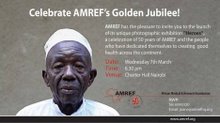
CELEBRATING THE AFRICAN MEDICAL AND RESEARCH FOUNDATION (AMREF)
PREAMBLE: On cloudless nights in 1957, children lay on their backs searching for a small red object traversing the sky: the Soviets had launched “sputnik”, the world’s first satellite. Although this also led to accelerating the “space race” and intensifying the “cold war”, imaginations everywhere were captivated by our common primordial fantasy: reaching for the stars. In the same year, three surgeons in Kenya, Michael Wood, Archibald McIndoe and Thomas Rees had a vision that could revolutionize health care in Africa. Sharing in the romance of Africa, its needs, its potential and sense of destiny, they launched a Flying Doctor Service. Over the next 5 decades, men set foot on the moon, satellites explored our solar system, the universe probed was probed with powerful orbital telescopes, robots explored the surface of Mars, and shuttles began servicing an international space station. In the meantime, what began as the Flying Doctor Service became Africa’s largest indigenous health organization: the African Medical and Research Foundation.
Yet, even as we make progress in solving the riddles of the universe, there remains extreme poverty and ill-health throughout Africa, and injustice throughout the world. In this, its 50th anniversary year, we celebrate the AMREF story which continues to unfold. In doing so we have drawn from our opportunity to view the organization at work during a joint donor evaluation in 2005-6, and from their anniversary book A Very African Journey (URL at foot of this article).
THE AMREF STORY
AMREF’s Vision is to seek “better health for Africa”. Its Mission states… “In creating vibrant networks of informed communities that work with empowered health workers in stronger health systems, we aim to ensure every African has access to the good health which is theirs by right.”
Over the past half century, AMREF has truly evolved. Prior to the 1970s, most of its work was service delivery. Under then-chairman, Dunstan Omari (former secretary to the East African Community), the concept of community-based health care was promoted. Advocated by then-lecturers at Nairobi University, Roy Shaffer and Miram Were (now Chair of AMREF), and implemented by Revi Tuluhungwa, Chris Wood and others, a strategy of working more closely with Ministries of Health took root. Since then, AMREF has trained Africans to staff the organization, relying steadily less on foreigners to carry out its work, just as it has been training community health workers for many African governments. Its Flying Doctor Service is now a self-sustaining entity, while AMREF itself still delivers an outreach programme to support essential care and training to rural hospitals. AMREF initiated and now runs community-based programmes in Kenya, Tanzania, Uganda, Ethiopia, Somalia, Sudan and South Africa. Increasingly it has emphasized education, innovation and research, working in partnership with communities, grassroots organizations, governments and donors. It concentrates on finding ways to improve health through projects that address Africa’s unique problems, taking into account: culture, attitudes, economies, politics and environment as critical factors. Based on evidence supported by its operational research, AMREF’s programmes serve as implementation models for Africa, influencing policies and practices by sharing its interventions across the continent.
For decades, AMREF has applied ecosystems principles in the identification of health risks and piloting appropriate health system solutions in rural areas. On the dry plains, trachoma (leading infectious cause of blindness) persists among the Masaai in an environment of little water and swarms of flies; this contrasts with a farming community nestled between two rivers only 15 kilometres away: here trachoma is absent and malaria hyperendemic (where water is plentiful, mosquitoes breed more readily). Clearly, differing environments in conjunction with human behaviour combine to determine health risks. Overlaid on a traditional culture in which each wife shares a one-room home with her children and newborn animals, preparing meals on a contaminated floor, it is in these settings that conditions such as trachoma must be tackled. The WHO “SAFE” protocol was adopted: surgery, antibiotics, face-washing, and environmental improvements. From a primary prevention perspective, the underlying priority is the reverse of this, but one must deal with the most seriously affected first, as this gains immediate attention and promotes the credibility of an integrated approach. Attending to environmental and personal hygiene are also prerequisites to the prevention of a much wider range of conditions. Simple interventions like “leaky tin technology” (a large can of water with a small hole at its base plugged by a thorn), so that clean water can remain uncontaminated and used sparingly, have made the difference in reducing exposure and transmission of such diseases. Two decades ago AMREF realized that episodic clinical teams weres neither effective nor efficient, and that a community approach was needed, emphasizing the role of women. Adopting the WHO “PHASE” campaign (personal hygiene and sanitation education) in 1995, and in partnership with Glaxo Smith Kline, AMREF pioneered this approach in Kenya and Uganda; this has been replicated elsewhere in the world eg., Peru, Tajikistan, Nicaragua, Bangladesh.
AMREF’s operational activities reflect Africa’s disease burdens at the grassroots, including malaria and HIV. For example, the Malaria Partnership Programme in Uganda involves AMREF, Ministries of Health and local NGOs with funding from Glaxo, Smith, Kline. In Kiboga, Kanungu and Kumi districts, AMREF has trained over 1,000 “community medicine distributors” (CMDs) to promote insecticide-treated bednet use and home-based fever management in children who previously would have been treated with ineffective drugs purchased from roadside vendors. Population Services International has underwritten the distribution of nets, using a revolving fund. Within 3 years, 80% of children with malaria in these districts benefited from CMD interventions, supported by AMREF-trained clinical officers, nurses and laboratory technicians, and a marketing effort using radio broadcasts, drama and music, as well as posters in shops, schools and churches. In response to the HIV epidemic, the “Angaza Project” (Swahili: “shed a light”) in Tanzania has implemented 47 counseling and testing sites (more in development), and almost 1,000 counselors trained, supported by a marketing effort using peer educators, music and sports: 0.5 million people have already been tested.
AMREF is intimately involved in health systems development in difficult urban settings. As stated by Director-General Dr Michael Smalley: “If health systems are robust then everything else works”. For example, in the Kibera slum nearby Nairobi, a squatter community of some 850,000 live in extreme poverty and overcrowding, in grossly deficient housing and poor environmental conditions. This situation is found in many cities throughout Africa, due to the rural to urban shift of populations. Such shanty-towns are becoming home to 2nd and 3rd generations, and are virtually a permanent feature of these cities. As migrants come from differing backgrounds and cultures, there is ethnic tension and little community solidarity. Nonetheless, it is precisely in this setting that AMREF has been working in close collaboration with the community-based organization Mradi ya Afya Msingi na Maendeleo (MRAMMA), to develop Primary Health Care (PHC), in a manner that reflects the spirit of the Alma Ata Declaration (1978), the most enduring set of principles for PHC development. In partnership for 11 years, the project has reached 100,000 slum dwellers, including such interventions as community organization and leadership development, stimulation of small enterprises, provision of safe water and sanitation, a core package of PHC interventions emphasizing maternal and child health, and a health centre to deal with a range of conditions responsible for the bulk of the disease burden. This community-based effort has succeeded so well that the City of Nairobi, the Ministry of Health and other partners have now joined to uplift the conditions of Kibera.
Among AMREF’s most important roles is the management of knowledge: building capacity through training, and introducing new learning systems. Since 1987, AMREF has run a 1-year diploma in community health, now offered in affiliation with Kenya’s Moi University. Through this rigorous programme have passed almost 500 students from 35 African countries. Innovative ways have also been found to exercise this role in a distributed manner, eg., almost 10,000 students have taken AMREFs correspondence courses. In 1998 the Maridi National Health Institute was started in southern Sudan with AMREF funding and support: this is a 3 year” clinical officer” course, through which over 130 graduates have been trained to become first line practitioners. New learning methods and technologies are being utilized: increasingly teaching is based on the PBL approach (problem-based learning), and an e-learning initiative has been launched in collaboration with the Nursing Council of Kenya with support (funding and technical) from Accenture: to upgrade 22,000 nurses from certificate to diploma level.
Much more could be told about the work of AMREF than is possible in the space of this short report. In South Africa, where the Ministry of Health accepts traditional practitioners within the formal health system (>60% of South Africans consult sangomas), AMREF is working to help determine “best practices”, and to promote the integration of sangomas within health priorities such as HIV counseling, TB treatment, oral rehydration therapy, and checking on immunization status, while also supporting safe and more effective traditional practices. Elsewhere in Africa eg., Kechene District, Ethiopia, AMREF is supporting microcredit schemes for families, simultaneously addressing poverty and health: helping women to develop economically viable small enterprises and to take care of their familes at the same time. In conflict zones eg., northern Uganda and southern Sudan, AMREF is working “to have health systems and informed communities ready to take control of their own lives and… health, once the fighting is over”.
Conclusion: AMREF recognizes far better than most health organizations around the world that 80% of health is made in households and communities; perhaps only 20% is repaired in hospitals and clinics. Redressing the imbalance in Africa requires empowering communities, teaching preventive measures in a way that can be understood, and narrowing the gap between health systems and communities. Priority must be given to operational and applied research: AMREF’s own priorities are development driven, and a research question embodied within all proposals to donors. From this research comes policy making: AMREF sees itself at the interface in this critical process. AMREF’s current 5 year strategy (2006-11) is to strengthen health systems and to provide the evidence. As stated by AMREF Chair, Professor Miriam Were: “In the past we just assumed that people would see how passionate and experienced we were and follow. Now we know it takes hard-nosed science to persuade others… we are beginning to produce the evidence to influence policy-makers”.
Reference: A Very African Journey is available on-line at: http://64.176.64.243/A%20Very%20African%20Journey.pdf
For more about AMREF, visit their website: http://www.amref.org/
Yet, even as we make progress in solving the riddles of the universe, there remains extreme poverty and ill-health throughout Africa, and injustice throughout the world. In this, its 50th anniversary year, we celebrate the AMREF story which continues to unfold. In doing so we have drawn from our opportunity to view the organization at work during a joint donor evaluation in 2005-6, and from their anniversary book A Very African Journey (URL at foot of this article).
THE AMREF STORY
AMREF’s Vision is to seek “better health for Africa”. Its Mission states… “In creating vibrant networks of informed communities that work with empowered health workers in stronger health systems, we aim to ensure every African has access to the good health which is theirs by right.”
Over the past half century, AMREF has truly evolved. Prior to the 1970s, most of its work was service delivery. Under then-chairman, Dunstan Omari (former secretary to the East African Community), the concept of community-based health care was promoted. Advocated by then-lecturers at Nairobi University, Roy Shaffer and Miram Were (now Chair of AMREF), and implemented by Revi Tuluhungwa, Chris Wood and others, a strategy of working more closely with Ministries of Health took root. Since then, AMREF has trained Africans to staff the organization, relying steadily less on foreigners to carry out its work, just as it has been training community health workers for many African governments. Its Flying Doctor Service is now a self-sustaining entity, while AMREF itself still delivers an outreach programme to support essential care and training to rural hospitals. AMREF initiated and now runs community-based programmes in Kenya, Tanzania, Uganda, Ethiopia, Somalia, Sudan and South Africa. Increasingly it has emphasized education, innovation and research, working in partnership with communities, grassroots organizations, governments and donors. It concentrates on finding ways to improve health through projects that address Africa’s unique problems, taking into account: culture, attitudes, economies, politics and environment as critical factors. Based on evidence supported by its operational research, AMREF’s programmes serve as implementation models for Africa, influencing policies and practices by sharing its interventions across the continent.
For decades, AMREF has applied ecosystems principles in the identification of health risks and piloting appropriate health system solutions in rural areas. On the dry plains, trachoma (leading infectious cause of blindness) persists among the Masaai in an environment of little water and swarms of flies; this contrasts with a farming community nestled between two rivers only 15 kilometres away: here trachoma is absent and malaria hyperendemic (where water is plentiful, mosquitoes breed more readily). Clearly, differing environments in conjunction with human behaviour combine to determine health risks. Overlaid on a traditional culture in which each wife shares a one-room home with her children and newborn animals, preparing meals on a contaminated floor, it is in these settings that conditions such as trachoma must be tackled. The WHO “SAFE” protocol was adopted: surgery, antibiotics, face-washing, and environmental improvements. From a primary prevention perspective, the underlying priority is the reverse of this, but one must deal with the most seriously affected first, as this gains immediate attention and promotes the credibility of an integrated approach. Attending to environmental and personal hygiene are also prerequisites to the prevention of a much wider range of conditions. Simple interventions like “leaky tin technology” (a large can of water with a small hole at its base plugged by a thorn), so that clean water can remain uncontaminated and used sparingly, have made the difference in reducing exposure and transmission of such diseases. Two decades ago AMREF realized that episodic clinical teams weres neither effective nor efficient, and that a community approach was needed, emphasizing the role of women. Adopting the WHO “PHASE” campaign (personal hygiene and sanitation education) in 1995, and in partnership with Glaxo Smith Kline, AMREF pioneered this approach in Kenya and Uganda; this has been replicated elsewhere in the world eg., Peru, Tajikistan, Nicaragua, Bangladesh.
AMREF’s operational activities reflect Africa’s disease burdens at the grassroots, including malaria and HIV. For example, the Malaria Partnership Programme in Uganda involves AMREF, Ministries of Health and local NGOs with funding from Glaxo, Smith, Kline. In Kiboga, Kanungu and Kumi districts, AMREF has trained over 1,000 “community medicine distributors” (CMDs) to promote insecticide-treated bednet use and home-based fever management in children who previously would have been treated with ineffective drugs purchased from roadside vendors. Population Services International has underwritten the distribution of nets, using a revolving fund. Within 3 years, 80% of children with malaria in these districts benefited from CMD interventions, supported by AMREF-trained clinical officers, nurses and laboratory technicians, and a marketing effort using radio broadcasts, drama and music, as well as posters in shops, schools and churches. In response to the HIV epidemic, the “Angaza Project” (Swahili: “shed a light”) in Tanzania has implemented 47 counseling and testing sites (more in development), and almost 1,000 counselors trained, supported by a marketing effort using peer educators, music and sports: 0.5 million people have already been tested.
AMREF is intimately involved in health systems development in difficult urban settings. As stated by Director-General Dr Michael Smalley: “If health systems are robust then everything else works”. For example, in the Kibera slum nearby Nairobi, a squatter community of some 850,000 live in extreme poverty and overcrowding, in grossly deficient housing and poor environmental conditions. This situation is found in many cities throughout Africa, due to the rural to urban shift of populations. Such shanty-towns are becoming home to 2nd and 3rd generations, and are virtually a permanent feature of these cities. As migrants come from differing backgrounds and cultures, there is ethnic tension and little community solidarity. Nonetheless, it is precisely in this setting that AMREF has been working in close collaboration with the community-based organization Mradi ya Afya Msingi na Maendeleo (MRAMMA), to develop Primary Health Care (PHC), in a manner that reflects the spirit of the Alma Ata Declaration (1978), the most enduring set of principles for PHC development. In partnership for 11 years, the project has reached 100,000 slum dwellers, including such interventions as community organization and leadership development, stimulation of small enterprises, provision of safe water and sanitation, a core package of PHC interventions emphasizing maternal and child health, and a health centre to deal with a range of conditions responsible for the bulk of the disease burden. This community-based effort has succeeded so well that the City of Nairobi, the Ministry of Health and other partners have now joined to uplift the conditions of Kibera.
Among AMREF’s most important roles is the management of knowledge: building capacity through training, and introducing new learning systems. Since 1987, AMREF has run a 1-year diploma in community health, now offered in affiliation with Kenya’s Moi University. Through this rigorous programme have passed almost 500 students from 35 African countries. Innovative ways have also been found to exercise this role in a distributed manner, eg., almost 10,000 students have taken AMREFs correspondence courses. In 1998 the Maridi National Health Institute was started in southern Sudan with AMREF funding and support: this is a 3 year” clinical officer” course, through which over 130 graduates have been trained to become first line practitioners. New learning methods and technologies are being utilized: increasingly teaching is based on the PBL approach (problem-based learning), and an e-learning initiative has been launched in collaboration with the Nursing Council of Kenya with support (funding and technical) from Accenture: to upgrade 22,000 nurses from certificate to diploma level.
Much more could be told about the work of AMREF than is possible in the space of this short report. In South Africa, where the Ministry of Health accepts traditional practitioners within the formal health system (>60% of South Africans consult sangomas), AMREF is working to help determine “best practices”, and to promote the integration of sangomas within health priorities such as HIV counseling, TB treatment, oral rehydration therapy, and checking on immunization status, while also supporting safe and more effective traditional practices. Elsewhere in Africa eg., Kechene District, Ethiopia, AMREF is supporting microcredit schemes for families, simultaneously addressing poverty and health: helping women to develop economically viable small enterprises and to take care of their familes at the same time. In conflict zones eg., northern Uganda and southern Sudan, AMREF is working “to have health systems and informed communities ready to take control of their own lives and… health, once the fighting is over”.
Conclusion: AMREF recognizes far better than most health organizations around the world that 80% of health is made in households and communities; perhaps only 20% is repaired in hospitals and clinics. Redressing the imbalance in Africa requires empowering communities, teaching preventive measures in a way that can be understood, and narrowing the gap between health systems and communities. Priority must be given to operational and applied research: AMREF’s own priorities are development driven, and a research question embodied within all proposals to donors. From this research comes policy making: AMREF sees itself at the interface in this critical process. AMREF’s current 5 year strategy (2006-11) is to strengthen health systems and to provide the evidence. As stated by AMREF Chair, Professor Miriam Were: “In the past we just assumed that people would see how passionate and experienced we were and follow. Now we know it takes hard-nosed science to persuade others… we are beginning to produce the evidence to influence policy-makers”.
Reference: A Very African Journey is available on-line at: http://64.176.64.243/A%20Very%20African%20Journey.pdf
For more about AMREF, visit their website: http://www.amref.org/
Subscribe to:
Posts (Atom)