PREAMBLE: The MDG Report 2012 was launched in New York by UN Secretary-General Ban Ki-moon on July 2, 2012. Several MDG targets have been met well ahead of the 2015 target date. The report states that meeting remaining targets remains possible if Governments keep their commitments made over a decade ago. Clearly this includes both recipient and donor nations.
Highlights of the Report:
Extreme poverty is falling in every region including Sub- Saharan Africa.
The poverty reduction target was met: the global poverty rate at $1.25 a day fell in 2010 to less than half the 1990 rate. If confirmed, the first target of the MDGs— cutting extreme poverty to half its 1990 level—will have been achieved at the global level well ahead of 2015.
The world has met the target of halving the proportion of people without access to improved sources of water: the proportion of people using an improved water source rising from 76 per cent in 1990 to 89 percent in 2010.
Improvements in the lives of 200 million slum dwellers exceeded the slum target: The share of urban residents in the developing world living in slums declined from 39 per cent in 2000 to 33 per cent in 2012. This achievement exceeds the target of significantly improving the lives of at least 100 million slum dwellers, well ahead of the 2020 deadline.
The world has achieved parity in primary education between girls and boys: Many more children are enrolled in primary school, especially since 2000. Girls benefited the most. The gender parity index value of 97 falls within the margin of error for 100.
Many countries facing the greatest challenges have made significant progress towards universal primary education. Enrolment rates of primary school age children increased markedly in sub-Saharan Africa, from 58 to 76 per cent between 1999 and 2010.
Child survival progress is gaining momentum. Despite population growth, the number of under-five deaths worldwide fell from more than 12.0 million in 1990 to 7.6 million in 2010.
Access to treatment for people living with HIV increased in all regions. At the end of 2010, 6.5 million people were receiving antiretroviral therapy for HIV or AIDS in developing regions. This total constitutes an increase of over 1.4 million people from December 2009, the largest one-year increase ever. The 2010 target of universal access, however, was not reached.
The world is on track to achieve the target of halting and beginning to reverse the spread of tuberculosis. Globally, tuberculosis incidence rates have been falling since 2002, and current projections suggest that the 1990 death rate from the disease will be halved by 2015.
Global malaria deaths have declined. The estimated incidence of malaria has decreased globally, by 17 per cent since 2000. Over the same period, malaria-specific mortality rates have decreased by 25 per cent. Reported malaria cases fell by more than 50 per cent between 2000 and 2010 in 43 of 99 countries with ongoing malaria transmission.
These accomplishments notwithstanding, there remain major challenges:
Inequality detracts from these gains, and advances have slowed: Achievements are unequally distributed across and within regions and countries. Moreover, progress has slowed for some MDGs after the 2008-9 economic crisis and related consequences.
Vulnerable employment has decreased only marginally over twenty years. Defined as share of unpaid family workers and own-account workers in total employment, this fell to 58 per cent from 67 per cent two decades earlier. Women and youth remain the most vulnerable.
Decreases in maternal mortality are far from the 2015 target. Despite improvements, progress is still slow. Reductions in adolescent childbearing and expansion of contraceptive use have continued, but at a slower pace since 2000 than over the decade before.
Use of improved sources of water remains lower in rural areas. While 19 per cent of the rural population used unimproved sources of water in 2010, the rate in urban areas was only 4 per cent. Nearly half of the population in developing regions still lack access to improved sanitation.
Hunger remains a global challenge. 850 million people lived in hunger in the 2006-8 period, 15.5 per cent of the world population. This continuing high level reflects lack of progress on hunger in several regions, even as income poverty decreased. Progress is slow in reducing child undernutrition. Close to one third of children in Southern Asia were underweight in 2010.
The number of people living in slums continues to grow. Despite a reduction in the proportion of urban populations living in slums, the absolute number continues to grow from a 1990 baseline of 650 million. An estimated 863 million people now live in slum conditions.
Gender equality and women’s empowerment remain key challenges. Gender inequality persists and women continue to face discrimination in access to education, work and economic assets, and participation in government. Violence against women continues to undermine efforts to reach all goals.
REFERENCE:
United Nations. The Millennium Development Goals Report 2012. New York 2012. http://mdgs.un.org/unsd/mdg/Resources/Static/Products/Progress2012/English2012.pdf
Showing posts with label HIV. Show all posts
Showing posts with label HIV. Show all posts
Sunday, 15 July 2012
Sunday, 1 July 2007
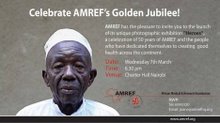
CELEBRATING THE AFRICAN MEDICAL AND RESEARCH FOUNDATION (AMREF)
PREAMBLE: On cloudless nights in 1957, children lay on their backs searching for a small red object traversing the sky: the Soviets had launched “sputnik”, the world’s first satellite. Although this also led to accelerating the “space race” and intensifying the “cold war”, imaginations everywhere were captivated by our common primordial fantasy: reaching for the stars. In the same year, three surgeons in Kenya, Michael Wood, Archibald McIndoe and Thomas Rees had a vision that could revolutionize health care in Africa. Sharing in the romance of Africa, its needs, its potential and sense of destiny, they launched a Flying Doctor Service. Over the next 5 decades, men set foot on the moon, satellites explored our solar system, the universe probed was probed with powerful orbital telescopes, robots explored the surface of Mars, and shuttles began servicing an international space station. In the meantime, what began as the Flying Doctor Service became Africa’s largest indigenous health organization: the African Medical and Research Foundation.
Yet, even as we make progress in solving the riddles of the universe, there remains extreme poverty and ill-health throughout Africa, and injustice throughout the world. In this, its 50th anniversary year, we celebrate the AMREF story which continues to unfold. In doing so we have drawn from our opportunity to view the organization at work during a joint donor evaluation in 2005-6, and from their anniversary book A Very African Journey (URL at foot of this article).
THE AMREF STORY
AMREF’s Vision is to seek “better health for Africa”. Its Mission states… “In creating vibrant networks of informed communities that work with empowered health workers in stronger health systems, we aim to ensure every African has access to the good health which is theirs by right.”
Over the past half century, AMREF has truly evolved. Prior to the 1970s, most of its work was service delivery. Under then-chairman, Dunstan Omari (former secretary to the East African Community), the concept of community-based health care was promoted. Advocated by then-lecturers at Nairobi University, Roy Shaffer and Miram Were (now Chair of AMREF), and implemented by Revi Tuluhungwa, Chris Wood and others, a strategy of working more closely with Ministries of Health took root. Since then, AMREF has trained Africans to staff the organization, relying steadily less on foreigners to carry out its work, just as it has been training community health workers for many African governments. Its Flying Doctor Service is now a self-sustaining entity, while AMREF itself still delivers an outreach programme to support essential care and training to rural hospitals. AMREF initiated and now runs community-based programmes in Kenya, Tanzania, Uganda, Ethiopia, Somalia, Sudan and South Africa. Increasingly it has emphasized education, innovation and research, working in partnership with communities, grassroots organizations, governments and donors. It concentrates on finding ways to improve health through projects that address Africa’s unique problems, taking into account: culture, attitudes, economies, politics and environment as critical factors. Based on evidence supported by its operational research, AMREF’s programmes serve as implementation models for Africa, influencing policies and practices by sharing its interventions across the continent.
For decades, AMREF has applied ecosystems principles in the identification of health risks and piloting appropriate health system solutions in rural areas. On the dry plains, trachoma (leading infectious cause of blindness) persists among the Masaai in an environment of little water and swarms of flies; this contrasts with a farming community nestled between two rivers only 15 kilometres away: here trachoma is absent and malaria hyperendemic (where water is plentiful, mosquitoes breed more readily). Clearly, differing environments in conjunction with human behaviour combine to determine health risks. Overlaid on a traditional culture in which each wife shares a one-room home with her children and newborn animals, preparing meals on a contaminated floor, it is in these settings that conditions such as trachoma must be tackled. The WHO “SAFE” protocol was adopted: surgery, antibiotics, face-washing, and environmental improvements. From a primary prevention perspective, the underlying priority is the reverse of this, but one must deal with the most seriously affected first, as this gains immediate attention and promotes the credibility of an integrated approach. Attending to environmental and personal hygiene are also prerequisites to the prevention of a much wider range of conditions. Simple interventions like “leaky tin technology” (a large can of water with a small hole at its base plugged by a thorn), so that clean water can remain uncontaminated and used sparingly, have made the difference in reducing exposure and transmission of such diseases. Two decades ago AMREF realized that episodic clinical teams weres neither effective nor efficient, and that a community approach was needed, emphasizing the role of women. Adopting the WHO “PHASE” campaign (personal hygiene and sanitation education) in 1995, and in partnership with Glaxo Smith Kline, AMREF pioneered this approach in Kenya and Uganda; this has been replicated elsewhere in the world eg., Peru, Tajikistan, Nicaragua, Bangladesh.
AMREF’s operational activities reflect Africa’s disease burdens at the grassroots, including malaria and HIV. For example, the Malaria Partnership Programme in Uganda involves AMREF, Ministries of Health and local NGOs with funding from Glaxo, Smith, Kline. In Kiboga, Kanungu and Kumi districts, AMREF has trained over 1,000 “community medicine distributors” (CMDs) to promote insecticide-treated bednet use and home-based fever management in children who previously would have been treated with ineffective drugs purchased from roadside vendors. Population Services International has underwritten the distribution of nets, using a revolving fund. Within 3 years, 80% of children with malaria in these districts benefited from CMD interventions, supported by AMREF-trained clinical officers, nurses and laboratory technicians, and a marketing effort using radio broadcasts, drama and music, as well as posters in shops, schools and churches. In response to the HIV epidemic, the “Angaza Project” (Swahili: “shed a light”) in Tanzania has implemented 47 counseling and testing sites (more in development), and almost 1,000 counselors trained, supported by a marketing effort using peer educators, music and sports: 0.5 million people have already been tested.
AMREF is intimately involved in health systems development in difficult urban settings. As stated by Director-General Dr Michael Smalley: “If health systems are robust then everything else works”. For example, in the Kibera slum nearby Nairobi, a squatter community of some 850,000 live in extreme poverty and overcrowding, in grossly deficient housing and poor environmental conditions. This situation is found in many cities throughout Africa, due to the rural to urban shift of populations. Such shanty-towns are becoming home to 2nd and 3rd generations, and are virtually a permanent feature of these cities. As migrants come from differing backgrounds and cultures, there is ethnic tension and little community solidarity. Nonetheless, it is precisely in this setting that AMREF has been working in close collaboration with the community-based organization Mradi ya Afya Msingi na Maendeleo (MRAMMA), to develop Primary Health Care (PHC), in a manner that reflects the spirit of the Alma Ata Declaration (1978), the most enduring set of principles for PHC development. In partnership for 11 years, the project has reached 100,000 slum dwellers, including such interventions as community organization and leadership development, stimulation of small enterprises, provision of safe water and sanitation, a core package of PHC interventions emphasizing maternal and child health, and a health centre to deal with a range of conditions responsible for the bulk of the disease burden. This community-based effort has succeeded so well that the City of Nairobi, the Ministry of Health and other partners have now joined to uplift the conditions of Kibera.
Among AMREF’s most important roles is the management of knowledge: building capacity through training, and introducing new learning systems. Since 1987, AMREF has run a 1-year diploma in community health, now offered in affiliation with Kenya’s Moi University. Through this rigorous programme have passed almost 500 students from 35 African countries. Innovative ways have also been found to exercise this role in a distributed manner, eg., almost 10,000 students have taken AMREFs correspondence courses. In 1998 the Maridi National Health Institute was started in southern Sudan with AMREF funding and support: this is a 3 year” clinical officer” course, through which over 130 graduates have been trained to become first line practitioners. New learning methods and technologies are being utilized: increasingly teaching is based on the PBL approach (problem-based learning), and an e-learning initiative has been launched in collaboration with the Nursing Council of Kenya with support (funding and technical) from Accenture: to upgrade 22,000 nurses from certificate to diploma level.
Much more could be told about the work of AMREF than is possible in the space of this short report. In South Africa, where the Ministry of Health accepts traditional practitioners within the formal health system (>60% of South Africans consult sangomas), AMREF is working to help determine “best practices”, and to promote the integration of sangomas within health priorities such as HIV counseling, TB treatment, oral rehydration therapy, and checking on immunization status, while also supporting safe and more effective traditional practices. Elsewhere in Africa eg., Kechene District, Ethiopia, AMREF is supporting microcredit schemes for families, simultaneously addressing poverty and health: helping women to develop economically viable small enterprises and to take care of their familes at the same time. In conflict zones eg., northern Uganda and southern Sudan, AMREF is working “to have health systems and informed communities ready to take control of their own lives and… health, once the fighting is over”.
Conclusion: AMREF recognizes far better than most health organizations around the world that 80% of health is made in households and communities; perhaps only 20% is repaired in hospitals and clinics. Redressing the imbalance in Africa requires empowering communities, teaching preventive measures in a way that can be understood, and narrowing the gap between health systems and communities. Priority must be given to operational and applied research: AMREF’s own priorities are development driven, and a research question embodied within all proposals to donors. From this research comes policy making: AMREF sees itself at the interface in this critical process. AMREF’s current 5 year strategy (2006-11) is to strengthen health systems and to provide the evidence. As stated by AMREF Chair, Professor Miriam Were: “In the past we just assumed that people would see how passionate and experienced we were and follow. Now we know it takes hard-nosed science to persuade others… we are beginning to produce the evidence to influence policy-makers”.
Reference: A Very African Journey is available on-line at: http://64.176.64.243/A%20Very%20African%20Journey.pdf
For more about AMREF, visit their website: http://www.amref.org/
Yet, even as we make progress in solving the riddles of the universe, there remains extreme poverty and ill-health throughout Africa, and injustice throughout the world. In this, its 50th anniversary year, we celebrate the AMREF story which continues to unfold. In doing so we have drawn from our opportunity to view the organization at work during a joint donor evaluation in 2005-6, and from their anniversary book A Very African Journey (URL at foot of this article).
THE AMREF STORY
AMREF’s Vision is to seek “better health for Africa”. Its Mission states… “In creating vibrant networks of informed communities that work with empowered health workers in stronger health systems, we aim to ensure every African has access to the good health which is theirs by right.”
Over the past half century, AMREF has truly evolved. Prior to the 1970s, most of its work was service delivery. Under then-chairman, Dunstan Omari (former secretary to the East African Community), the concept of community-based health care was promoted. Advocated by then-lecturers at Nairobi University, Roy Shaffer and Miram Were (now Chair of AMREF), and implemented by Revi Tuluhungwa, Chris Wood and others, a strategy of working more closely with Ministries of Health took root. Since then, AMREF has trained Africans to staff the organization, relying steadily less on foreigners to carry out its work, just as it has been training community health workers for many African governments. Its Flying Doctor Service is now a self-sustaining entity, while AMREF itself still delivers an outreach programme to support essential care and training to rural hospitals. AMREF initiated and now runs community-based programmes in Kenya, Tanzania, Uganda, Ethiopia, Somalia, Sudan and South Africa. Increasingly it has emphasized education, innovation and research, working in partnership with communities, grassroots organizations, governments and donors. It concentrates on finding ways to improve health through projects that address Africa’s unique problems, taking into account: culture, attitudes, economies, politics and environment as critical factors. Based on evidence supported by its operational research, AMREF’s programmes serve as implementation models for Africa, influencing policies and practices by sharing its interventions across the continent.
For decades, AMREF has applied ecosystems principles in the identification of health risks and piloting appropriate health system solutions in rural areas. On the dry plains, trachoma (leading infectious cause of blindness) persists among the Masaai in an environment of little water and swarms of flies; this contrasts with a farming community nestled between two rivers only 15 kilometres away: here trachoma is absent and malaria hyperendemic (where water is plentiful, mosquitoes breed more readily). Clearly, differing environments in conjunction with human behaviour combine to determine health risks. Overlaid on a traditional culture in which each wife shares a one-room home with her children and newborn animals, preparing meals on a contaminated floor, it is in these settings that conditions such as trachoma must be tackled. The WHO “SAFE” protocol was adopted: surgery, antibiotics, face-washing, and environmental improvements. From a primary prevention perspective, the underlying priority is the reverse of this, but one must deal with the most seriously affected first, as this gains immediate attention and promotes the credibility of an integrated approach. Attending to environmental and personal hygiene are also prerequisites to the prevention of a much wider range of conditions. Simple interventions like “leaky tin technology” (a large can of water with a small hole at its base plugged by a thorn), so that clean water can remain uncontaminated and used sparingly, have made the difference in reducing exposure and transmission of such diseases. Two decades ago AMREF realized that episodic clinical teams weres neither effective nor efficient, and that a community approach was needed, emphasizing the role of women. Adopting the WHO “PHASE” campaign (personal hygiene and sanitation education) in 1995, and in partnership with Glaxo Smith Kline, AMREF pioneered this approach in Kenya and Uganda; this has been replicated elsewhere in the world eg., Peru, Tajikistan, Nicaragua, Bangladesh.
AMREF’s operational activities reflect Africa’s disease burdens at the grassroots, including malaria and HIV. For example, the Malaria Partnership Programme in Uganda involves AMREF, Ministries of Health and local NGOs with funding from Glaxo, Smith, Kline. In Kiboga, Kanungu and Kumi districts, AMREF has trained over 1,000 “community medicine distributors” (CMDs) to promote insecticide-treated bednet use and home-based fever management in children who previously would have been treated with ineffective drugs purchased from roadside vendors. Population Services International has underwritten the distribution of nets, using a revolving fund. Within 3 years, 80% of children with malaria in these districts benefited from CMD interventions, supported by AMREF-trained clinical officers, nurses and laboratory technicians, and a marketing effort using radio broadcasts, drama and music, as well as posters in shops, schools and churches. In response to the HIV epidemic, the “Angaza Project” (Swahili: “shed a light”) in Tanzania has implemented 47 counseling and testing sites (more in development), and almost 1,000 counselors trained, supported by a marketing effort using peer educators, music and sports: 0.5 million people have already been tested.
AMREF is intimately involved in health systems development in difficult urban settings. As stated by Director-General Dr Michael Smalley: “If health systems are robust then everything else works”. For example, in the Kibera slum nearby Nairobi, a squatter community of some 850,000 live in extreme poverty and overcrowding, in grossly deficient housing and poor environmental conditions. This situation is found in many cities throughout Africa, due to the rural to urban shift of populations. Such shanty-towns are becoming home to 2nd and 3rd generations, and are virtually a permanent feature of these cities. As migrants come from differing backgrounds and cultures, there is ethnic tension and little community solidarity. Nonetheless, it is precisely in this setting that AMREF has been working in close collaboration with the community-based organization Mradi ya Afya Msingi na Maendeleo (MRAMMA), to develop Primary Health Care (PHC), in a manner that reflects the spirit of the Alma Ata Declaration (1978), the most enduring set of principles for PHC development. In partnership for 11 years, the project has reached 100,000 slum dwellers, including such interventions as community organization and leadership development, stimulation of small enterprises, provision of safe water and sanitation, a core package of PHC interventions emphasizing maternal and child health, and a health centre to deal with a range of conditions responsible for the bulk of the disease burden. This community-based effort has succeeded so well that the City of Nairobi, the Ministry of Health and other partners have now joined to uplift the conditions of Kibera.
Among AMREF’s most important roles is the management of knowledge: building capacity through training, and introducing new learning systems. Since 1987, AMREF has run a 1-year diploma in community health, now offered in affiliation with Kenya’s Moi University. Through this rigorous programme have passed almost 500 students from 35 African countries. Innovative ways have also been found to exercise this role in a distributed manner, eg., almost 10,000 students have taken AMREFs correspondence courses. In 1998 the Maridi National Health Institute was started in southern Sudan with AMREF funding and support: this is a 3 year” clinical officer” course, through which over 130 graduates have been trained to become first line practitioners. New learning methods and technologies are being utilized: increasingly teaching is based on the PBL approach (problem-based learning), and an e-learning initiative has been launched in collaboration with the Nursing Council of Kenya with support (funding and technical) from Accenture: to upgrade 22,000 nurses from certificate to diploma level.
Much more could be told about the work of AMREF than is possible in the space of this short report. In South Africa, where the Ministry of Health accepts traditional practitioners within the formal health system (>60% of South Africans consult sangomas), AMREF is working to help determine “best practices”, and to promote the integration of sangomas within health priorities such as HIV counseling, TB treatment, oral rehydration therapy, and checking on immunization status, while also supporting safe and more effective traditional practices. Elsewhere in Africa eg., Kechene District, Ethiopia, AMREF is supporting microcredit schemes for families, simultaneously addressing poverty and health: helping women to develop economically viable small enterprises and to take care of their familes at the same time. In conflict zones eg., northern Uganda and southern Sudan, AMREF is working “to have health systems and informed communities ready to take control of their own lives and… health, once the fighting is over”.
Conclusion: AMREF recognizes far better than most health organizations around the world that 80% of health is made in households and communities; perhaps only 20% is repaired in hospitals and clinics. Redressing the imbalance in Africa requires empowering communities, teaching preventive measures in a way that can be understood, and narrowing the gap between health systems and communities. Priority must be given to operational and applied research: AMREF’s own priorities are development driven, and a research question embodied within all proposals to donors. From this research comes policy making: AMREF sees itself at the interface in this critical process. AMREF’s current 5 year strategy (2006-11) is to strengthen health systems and to provide the evidence. As stated by AMREF Chair, Professor Miriam Were: “In the past we just assumed that people would see how passionate and experienced we were and follow. Now we know it takes hard-nosed science to persuade others… we are beginning to produce the evidence to influence policy-makers”.
Reference: A Very African Journey is available on-line at: http://64.176.64.243/A%20Very%20African%20Journey.pdf
For more about AMREF, visit their website: http://www.amref.org/


Subscribe to:
Posts (Atom)