FROM a Great Canadian and World Statesman

"A great gulf... has... opened between man's material advance and his social and moral progress, a gulf in which he may one day be lost if it is not closed or narrowed..." Lester B Pearson http://nobelprize.org/nobel_prizes/peace/laureates/1957/pearson-lecture.html
Showing posts with label global health. Show all posts

Sunday, 15 September 2013

New Publication: A GLOBAL REVIEW OF PUBLIC HEALTH EDUCATION & CAPACITY BUILDING

PREAMBLE: This month we bring to your attention a comprehensive review by Franklin White, on the topic of “The Imperative of Public Health Education: A Global Perspective.”  

Published in the peer reviewed journal Medical Principles and Practice, this full text article is available on-line free of charge at http://www.karger.com/Article/FullText/354198

The abstract as published on PubMed (US National Library of Medicine), now follows:

ABSTRACT:  White F. The Imperative of Public Health Education: A Global Perspective. Med Princ Pract 2013 August 21 [Epub ahead of print] 

This review positions public health as an endeavour that requires a high order of professionalism in addressing the health of populations; this requires investment in an educational capacity that is designed to meet this need. In the global context, the field has evolved enormously over the past half century, supported by institutions such as the World Bank, the World Health Organization and the Institute of Medicine. Operational structures are formulated by strategic principles, with educational and career pathways guided by competency frameworks, all requiring modulation according to local, national and global realities. Talented and well-motivated individuals are attracted by its multidisciplinary and transdisciplinary environment, and the opportunity to achieve interventions that make real differences to people's lives. The field is globally competitive and open to many professional backgrounds based on merit. Its competencies correspond with assessments of population needs, and the ways in which strategies and services are formulated. Thus, its educational planning is needs-based and evidence-driven. This review explores four public health education levels: graduate, undergraduate, continuing professional education and promotion of health literacy for general populations. The emergence of accreditation schemes is examined, focusing on their relative merits and legitimate international variations. The role of relevant research policies is recognized, along with the need to foster professional and institutional networks in all regions of the world. It is critically important for the health of populations that nations assess their public health human resource needs and develop their ability to deliver this capacity, and not depend on other countries to supply it. © 2013 S. Karger AG, Basel.

Full Reference and Link to article: White F. The Imperative of Public Health Education: A Global Perspective. Med Princ Pract 2013 August 21 DOI: 10.1159/000354198 [Epub ahead of print] http://www.karger.com/Article/FullText/354198

Note: One of the most comprehensive reviews of its type (15 journal pages), its observations should be of relevance to institutional capacity building for public health education in all global regions. Citing over 70 references, the work is a by-product of reviews carried out in support of public health educational development at Kuwait University; it also draws insights from an extensive international career in public health (see Wikipedia entry for Franklin White: http://en.wikipedia.org/wiki/Franklin_White).

Saturday, 18 February 2012

MAJOR PROGRESS IN MALARIA CONTROL: THE ROLE OF THE GLOBAL FUND, ITS DETRACTORS AND SUPPORTERS.

PREAMBLE: Over the past two issues we have taken note of decisions by several European entities (Germany, Ireland, and Sweden and the European Commission itself) to suspend funding to the Global Fund on AIDS, Tuberculosis and Malaria (GFATM). In part, this decision was made ostensibly due to concerns about corruption in recipient countries, even though this was limited to only 4 countries (among over a hundred recipients) and was discovered, investigated and openly reported by the Global Fund itself. This level of corruption, independently analysed, is significantly lower than that of the EURO block.

The truth behind this decision is that Europe has been financially mismanaged, with bank failures in some countries, and problems of corruption and mismanagement. European captains of industry (like their Americans counterparts) walked away with fortunes under their belts in the form of self-awarded bonuses, even as their operations have been bailed out by their taxpayers. Several governments are now at risk of unprecedented financial defaults.

The decisions of these European entities smack of old style colonialism: arrogance from the top down. It damages their hard won (or restored) reputations for being global leaders.

To use developing countries and the Global Fund as a scapegoat for this is unconscionable: at least be honest! Instead, these particular European entities should have had the integrity to own up and say “sorry, we cant afford this now, because we ourselves are in such a mess”.

Thankfully, the Bill and Melinda Gates Foundation, being evidence-based, has stepped in to shore up Global Fund finances due to this donor default. Also, former Japanese prime minister Naoto Kan said his country would contribute $340 million to the fund this year. Two years ago, Japan contributed $200 million, but it gave only $110 million last year because of domestic needs from the earthquake and tsunami. Of course many other countries are honoring their pledges, even as many of them also have financial challenges at this time.

“These are tough economic times, but that is no excuse for cutting aid to the world’s poorest,” Bill Gates said in announcing the $750 million contribution.

We congratulate the Gates Foundation, and the government of Japan, a nation that knows more than most the meaning of hardship and tragedy, and apparently has a high sense of integrity.

We dedicate this issue to the major successes now taking place in malaria control, largely thanks to support from the Global Fund. With this purpose, we have partially extracted verbatim the report below which appeared in the Health and Development Global Update published by the HLSP Institute in June 2011.

Reference: Brown D, Gates Foundation gives $750 million to Global Fund. Washington Post January 27, 2012. http://www.washingtonpost.com/national/health-science/gates-foundation-gives-750-million-to-global-fund/2012/01/26/gIQAHKw5TQ_story.html Accessed February 18, 2012.

MALARIA: A GLOBAL UPDATE
The latest WHO World Malaria Report in April 2011 documents impressive increases in intervention coverage and reductions in malaria morbidity and mortality. WHO estimates that the number of malaria cases has fallen by more than 50% in 43 countries over the past decade. Eleven countries in Africa have shown a reduction of more than 50% in either confirmed malaria cases or malaria admissions and deaths in recent years. In Asia, four countries saw a decrease in the number of malaria cases of more than 50% since 2000.

Africa in particular has seen tremendous progress in increasing access to insecticide-treated nets (ITNs) in past 3 years. However, given an estimated lifespan of three years, nets delivered in 2006 and 2007 are already due for replacement and those delivered between 2008 and 2010 will soon be. The challenge is in ensuring that the high levels of coverage achieved are maintained.

We still have incomplete information on access to treatment in general, and particularly for the significant proportion of patients treated in the private sector. We do know that the number of procured rapid diagnostic tests (RDTs) and artemisinin-based combination therapies (ACTs) is increasing globally yet, especially in African countries, most patients are receiving ACTs without confirmatory diagnosis. This continues to represent a significant financial, technical and personal challenge for many patients, health care providers and national malaria control programme managers. One exception is Senegal, which has introduced RDTs on a national scale in public facilities and, with high levels of adherence to diagnostic results, achieved dramatic reductions in ACT consumption . On the other hand, another study in urban Tanzania shows that the introduction of RDTs also had the unintended consequence of increasing inappropriate antibiotic prescription (from 49% to 72%) – a behaviour ascribed to clinicians’ insufficient knowledge and training on other causes of fever. This is why RDTs able to diagnose a range of common illnesses are high on the malaria community’s R&D ‘wish list’.

Coverage with intermittent preventive treatment for pregnant women (IPTp) remains far from target levels – ranging from 2.4% in Angola to 62% in Zambia. No country has yet adopted a national policy of intermittent preventive treatment for infants (IPTi), as recommended by WHO.

In the countries with greatest progress, the decreases are associated with intense malaria control interventions. But this progress is fragile. The resurgence of the disease in 2009 in Rwanda, Sao Tome and Principe, and Zambia shows that control programmes need to be maintained even if numbers of cases have been reduced substantially.

Source: HLSP Institute. Health and Development Global Update. July 2011. http://www.hlsp.org/LinkClick.aspx?fileticket=VxUphqNpW_w%3D&tabid=1575

Envoie: The prevention and control of AIDS, Tuberculosis and Malaria represent moving targets. Only with sustained international support from both public and private sectors, and perseverance by the countries mostly affected, will eventual success be achieved. The results as reported in the above extract are extremely encouraging and should be taken into account by the European entities mentioned in our preamble, when they eventually reconsider their support: which they surely will.

Thursday, 14 August 2008

SELECTED WEB RESOURCES ON GLOBAL HEALTH with an acknowledgement to ProCOR

PREAMBLE: This issue highlights some of the work of an organization we respect for its efforts to bring together a virtual community of health professionals from around the world. ProCOR is devoted to examining health and related social issues of relevance to developing countries, with particular reference to cardiovascular diseases. ProCor's monthly "Resource Update" (edited by Juan Ramos) highlights relevant materials. A recent Resource Update on ProCOR listed a number of websites that offer valuable information about health and/or health resources around the world. The following are selected from this list in order to further disseminate ProCOR’s efforts in this regard, as well as to draw attention to the health communications work of ProCOR:

For more information about ProCOR itself, visit their website at: http://www.procor.org/ For other sites that we regularly recommend, see column at right for “Recommended Global Links”.

- SELECTED WEB RESOURCES ON GLOBAL HEALTH -
African Network for Health Knowledge Management and Communication: Agency that explores harnessing modern information and communication technologies (ICTs) for community health and development in Africa. http://www.afriafya.org/

Books for Africa: Organization that distributes medical and nursing textbooks to 18 African countries. http://www.booksforafrica.org/

Challenges and successes in reducing health disparities - Workshop summary: Textbook summary of a workshop on challenges and successes in reducing health disparities held on 31 July 2007 in St. Louis, Missouri, USA. Entire textbook is available free online. National Academies Press, 2008. http://books.nap.edu/catalog.php?record_id=12154

Community guide to environmental health: Illustrated guide on global crisis in environmental health for health promoters, development workers, educators, activists, and community leaders in rural or urban settings. Materials from the book are available for free download. www.hesperian.org/projects_inProgress_communityGuide.php

Global Health Action: Open access journal of hands-on approaches to global public health challenges. Umeå Centre for Global Health Research. www.co-action.net/journals/gha

Global Smokefree Partnership: Multi-partner initiative to promote effective smoke-free policies worldwide. Helps advocates access evidence, request assistance, and take action in support of smoke-free policies. http://www.globalsmokefree.com/

Growth report - Strategies for sustained growth and inclusive development: Report examining how developing countries can achieve fast, sustained, and equitable growth. International Bank for Reconstruction and Development, 2008. PDF (10.3 MB): www.growthcommission.org/storage/cgdev/documents/Report/GrowthReportfull.pdf

Health and Human Rights: Open access international journal dedicated to advancing health as an issue of fundamental human rights and social justice. http://www.hhrjournal.org/

HIFA2015 website: Advocacy and knowledge-sharing network of 1500 members from 110 countries with the shared goal: Every person worldwide will have access to an informed healthcare provider by 2015. Email discussion group archives available at www.dgroups.org/groups/hifa2015. http://www.hifa2015.org/

International Fruit and Vegetable Alliance: Global alliance that supports efforts to increase intake of fruit and vegetables worldwide. Provides a toolkit for starting a "5 a day" program. http://www.ifava.org/

International research community on multimorbidity: Electronic network focused on research questions relevant to international communication on multimorbidity in primary care. www.med.usherbrooke.ca/cirmo

Libraries, literacy, and poverty reduction - A key to African development: Paper outlining affordable and achievable library strategies for poor communities to promote development. Book Aid International, 2006. PDF (302 KB): www.bookaid.org/resources/downloads/advocacy/Libraries_Literacy_Poverty_Reduction.pdf

MobileActive strategy guide #2: Using mobile phones in advocacy campaignsGuide offering strategies, case studies, lessons learned, and a how-to section for advocacy organizations using mobile phones to advance their causes. Encourages the adoption of mobile phones by NGOs to build constituent lists, influence political causes, and raise money. MobileActive, 2007. PDF (955 KB): http://mobileactive.org/files/MobileActiveGuide2_0.pdf

Primary health care for older people: A participatory study in 5 Asian countriesStudy report on healthy ageing and access to quality primary health care services. Focuses on improving stroke and diabetes management. HelpAge International, 2008.www.helpage.org/News/Latestnews/G61d

Scientists without Borders: Initiative to mobilize and coordinate science-based efforts that improve the quality of life in the developing world. Website homepage provides options for low- or high-bandwidth connection. New York Academy of Sciences. http://scientistswithoutborders.nyas.org/default.aspx

Sharing Knowledge Handbook 2: Handbook for men and women working in villages, towns, and rural areas who wish to transform their communities through information sharing. Oxfam Horn of Africa Capacity Building Program, 2004.www.oxfam.ca/news-and-publications/publications-and-reports/sharing-knowledge-handbook-2

SimIns health financing policy tool 2.1: Computerized tool to aid in health financing policy decisions. Projects health expenditure and funding for a 10-year time period; evaluates feasibility of alternative mixes of financing sources, including social health insurance, community-based health insurance, and government budget lines. WHO, 2008.www.who.int/health_financing/tools/simins

Thomas McKeown, meet Fidel Castro: Physicians, population health and the Cuban paradox: Open access article about Cuba's "first world" population health status despite a minimal economic base. Healthcare Policy/Politiques de Santé 2008; 3(4): 21-32http://www.longwoods.com/product.php?productid=19916

World Diabetes Day materials: Materials for World Diabetes Day, 14 November 2008, available for free download. International Diabetes Federation, 2008.www.worlddiabetesday.org/materials

Saturday, 1 September 2007

THIRD WORLD AID TO FIRST WORLD COUNTRIES... The “Brain Drain”

PREAMBLE: In this issue we feature the "brain drain" (migration of professionals from low-resource settings to more developed ones) from sub-Saharan Africa. The report was developed by Juan Ramos, Program Coordinator of ProCOR, a web community focusing on cardiovascular disease problems in the developing world, that offers free-ranging debate on a range of related health and social issues (SEE: Recommended Links in sidebar, adjacent to June 1 blog below). The crisis is enormous, and some potential solutions are outlined in the report. It is to be hoped that there will be some practical response to these, such as striving for better compensation for indigenous health professionals, attention to policies that determine recruitment and retention of health professions in low income countries, fixing the ethics of western firms that raid poor countries to meet the service demands of rich ones, and finding ways to compensate third world "donor" countries for their loss of human resources. Through official inaction, "first world" countries benefit from a massive subsidy from the "third world", equal to the direct and indirect costs of their investment in this health human resource, and the opportunity costs entailed by its loss.

Also in the main section below we elevate an item previously presented in our sidebar: on "Corporate Hybrids". Your host, Pacific Health & Development Sciences Inc. (PacificSci), is an example of such an organization, now in its 4th year of operation.

In our sidebar: Once again we focus on Canada's political scene, with a brief capsule on Prime Minister Stephen Harper’s limited popularity, as revealed in a recent poll. We then focus on a troubling police action that may have been politically directed. Whether or not one agrees or disagrees with opposition on any given policy issue, the legal and democratic right to protest is supposed to be protected in our society. However, the recent undermining of a legal protest in a designated area adjacent to the “Security and Prosperity Summit” (involving the leadership of Canada, Mexico and the US) through use of agents provocateurs has alarmed our civil society. That Canada’s police forces were used to discredit the use of this right is cause for serious concern, and it is disturbing that the Honourable Stockwell Day, Minister for Public Security is ignoring calls for a public inquiry, issuing statements designed to diminish political accountability.

BRAIN DRAIN FROM SUBSAHARAN AFRICA
Significant numbers of African-trained health workers migrate every year to developed regions, leaving severely crippled health systems in countries where life expectancy is only age 50 and 16% of children die before age five. However, the critical shortage of health care workers in many parts of the world is beginning to receive attention from donors and international agencies. Donors are increasingly realizing that without enough trained workers to deliver drugs, vaccines and care, funding projects will not have the desired effects.

The population of sub-Saharan Africa totals over 660 million, with a ratio of fewer than 13 physicians per 100,000. The continent bears 24% of the global burden of disease but has only 3% of the health care workforce and 1% of the world's financial resources. Africa suffers more from brain drain due to economic conditions, wage differentials, rapid population growth among young people and conflict than any other continent.The worker shortage derives from a combination of underproduction, internal maldistribution and emigration of trained workers. Sub-Saharan Africa needs approximately 700,000 physicians to meet the Millennium Development Goals. Many African countries cannot meet widely accepted basic standards for health care coverage by physicians, nurses and midwives. An additional 2.4 million physicians, nurses and midwives are needed, along with an additional 1.9 million pharmacists, health aides, technicians and other auxiliary personnel.

Fewer health professionals from African countries than from other countries work in the US, according to the Least Developed Countries Report 2007. Data from the report demonstrate that the percentage of doctors practicing in the US relative to the total number of doctors back home range from 43% in Liberia to 10% in Zambia. This would not be a problem if the number of doctors remaining in their country of origin was sufficient to meet the needs of the population, but this is not the case. For example, Zambia has only seven doctors per 100,000 people, compared with the US level, which is close to 300. Even though the absolute number of professionals from the poorest countries working abroad may be small, the impact on professional services back home can be severe.

Efforts to retain workers focus on health care systems. For example, Swaziland provides HIV/AIDS services for health care workers who, practicing in high-prevalence areas with minimal resources for safety measures, are at an increased risk for occupational exposure. Other efforts build on the belief that providing workers with needed resources for care motivates them to stay and work in their home countries.Improved wages are also a key to retention. Salary support can help motivate health care workers to remain in their countries, even if it means working with fewer resources. Other types of inducements have been offered, such as lunch allowances, care loans and affordable housing.Some countries have begun to recruit trainees from rural areas. In South Africa, local students can receive scholarships for health care training on the condition they agree to return to their home district to practice. A study of the program found that trainees from rural areas were three to eight times as likely as those from urban areas to practice in rural regions after graduation.

The documented shortage of health care workers has inspired the American Public Health Association to pass a policy statement on "Ethical Restrictions on International Recruitment of Health Professionals to the United States." The policy addresses the role of the US in exacerbating the international crisis, calling on employers to adopt voluntary codes for ethical recruitment and on the government to contract only with employers who have done so. The future of global health and development in the 21st century lies in the management of the crisis in human resources for health.

More information is available from these resources on brain drain:
* "Providing the providers-remedying Africa's shortage of health care workers." N Engl J Med 2007; 356(25): 2564-67.http://content.nejm.org/cgi/content/extract/356/25/2564
* The Brain Drain of Health Professionals from Sub-Saharan Africa to Canada (3.5 MB):http://www.queensu.ca/samp/sampresources/samppublications/mad/MAD_2.pdf
* The Least Developed Countries Report 2007 (2.54 MB):http://www.unctad.org/en/docs/ldc2007_en.pdf

Source: Juan Ramos. ProCOR. Aug 9, 2007 Jramos3@partners.org
NOTE: To visit ProCOR, scan column at right to locate URL under “Recommended Links”.

CORPORATE HYBRIDS
“… organizations driven by both social purpose and financial promise that fall somewhere between traditional companies and charities…distinct from those operating in the government, business and non-profit sectors…Whatever participants call it, the fourth sector faces challenges. Current legal and tax structures draw strict lines between for-profits and non-profits… The social benefits that fourth-sector firm seek to unlock are not easily quantified and often take decades, not quarters, to attain.”

Reference: Stephanie Strom. The New York Times. May 6, 2007.

COMMENT: By definition, PacificSci is a hybrid or "fourth sector" organization. Ineligible for grants available to non-profits, nor driven by the bottom line as a purely business enterprise, nor financially underwritten by the tax payer as are universities, government bodies and international agencies, yet our contractual work, advocacy efforts and pro bono activities are all guided by our secular humanist mission: seeking solutions to the health and social impacts of development. Now in its 4th year, our philosophical model is proving operationally viable and productive.

Monday, 1 January 2007

Peace, Security, Health & Human Rights

PREAMBLE: In our first issue of 2007, we take note of the new UN Secretary General, focus on war and peace in the Middle East, and complete the transfer of reports and commentaries from our News & Reports site (as announced in our December posting).

 KOFI ANNAN ADMINISTERS OATH OF OFFICE TO SUCCESSOR Statement by Secretary-General-Designate (synopsis)
United Nations Secretary-General-designate Ban Ki-moon, of South Korea, stood before the world’s nations mindful of the oath he had just taken and that the sentiments, loyalty, discretion and conscience, together with the principles of the Charter, would be his watchwords as he carried out his duties. He told Mr. Annan: “Your courage and vision have inspired the world” and stated that "by strengthening the three pillars of the UN, security, development and human rights, the UN family could build a more peaceful and prosperous world for future generations."
December 14, 2006 http://www.maximsnews.com/1006mnundecember29333.htm

 FOCUS ON IRAQ & PALESTINE .............................................

THE HUMAN COST OF THE WAR IN IRAQ: A survey led by the Bloomberg School of Public Health, Johns Hopkins University, reveals that approximately 600,000 people have been killed in violence that began with the US invasion of Iraq in March 2003. http://www.stat.columbia.edu/~gelman/stuff_for_blog/iraq1.pdf

PRESIDENT FORD DISAGREED ON THE INVASION: In an embargoed 2004 interview (publishable only after his death on December 26, 2006) Ford revealed that he believed that President Bush, Vice President Cheney and Secretary Rumsfeld erred in justifying the war as one aimed at eliminating Saddam Hussein’s weapons of mass destruction and said he would have pushed alternatives, such as sanctions, much more vigorously.
http://www.washingtonpost.com/wp-dyn/content/article/2006/12/27/AR2006122701558.html

INVESTORS PROFIT: War is a disaster, but not for Lockheed Martin (LM). The world’s largest arms merchant (F-16 fighters, Patriot missiles, radar, satellites) turns mayhem into money. For the first 9 months of 2006, revenues rose 7% to $28.78 billion and profit jumped 43% to $1.8 billion (US taxpayers foot the bill), creating shock and awe on Wall Street. Like other firms that profit from conflict, LM claims “We are a company that values ethics, integrity, teamwork, and pursues superior performance”.
Adapted from: John Heinzl, Globe and Mail, December 30, 2006.

Book Review: PALESTINE - PEACE NOT APARTHEID: This book offers a critical analysis of the crisis in Palestine and Israel. It is unique, coming as it does from the 2002 Nobel Peace Prize awardee, former US President Jimmy Carter, who states: "Peace will come to Israel and the Middle East only when the Israeli government is willing to comply with international law, with the Roadmap for Peace, with official American policy, with the wishes of a majority of its own citizens - and honor its own previous commitments - by accepting its legal borders. All Arab neighbors must pledge to honor Israel's right to live in peace under these conditions." Highly recommended. For negative views, visit: http://blog.washingtonpost.com/worldopinionroundup/2006/12/jimmy_carter_palestinian_sympa.html

CAN INTERNATIONAL PUBLIC HEALTH LAW HELP PREVENT WAR? This question was posed during the lead up to the invasion of Iraq, in the belief that prevention of war (the ultimate violence) is one of the most critical steps mankind can make to protect public health. Given the serious potential for future premeditated wars in our times, there is value in revisiting this idea: http://www.who.int/bulletin/volumes/81/3/Letter0303.pdf

 FOCUS ON AFRICA .............................................

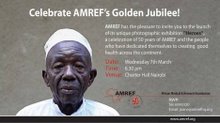
A TASTE OF REALITY - African Medical and Research Foundation (AMREF): For Africa's health realities, offers a Film Catalogue with such titles as: Gulu, TV-Slum, Speak Africa, Baba Mandela, & Big Brother AIDS. To access AMREF, winner of the 2005 Gates Award for Global Health, see AMREF’s link in column at right (Recommended Global Links).

Book Review: COMMISSION ON AFRICA REPORT: This report, chaired by Tony Blair, calls for G8 nations to end extreme poverty in the world's most desperate continent. Reference: Our Common Interest - The Commission for Africa: an argument. Penguin 2005. For the full report and background document visit the relevant link in column at right.

Book Review: BODY COUNT: Not to be confused with a novel of this title, this documents how the Bush Administration, allied with the Christian Right, joined the Vatican to promote abstinence as the preferred strategy for the HIV/AIDS pandemic, and how some African leaders fell in line, denying life-saving drugs while drug companies moved to protect patent rights and profits. Reference: Peter Gill. Body Count - how they turned AIDS into a catastrophe. Profile Books. London 2006. ISBN-10 1 86197 923 1.

 COMMENTARIES .....................................................

MAKING MARKETS WORK FOR THE POOR - CARE Canada's Approach: While a strong civil society and public sector infrastructures are essential for social development, international cooperation increasingly embraces stimulation of a vibrant private sector. Visit the relevant link in column at right.

FIRST WORLD CONCERNS - GDP: A POOR MEASUREMENT OF GROWTH: GDP, widely imagined to measure prosperity, is misleading as it does not reflect wealth disparities, and may rise even as fortunes of middle and lower income people falter.
http://www.sightline.org/publications/enewsletters/CSNews/CS_10_05_economy

THANKS FOR VISITING PacificSci GLOBAL PERSPECTIVES!

INSPIRATIONAL WELCOME ............................... from T.S.Eliot's "Little Gidding"

If you came this way From the place you would come from... It would be the same at the end of the journey... If you came, not knowing what you came for, It would be the same... And what you thought you came for Is only a shell, a husk of meaning... From which the purpose breaks only when it is fulfilled If at all.