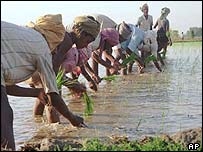
PREAMBLE: For this issue we have selected a recent UN News Release that addresses global consequences of the greed and corruption in the financial industry. While almost all people have been affected by the economic crisis, the World Bank states that the crisis is set to drive 53 million more people into poverty in 2009, seriously threatening the prospect of achieving the Millennium Development Goals.
ECONOMIC CRISIS TO DRIVE MILLIONS INTO POVERTY IN 2009
13 February 2009 – The spreading global economic crisis is set to trap up to 53 million more people in poverty in developing countries this year on top of the 130-155 million driven into poverty in 2008 by soaring food and fuel prices, bringing the total of those living on less than $2 a day to over 1.5 billion, according to the World Bank.
The new forecast highlights the serious threat to achieving the United Nation's Millennium Development Goals (MDGs), which aim to slash poverty, hunger, infant and maternal mortality, and lack of access to health care and education, all by 2015. Preliminary estimates for 2009 to 2015 forecast that an average 200,000 to 400,000 more children a year may die if the crisis persists, making a total of 1.4 to 2.8 million over the period.
“The global economic crisis threatens to become a human crisis in many developing countries unless they can take targeted measures to protect vulnerable people in their communities,” World Bank President Robert B. Zoellick said on the eve of the Group of Seven (G7) finance ministers' meeting of leading industrial countries in Rome on Saturday, which he will attend.
“While much of the world is focused on bank rescues and stimulus packages, we should not forget that poor people in developing countries are far more exposed if their economies falter. This is a global crisis requiring a global solution. The needs of poor people in developing countries must be on the table.”
New estimates for 2009 suggest that lower economic growth rates will trap 46 million more people on less than $1.25 a day than was expected prior to the crisis, for a total of an extra 53 million trapped on less than $2 a day, on top of the 1.37 billion before the current crises.
A World Bank policy note issued in the run up to the G7 meeting reports that almost 40 per cent of 107 developing countries were highly exposed to the effects of the crisis and the remainder were moderately exposed, with less than 10 percent facing little risk.
It is critical for exposed countries to finance job creation, delivery of essential services and infrastructure, and safety net programmes for the vulnerable, according to the note, entitled The Global Economic Crisis: Assessing Vulnerability with a Poverty Lens.
Yet three quarters of these countries cannot raise funds domestically or internationally to finance programmes to curb the effects of the downturn. One quarter of them also lack the institutional capacity to expand spending to protect vulnerable groups. The note urges financial support in the form of grants and low or zero interest loans for these countries.
Mr. Zoellick recently called for the establishment of a Vulnerability Fund in which each developed country would devote 0.7 per cent of its stimulus package to aid poorer countries set up safety net programmes, invest in infrastructure, and support small and medium-sized enterprises and microfinance institutions.
Source: UN News Service. http://www.un.org/apps/news/story.asp?NewsID=29897&Cr=financial&Cr1=crisis
Wednesday, 15 April 2009
Monday, 16 March 2009
LEADERSHIP AND MANAGEMENT OF HEALTH ORGANIZATIONS – 7 QUESTIONS
PREAMBLE: When this issue was first posted on March 16, we attempted to test a 7-day polling function offered by Google. Our trial topic was “health leadership and management”. However, interest in the poll was insufficient, so we removed the questions from our sidebar on March 23. We also reconstructed the material that now follows, to be consistent with this decision.
Given the role of poorly prepared leaders and managers in the global financial crisis, it is possible that a similar crisis may be developing in health organizations.
As a “backgrounder” we supply extracts from an Opinion piece in the Globe and Mail, in which Henry Mintzberg, Cleghorn Professor of Management Studies, McGill University, took aim at “America’s monumental failure of management”. His focus on the global financial crisis and the contribution of US management teaching, including that of Harvard University, stimulated our interest in reflecting on current approaches to health leadership and management and the potential for similar failures.
Reference: Minzberg H. Globe and Mail p A11, March 16, 2009 http://www.theglobeandmail.com/servlet/story/RTGAM.20090313.wcomintzberg16/BNStory/specialComment/home
Comment: One of our concerns is that the current fashion of promoting leadership studies among health professionals early in their career development may be at the cost of first building their management skills; if so, this will eventually adversely impact the managerial competence of their organizations.
BACKGROUNDER
In his critique of American leadership and management training practices, Minzberg states: “American management is still revered across much of the globe for what it used to be. Now, a great deal of it is just plain rotten - detached and hubristic. Instead of rolling up their sleeves and getting engaged, too many CEOs sit in their offices and deem: They pronounce targets for others to meet, or else get fired.”
Further on he addresses “hubris on a massive scale” from which we extract the following:
“Management is a practice, learned in context. No manager, let alone leader, has ever been created in a classroom. Programs that claim to do so promote hubris instead. And that has been carried from the business schools into corporate America on a massive scale."
Minzberg then comments on the iconic Harvard Business School which, according to its MBA website, is ‘focused on one purpose - developing leaders.’ He states: "At Harvard, you become such a leader by reading hundreds of brief case studies, each the day before you or your colleagues are called on to pronounce on what that company should do. Yesterday, you knew nothing about Acme Inc.; today, you're pretending to decide its future. What kind of leader does that create?"
He notes that Harvard prides itself on how many of its graduates make it to the executive suites. He states: “Learning how to present arguments in a classroom… helps. But how do these people perform once they get to those suites? Harvard does not ask. So we took a look.” He then summarizes a study he carried out with a colleague Joseph Lampel:
“Joseph Lampel and I found a list of Harvard Business School superstars, published in a 1990 book by a long-term insider. We tracked the performance of the 19 corporate chief executives on that list, many of them famous, across more than a decade. Ten were outright failures (the company went bankrupt, the CEO was fired, a major merger backfired etc.); another four had questionable records at best. Five out of the 19 seemed to do fine. These figures, limited as they were, sounded pretty damning. (When we published our results, there was nary a peep. No one really cared.)”
OUR SEVEN QUESTIONS ON HEALTH LEADERSHIP AND MANAGEMENT
These questions were composed by the authors of this blog, and required only “yes” or “no” responses, a format that we recognized would severely limit the scope of the exercise. As already noted, responses were insufficient to form a basis for any comment or interpretation, so we removed the poll from this issue on March 23, and offer the same seven question (below), but now with our own commentary.
Introduction: A wide range of educational institutions (with varying capacities in health, leadership and management, from modest to substantial) have a major impact on the preparation of leaders and managers for the health field, yet health systems everywhere are creaking under the strain of expanding need and constrained budgets. We suggest therefore that the time has surely come to examine some related questions regarding leadership and management in the health sector.
The Seven Questions:
1. Like GM, are some health care organizations now “too big to fail”? COMMENT: We believe that this is very much so, and that examples exist at every level, from the World Health Organization to any number of health service entities within countries. What looms large are issues of accountability.
2. Is too much emphasis now being given to “leadership” training for health organizations at the expense of basic management skills? COMMENT: We are aware of numerous instances where individuals have been inside-tracked into leadership training, without having first gone through the process of learning much about health organizations from working within them.
3. Noting a trend towards recruiting CEOs for large health organizations from outside the health system, based on their success in unrelated fields e.g, food, energy, tourism, are such CEOs adequately prepared for the health context? COMMENT: This is a definite risk in political cultures that are more oriented towards cost containment than positive health outcomes.
4. Do such CEOs give enough philosophical commitment (comparable to that of the health professionals they lead) to health goals and objectives? COMMENT: We believe that there is a risk here, and one that needs to be studied. Just how well can "leaders" from outside health identify with health goals, or will business models dominate to the detriment of evidence based services?
5. With such CEOs is there a greater risk of remote leadership with an easy exit out of health in the event of failure? COMMENT: To the extent that health services are viewed as a business, we believe that there is a risk in relation to this trend; while career mobility and sourcing talent are important recruitment considerations, there are also downside risks in relation to loyalty to a health mission e.g, consider the greed and irresponsibility in the financial industry that has surfaced over the past year.
6. Are “leaders” of health organizations receiving disproportionate compensation, driven more by the size of their operating budgets than consistency with evidence of efficacy and positive outcomes, while extolling teamwork and sustainability? COMMENT: We dont know the answer to this, but it is a serious question: if more transparency were to apply to senior levels of the health enterprise, it would be easier for everyone to know.
7. Do teachers of health leadership and management in tertiary education institutions have sufficient health leadership and management experience to relate their teaching to reality? COMMENT: There are many exceptions, but also many people engaged in education and research into health leadership and management have a "product" to promote, not necessarily real experience on how that product actually works.
Disclaimer: The foregoing questions and comments are not cited from any of Minzberg's work, but were stimulated by his opinion piece. We accept responsibility for our exercise, and hope that it may provoke interest in the future of health leadership and management.
Given the role of poorly prepared leaders and managers in the global financial crisis, it is possible that a similar crisis may be developing in health organizations.
As a “backgrounder” we supply extracts from an Opinion piece in the Globe and Mail, in which Henry Mintzberg, Cleghorn Professor of Management Studies, McGill University, took aim at “America’s monumental failure of management”. His focus on the global financial crisis and the contribution of US management teaching, including that of Harvard University, stimulated our interest in reflecting on current approaches to health leadership and management and the potential for similar failures.
Reference: Minzberg H. Globe and Mail p A11, March 16, 2009 http://www.theglobeandmail.com/servlet/story/RTGAM.20090313.wcomintzberg16/BNStory/specialComment/home
Comment: One of our concerns is that the current fashion of promoting leadership studies among health professionals early in their career development may be at the cost of first building their management skills; if so, this will eventually adversely impact the managerial competence of their organizations.
BACKGROUNDER
In his critique of American leadership and management training practices, Minzberg states: “American management is still revered across much of the globe for what it used to be. Now, a great deal of it is just plain rotten - detached and hubristic. Instead of rolling up their sleeves and getting engaged, too many CEOs sit in their offices and deem: They pronounce targets for others to meet, or else get fired.”
Further on he addresses “hubris on a massive scale” from which we extract the following:
“Management is a practice, learned in context. No manager, let alone leader, has ever been created in a classroom. Programs that claim to do so promote hubris instead. And that has been carried from the business schools into corporate America on a massive scale."
Minzberg then comments on the iconic Harvard Business School which, according to its MBA website, is ‘focused on one purpose - developing leaders.’ He states: "At Harvard, you become such a leader by reading hundreds of brief case studies, each the day before you or your colleagues are called on to pronounce on what that company should do. Yesterday, you knew nothing about Acme Inc.; today, you're pretending to decide its future. What kind of leader does that create?"
He notes that Harvard prides itself on how many of its graduates make it to the executive suites. He states: “Learning how to present arguments in a classroom… helps. But how do these people perform once they get to those suites? Harvard does not ask. So we took a look.” He then summarizes a study he carried out with a colleague Joseph Lampel:
“Joseph Lampel and I found a list of Harvard Business School superstars, published in a 1990 book by a long-term insider. We tracked the performance of the 19 corporate chief executives on that list, many of them famous, across more than a decade. Ten were outright failures (the company went bankrupt, the CEO was fired, a major merger backfired etc.); another four had questionable records at best. Five out of the 19 seemed to do fine. These figures, limited as they were, sounded pretty damning. (When we published our results, there was nary a peep. No one really cared.)”
OUR SEVEN QUESTIONS ON HEALTH LEADERSHIP AND MANAGEMENT
These questions were composed by the authors of this blog, and required only “yes” or “no” responses, a format that we recognized would severely limit the scope of the exercise. As already noted, responses were insufficient to form a basis for any comment or interpretation, so we removed the poll from this issue on March 23, and offer the same seven question (below), but now with our own commentary.
Introduction: A wide range of educational institutions (with varying capacities in health, leadership and management, from modest to substantial) have a major impact on the preparation of leaders and managers for the health field, yet health systems everywhere are creaking under the strain of expanding need and constrained budgets. We suggest therefore that the time has surely come to examine some related questions regarding leadership and management in the health sector.
The Seven Questions:
1. Like GM, are some health care organizations now “too big to fail”? COMMENT: We believe that this is very much so, and that examples exist at every level, from the World Health Organization to any number of health service entities within countries. What looms large are issues of accountability.
2. Is too much emphasis now being given to “leadership” training for health organizations at the expense of basic management skills? COMMENT: We are aware of numerous instances where individuals have been inside-tracked into leadership training, without having first gone through the process of learning much about health organizations from working within them.
3. Noting a trend towards recruiting CEOs for large health organizations from outside the health system, based on their success in unrelated fields e.g, food, energy, tourism, are such CEOs adequately prepared for the health context? COMMENT: This is a definite risk in political cultures that are more oriented towards cost containment than positive health outcomes.
4. Do such CEOs give enough philosophical commitment (comparable to that of the health professionals they lead) to health goals and objectives? COMMENT: We believe that there is a risk here, and one that needs to be studied. Just how well can "leaders" from outside health identify with health goals, or will business models dominate to the detriment of evidence based services?
5. With such CEOs is there a greater risk of remote leadership with an easy exit out of health in the event of failure? COMMENT: To the extent that health services are viewed as a business, we believe that there is a risk in relation to this trend; while career mobility and sourcing talent are important recruitment considerations, there are also downside risks in relation to loyalty to a health mission e.g, consider the greed and irresponsibility in the financial industry that has surfaced over the past year.
6. Are “leaders” of health organizations receiving disproportionate compensation, driven more by the size of their operating budgets than consistency with evidence of efficacy and positive outcomes, while extolling teamwork and sustainability? COMMENT: We dont know the answer to this, but it is a serious question: if more transparency were to apply to senior levels of the health enterprise, it would be easier for everyone to know.
7. Do teachers of health leadership and management in tertiary education institutions have sufficient health leadership and management experience to relate their teaching to reality? COMMENT: There are many exceptions, but also many people engaged in education and research into health leadership and management have a "product" to promote, not necessarily real experience on how that product actually works.
Disclaimer: The foregoing questions and comments are not cited from any of Minzberg's work, but were stimulated by his opinion piece. We accept responsibility for our exercise, and hope that it may provoke interest in the future of health leadership and management.


Saturday, 14 February 2009
CLIMATE CHANGE AND THE EXPANDING GLOBAL REACH OF DENGUE FEVER
PREAMBLE: We selected dengue fever for this issue because both principals of PacificSci developed this disease while visiting the island of Trinidad in the West Indies in December 2008. Characterized by headache, muscle and joint pains, spiking fever; and (in one of us) a petechial (hemorraghic) rash, the other of us was admitted to hospital for dehydration and a major fall in platelet count (20,000; normal = 150,000-400,000). We tested positive to an IgM laboratory test, indicative of acute infection. We returned to Canada in mid-January and are convalescing.
Given the incubation range for dengue fever, typically 4-7 days, it is likely that we were exposed within 24 hours of entry into Trinidad, either on arrival at Piarco airport, or subsequently at a residential area on the north-west boundary of Port of Spain. Although the Ministry of Health maintains a mosquito control programme at the airport, an active epidemic of dengue fever had been reported by the media for several weeks in adjacent communities to the east of Port of Spain; locally employed baggage handlers could have served as a reservoir. Initially downplayed by the Ministry of Health (according to media reports), the Pan American Health Organization records 2,366 cases including deaths by the 37th week of in 2008 in Trinidad, which translates to well over 3000 cases by year end.
Source: http://www.paho.org/English/AD/DPC/CD/dengue-cases-2008.htm
Since the late 1970s dengue fever reemerged as an expanding public health problem in the Caribbean basin. Because the situation now involves co-circulation of three serotypes, the threat to personal and public health has actually heightened because a primary infection does not immunize against subsequent infection from another strain; to the contrary, it sets up a complex immune response that may result in serious disease e.g, dengue hemorrhage fever and dengue shock syndrome. This threat is compounded by climate change which is having the effect of both extending the range of the mosquito vector and also the length of the mosquito breeding season.
[See: accompanying articles below for more details].
Although there has been plenty of warning about this increasing threat, diminished priorities for public health e.g., education and mosquito abatement, plus deteriorating infrastructures e.g, drains and ditches which trap fresh water (ideal for mosquito breeding), have exacerbated the impact of this condition in many countries. Concerns for the potential impact on tourism have contributed to insufficient recognition by the political establishment, an inappropriate response because ultimately this disease will become more firmly established, and affected countries will become globally recognized as endemic for the disease. The major risk is of course for the people of the affected countries, especially those who live in heavily mosquito afflicted areas. The adequacy of the health care system in many instances may not be sufficient to cope with epidemic surges; clearly therefore the appropriate response is to refocus on prevention.
PRIOR WARNINGS OF GEOGRAPHIC EXPANSION AND INCREASED SEVERITY - HAVE THEY GONE UNHEEDED?
Over a decade ago [1], mathematical models simulating climate change projected that rising global temperatures will increase the range of mosquitoes that transmits the dengue fever virus, even then considered the most serious viral infection transmitted in man by insects, whether measured by number of infections or the number of deaths.
Researchers used three different models to show that dengue's epidemic potential increases with a relatively small temperature rise. The higher a virus's epidemic potential, the fewer mosquitoes are necessary to maintain or spread dengue in a vulnerable population. Most predicted areas of encroachment were temperate regions that border on endemic zones, places where humans and the primary carrier, the mosquito Aedes aegypti, often co-exist, but where lower temperatures until then limited transmission.
Global warming would not only increase the range of the mosquito but would also reduce the size of Ae. aegypti's larva and, ultimately, adult size. Since smaller adults must feed more frequently to develop their eggs, warmer temperatures boost the incidence of double feeding and increase the likelihood of transmission. In addition, the time the virus must spend incubating inside the mosquito is shortened at higher temperatures. Shortening the incubation period can mean a potential higher transmission rate of disease.
NOTE: The foregoing study was co-funded by the U.S. Environmental Protection Agency, the National Institute of Public Health and Environment (RIVM) (the Netherlands), and the Center for Medical, Agricultural, and Veterinary Entomology of the U.S. Department of Agriculture.
According to a recent report [2], published by the US Centers for Disease Control and Prevention, dengue is expanding in tropical and subtropical regions and is now the most frequent arboviral disease globally, with an estimated annual 100 million cases of dengue fever, 250,000 cases of dengue hemorrhagic fever, and 25,000 deaths (a 1% fatality:case ratio). Dengue has been reported in >100 countries, and 2.5 billion people live in areas where it is endemic.
Increasingly reported in travelers, dengue is a major international public health concern because of the expanding geographic distribution of the virus and competent mosquito vectors, increased frequency of epidemics, co-circulation of multiple virus serotypes, and emergence of dengue hemorrhagic fever in new areas.
References:
1. Science Daily Mar 10, 1998 http://www.sciencedaily.com/releases/1998/03/980310081157.htm
2. Wilder-Smith et al in the January 2009 issue of Emerging Infectious Diseases http://www.cdc.gov/EID/content/15/1/8.htm
MORE GLOBAL NEWS ON DENGUE FEVER
The situation as experienced described in our preamble is by no means limited to the Caribbean basin. A report published in Time magazine in 2007 reveals – among other things - that denial and inertia regarding dengue fever is widespread. Political leadership clearly has been insufficient in many countries to respond adequately to this threat. The following is extracted from a TIME Magazine report in 2007 (citation below):
“Across Southeast Asia, doctors and public-health officials are grappling with alarmingly high dengue-infection rates. Cambodia and Vietnam reported double the cases this year (2007) compared with (the prior year), and more than 400 deaths; Thailand and Burma each recorded roughly a third more cases in 2007. The World Health Organization (WHO) says this is the fourth consecutive year of unusually high rates in the region — and doctors are worried that global warming may be partially to blame.
That's because the mosquito that infects most people with dengue, the striped Aedes aegypti, does better in warm, wet weather. Regions experiencing rising temperatures and longer rainy seasons are seeing large outbreaks year after year, and what has previously been thought of as a tropical disease is popping up in more temperate regions. Nepal and Bhutan saw their first cases in recent years, as did isolated spots such as Easter Island. Today, an estimated 2.5 billion people live in areas where dengue is endemic. The WHO expects millions more will be added in coming years. ‘Dengue is an evolving situation,’ says Dr. Jai Narain, director of communicable diseases for the WHO in Southeast Asia. ‘A lot of people say climate change will impact [the disease] somewhere down the line. But it already is.’
Weather isn't doing the job alone. As more and more people migrate to cities, they create additional opportunities for the mosquito to spread the virus. The problem is particularly acute in developing countries, where inadequate utilities mean residents must store water in jars and tanks — prime breeding grounds for the Aedes aegypti. Increasing air travel is also a factor as infected fliers spread the disease quickly worldwide. ‘It's simplistic to suggest that the increasing outbreak is solely caused by climate change,’ says Simon Hales, a senior research fellow at New Zealand's University of Otago. ‘But those who would suggest that it has nothing to do with it are equally misguided.’ Hales estimates that if global warming advances as predicted by the U.N., more than half the world could be dengue country before the end of this century.
Lacking vaccines or effective treatments [Ed Note: neither option exist for dengue, which has not received adequate attention to this needed research and development], public-health officials are battling the disease with old-school tactics: pest control and education. But fumigation campaigns are too expensive for many Asian governments to carry out effectively; it's also difficult to regularly send out health officials to remind communities to keep their homes dry and water supplies clean. Even wealthy Singapore, a model of dengue control, was floored by an outbreak in 2005. Reported cases went down the following year, but are back up again slightly in 2007. ‘That's a kind of warning to us," says Hales. "As the temperature continues to increase, it gets progressively more difficult to prevent the disease from spreading — even with the best technology.’
Health-care professionals are trying to raise global awareness of the threat. In Cambodia, for example, more funding goes to controlling avian flu, a disease that affects far fewer people but has a higher fear factor worldwide. Health organizations such as the U.S.-based Centers for Disease Control and Prevention are stressing the link between climate change and disease, hoping to get more money to fight mosquito-borne illnesses.
‘This is a critical moment,’ says Dr. Maria Neira, director of the WHO's program on public health and the environment. ‘If the public pressure is maintained, the politicians will act accordingly. Waiting for dengue fever to burn itself out may be the only option for individuals who catch the disease, but that's a lousy prescription for the planet.’ “
Source: Krista Mahr Thursday, Dec. 06, 2007 TIME MAGAZINE http://www.time.com/time/magazine/article/0,9171,1691616,00.html
Given the incubation range for dengue fever, typically 4-7 days, it is likely that we were exposed within 24 hours of entry into Trinidad, either on arrival at Piarco airport, or subsequently at a residential area on the north-west boundary of Port of Spain. Although the Ministry of Health maintains a mosquito control programme at the airport, an active epidemic of dengue fever had been reported by the media for several weeks in adjacent communities to the east of Port of Spain; locally employed baggage handlers could have served as a reservoir. Initially downplayed by the Ministry of Health (according to media reports), the Pan American Health Organization records 2,366 cases including deaths by the 37th week of in 2008 in Trinidad, which translates to well over 3000 cases by year end.
Source: http://www.paho.org/English/AD/DPC/CD/dengue-cases-2008.htm
Since the late 1970s dengue fever reemerged as an expanding public health problem in the Caribbean basin. Because the situation now involves co-circulation of three serotypes, the threat to personal and public health has actually heightened because a primary infection does not immunize against subsequent infection from another strain; to the contrary, it sets up a complex immune response that may result in serious disease e.g, dengue hemorrhage fever and dengue shock syndrome. This threat is compounded by climate change which is having the effect of both extending the range of the mosquito vector and also the length of the mosquito breeding season.
[See: accompanying articles below for more details].
Although there has been plenty of warning about this increasing threat, diminished priorities for public health e.g., education and mosquito abatement, plus deteriorating infrastructures e.g, drains and ditches which trap fresh water (ideal for mosquito breeding), have exacerbated the impact of this condition in many countries. Concerns for the potential impact on tourism have contributed to insufficient recognition by the political establishment, an inappropriate response because ultimately this disease will become more firmly established, and affected countries will become globally recognized as endemic for the disease. The major risk is of course for the people of the affected countries, especially those who live in heavily mosquito afflicted areas. The adequacy of the health care system in many instances may not be sufficient to cope with epidemic surges; clearly therefore the appropriate response is to refocus on prevention.
PRIOR WARNINGS OF GEOGRAPHIC EXPANSION AND INCREASED SEVERITY - HAVE THEY GONE UNHEEDED?
Over a decade ago [1], mathematical models simulating climate change projected that rising global temperatures will increase the range of mosquitoes that transmits the dengue fever virus, even then considered the most serious viral infection transmitted in man by insects, whether measured by number of infections or the number of deaths.
Researchers used three different models to show that dengue's epidemic potential increases with a relatively small temperature rise. The higher a virus's epidemic potential, the fewer mosquitoes are necessary to maintain or spread dengue in a vulnerable population. Most predicted areas of encroachment were temperate regions that border on endemic zones, places where humans and the primary carrier, the mosquito Aedes aegypti, often co-exist, but where lower temperatures until then limited transmission.
Global warming would not only increase the range of the mosquito but would also reduce the size of Ae. aegypti's larva and, ultimately, adult size. Since smaller adults must feed more frequently to develop their eggs, warmer temperatures boost the incidence of double feeding and increase the likelihood of transmission. In addition, the time the virus must spend incubating inside the mosquito is shortened at higher temperatures. Shortening the incubation period can mean a potential higher transmission rate of disease.
NOTE: The foregoing study was co-funded by the U.S. Environmental Protection Agency, the National Institute of Public Health and Environment (RIVM) (the Netherlands), and the Center for Medical, Agricultural, and Veterinary Entomology of the U.S. Department of Agriculture.
According to a recent report [2], published by the US Centers for Disease Control and Prevention, dengue is expanding in tropical and subtropical regions and is now the most frequent arboviral disease globally, with an estimated annual 100 million cases of dengue fever, 250,000 cases of dengue hemorrhagic fever, and 25,000 deaths (a 1% fatality:case ratio). Dengue has been reported in >100 countries, and 2.5 billion people live in areas where it is endemic.
Increasingly reported in travelers, dengue is a major international public health concern because of the expanding geographic distribution of the virus and competent mosquito vectors, increased frequency of epidemics, co-circulation of multiple virus serotypes, and emergence of dengue hemorrhagic fever in new areas.
References:
1. Science Daily Mar 10, 1998 http://www.sciencedaily.com/releases/1998/03/980310081157.htm
2. Wilder-Smith et al in the January 2009 issue of Emerging Infectious Diseases http://www.cdc.gov/EID/content/15/1/8.htm
MORE GLOBAL NEWS ON DENGUE FEVER
The situation as experienced described in our preamble is by no means limited to the Caribbean basin. A report published in Time magazine in 2007 reveals – among other things - that denial and inertia regarding dengue fever is widespread. Political leadership clearly has been insufficient in many countries to respond adequately to this threat. The following is extracted from a TIME Magazine report in 2007 (citation below):
“Across Southeast Asia, doctors and public-health officials are grappling with alarmingly high dengue-infection rates. Cambodia and Vietnam reported double the cases this year (2007) compared with (the prior year), and more than 400 deaths; Thailand and Burma each recorded roughly a third more cases in 2007. The World Health Organization (WHO) says this is the fourth consecutive year of unusually high rates in the region — and doctors are worried that global warming may be partially to blame.
That's because the mosquito that infects most people with dengue, the striped Aedes aegypti, does better in warm, wet weather. Regions experiencing rising temperatures and longer rainy seasons are seeing large outbreaks year after year, and what has previously been thought of as a tropical disease is popping up in more temperate regions. Nepal and Bhutan saw their first cases in recent years, as did isolated spots such as Easter Island. Today, an estimated 2.5 billion people live in areas where dengue is endemic. The WHO expects millions more will be added in coming years. ‘Dengue is an evolving situation,’ says Dr. Jai Narain, director of communicable diseases for the WHO in Southeast Asia. ‘A lot of people say climate change will impact [the disease] somewhere down the line. But it already is.’
Weather isn't doing the job alone. As more and more people migrate to cities, they create additional opportunities for the mosquito to spread the virus. The problem is particularly acute in developing countries, where inadequate utilities mean residents must store water in jars and tanks — prime breeding grounds for the Aedes aegypti. Increasing air travel is also a factor as infected fliers spread the disease quickly worldwide. ‘It's simplistic to suggest that the increasing outbreak is solely caused by climate change,’ says Simon Hales, a senior research fellow at New Zealand's University of Otago. ‘But those who would suggest that it has nothing to do with it are equally misguided.’ Hales estimates that if global warming advances as predicted by the U.N., more than half the world could be dengue country before the end of this century.
Lacking vaccines or effective treatments [Ed Note: neither option exist for dengue, which has not received adequate attention to this needed research and development], public-health officials are battling the disease with old-school tactics: pest control and education. But fumigation campaigns are too expensive for many Asian governments to carry out effectively; it's also difficult to regularly send out health officials to remind communities to keep their homes dry and water supplies clean. Even wealthy Singapore, a model of dengue control, was floored by an outbreak in 2005. Reported cases went down the following year, but are back up again slightly in 2007. ‘That's a kind of warning to us," says Hales. "As the temperature continues to increase, it gets progressively more difficult to prevent the disease from spreading — even with the best technology.’
Health-care professionals are trying to raise global awareness of the threat. In Cambodia, for example, more funding goes to controlling avian flu, a disease that affects far fewer people but has a higher fear factor worldwide. Health organizations such as the U.S.-based Centers for Disease Control and Prevention are stressing the link between climate change and disease, hoping to get more money to fight mosquito-borne illnesses.
‘This is a critical moment,’ says Dr. Maria Neira, director of the WHO's program on public health and the environment. ‘If the public pressure is maintained, the politicians will act accordingly. Waiting for dengue fever to burn itself out may be the only option for individuals who catch the disease, but that's a lousy prescription for the planet.’ “
Source: Krista Mahr Thursday, Dec. 06, 2007 TIME MAGAZINE http://www.time.com/time/magazine/article/0,9171,1691616,00.html
Wednesday, 14 January 2009
INTERNATIONAL & GLOBAL DEVELOPMENT – YEAR IN REVIEW 2008
PREAMBLE: This is our second annual review, offered at the beginning of New Year 2009 because we reserved our December 2008 issue to celebrate the 5th anniversary of Pacific Health & Development Sciences (PacificSci).
THREE LEADING ISSUES FROM 2008:
Flowers or Fertilizer?
1. GLOBAL STEWARDSHIP: There can be little debate that the leading issue in this category is the global economic crisis. In the latter half of 2008, the world faced an unprecedented near-collapse of its banking systems, ushering in a global recession.
Fertilizer: We assign the prime responsibility for this catastrophe jointly to political leadership in the United States in concert with the greed, negligence and corruption of its financial industry. This does not take the inaction and practices of other countries off the hook, as consequential national and global failures are documented extensively elsewhere, especially in Europe. Clearly, no country (rich or poor) has been spared, and it will take many years for individuals, families, communities and societies as a whole to recover from this crisis of greed, neglect and incompetence. Perhaps needless to say, the necessities of life and the social fabric of all countries e.g, health and educational systems, secure food supply, clothing and shelter depend on integrity in our financial systems. Trust must be restored in those systems.
Flowers: Out of this morass some good is emerging, and in this regard we note the leadership of UK Prime Minister Gordon Brown, who put forward a 5 point plan to galvanize the world financial community around new principles. Implicit in the “Brown Doctrine” is an analysis of what is so seriously wrong with the world financial order. It forms a clear case for supra-national supervision of international finance, which clearly cannot any longer be left to the caprices of any one country. The key features of the Doctrine are presented below (2008 as we observed it) from our October 2008 issue.
2. INTERNATIONAL DEVELOPMENT
In this category we draw attention to the work of a World Health Organization (WHO) Commission on the Social Determinants of Health, released in August 2008, chaired by Sir Michael Marmot. In releasing the report in August, WHO Director-General Dr Margaret Chan stated: "Health inequity really is a matter of life and death,…but health systems will not naturally gravitate towards equity. Unprecedented leadership is needed that compels all actors, including those beyond the health sector, to examine their impact on health. Primary health care, which integrates health in all of government's policies, is the best framework for doing so." It does not seem appropriate to allocate “flowers” to the Commission itself, as this would be like “applauding the messenger”. Instead, we now draw attention to their mention of a few countries for addressing inequities:
Flowers: “Some low-income countries such as Cuba, Costa Rica, China, state of Kerala in India and Sri Lanka have achieved levels of good health despite relatively low national incomes”. Wealth alone therefore does not determine the health of a nation's population. But, the Commission points out, wealth can be wisely used: “Nordic countries,… have followed policies that encouraged equality of benefits and services, full employment, gender equity and low levels of social exclusion”. Also “the feasibility of action is indicated in the change… already occurring. Egypt has shown a remarkable drop in child mortality from 235 to 33 per 1000 in 30 years. Greece and Portugal reduced their child mortality from 50 per 1000 births to levels nearly as low as Japan, Sweden, and Iceland. Cuba achieved more than 99% coverage of its child development services in 2000.”
Fertilizer: This can be applied to a large number of nations for whom "health gradients" within countries are persistent or even deteriorating. Examples: Life expectancy for Indigenous Australian males is shorter by 17 years than all other Australian males. In Indonesia, maternal mortality is 3–4 times higher among the poor than the rich. The adult mortality differential between least and most deprived UK neighbourhoods is more than 2.5 times. Child mortality in Nairobi slums is 2.5 times higher than in other parts of the city. A baby born to a Bolivian mother with no education has 10% chance of dying, while one born to a woman with at least secondary education has a 0.4% chance. In the US, 886 202 deaths would have been averted between 1991 and 2000 if mortality rates between white and African Americans were equalized. In Uganda the death rate of children under 5 years in the richest fifth of households is 106 per 1000 live births versus 192 deaths per 1000 live births in the poorest fifth (almost one in five)…; set this against an average death rate for under fives in high income countries of 7 deaths per 1000.
Comment: All too often our political “leaders”, more interested in short term gains (“looking good”) than in real change, respond to such information with fatuous, even pontifical comments, without intending to deal with the underlying causes. This is worse in some countries than in others, and there is even greater cause for concern wherever relevant social indicators are slipping: deteriorating infrastructure, lack of measurable gains in access to health care and quality education, return of previously controlled preventable diseases (e.g, gastroenteritis, dengue fever), crime of various sorts (often related to mismanaged economies and related poverty), corruption and related trends towards authoritarian politics ignoring the fundamentals of human rights.
3. HUMAN RIGHTS ABUSES
At time of writing, over a thousand people, mostly innocent civilians, have been killed in Gaza by hi-tech Israeli military attacks since mid December 2008, virtually 100 times the number of Israeli casualties (mostly military, including “friendly fire”). In alleged retaliation for Hamas rocket attacks, in themselves a crime under international humanitarian law, this disproportionate and collective punishment of the Palestinian people can only be viewed as an atrocity of far greater magnitude.
In the meantime, long standing legitimate Palestinian grievances continue to be ignored by Israel and by the so-called “international community”.
Apologists for Israel are quick to note the horrific atrocities elsewhere in the world over the past year, such as in the Sudan and the Congo, and complain that their conflict attracts disproportionate condemnation. Israel thereby claims to occupy higher moral ground in its conflict with the Palestinians; yet the facts remain that people driven out of their ancestral land, penned up in refugee camps, impoverished and colonized by settlements on land that many recognize as theirs, also have the right to self-determination.
Flowers: Six international humanitarian NGOs: Amnesty International, Christian Aid, CAFOD, CARE, OXFAM, Save the Children, Trocaire; for documenting the situation in the Gaza as “the worst since the 1967 war between Israel and its neighbours” (March 2008).
Fertilizer: Israel, and through their support for its actions, the US and Canada. The US has funded and armed Israel to become the most powerful military force in the Middle East, on land, sea and air (Gaza has no military capacity, hence the asymmetry of home-made rockets). Canada, once a fair minded country, meanwhile has adopted an almost totally one-sided posture in support of Israel (under the minority government of Stephen Harper). It remains to be seen whether the incoming Obama administration will be more even-handed than its predecessor, given the power of the Israeli lobby on this continent.
With supporters like this, should Israel really be compared with Sudan or the Congo? Or should it be given the same scrutiny as the Balkans, and be referred urgently to a war crimes tribunal?
Comment: It is difficult to see where this is going and who is intended to benefit from the continued stand-off between these two peoples. What are the motivations behind the attacks? There is surely more to this than home-made rockets, especially in the context of unresolved injustices. There is potential here for an even wider regional conflagration. For a world only now starting to emerge from the Bush-Blair distortions of information to prosecute the disaster in Iraq, we must remain alert to the advice of Edmund Burke:
All that is needed for the forces of evil to succeed is for enough good men to remain silent.
2008 AS WE RECORDED IT
January: WORLD DEVELOPMENT CALLS FOR INVESTMENT IN AGRICULTURE 2008 The World Development Report 2008 (linked) calls for greater investment in agriculture in developing countries. This annual World Bank report warns that the sector must be placed at the center of the development agenda if goals of halving extreme poverty and hunger by 2015 are to be realized: While 75% of the world’s poor live in rural areas in developing countries, a mere 4% of official development assistance goes to agriculture; In Sub-Saharan Africa, a region heavily reliant on agriculture for overall growth, public spending for farming is also only 4% of total government spending and the sector is still taxed at relatively high levels; GDP growth originating in agriculture is about four times more effective in raising incomes of extremely poor people than GDP growth originating outside the sector.
Said World Bank Group President Robert B. Zoellick: “At the global level, countries must deliver on vital reforms such as cutting distorting subsidies and opening markets, while civil society groups, especially farmer organizations, need more say in setting the agricultural agenda.”
In this issue we focused on Malawi as a Case Study of the role of new subsidies to enhance agricultural production, despite decades of donor proscription not to subsidize, and take note of a World Trade Organization investigation into the use by the United States of truly massive trade-distorting farm subsidies in violation of international commerce rules.
February: CANADIAN POLITICS TRUMPS NUCLEAR SCIENCE, HEALTH AND SAFETY This issue draws attention to the apparent disregard for nuclear safeguards recently revealed by Canada’s minority Conservative government. This failure to respect the independent role of the Canadian Nuclear Safety Commission puts into question whether Canada takes nuclear safety seriously. For a synopsis of this episode, we paraphrased and updated the core content of a January 2008 article in The (Toronto) Star by Walkom (acknowledged). Further down, we summarized a report from the Canadian Medical Association Journal that revealed the manipulative attitude of the Canadian medical isotope industry, paraphrased from a CTV News report. The main story is how Canada’s government put politics ahead of public health and safety. Clearly there are questionable commercial and political practices in Canada at present.
March: HUMANITARIAN SITUATION IN GAZA WORST IN FOUR DECADES This issue features a report recently released by six international humanitarian NGOs (Amnesty International, Christian Aid, CAFOD, CARE, OXFAM, Save the Children, Trocaire), documenting the situation in Gaza as the worst since the 1967 war between Israel and its neighbours. The deterioration can be attributed mostly to the period since mid-2007 when Israel imposed a blockade. For "balance", we cite two reports from Israeli media; we also recognize that – like Canadians and their government –the views of all Israelis are not necessarily reflected in the policies of their government.
Canadian Complicity: This report should be of particular concern for Canadians, especially because Canada (under the minority Conservative government of Stephen Harper) is the only member country to vote against a recent United Nations Human Rights Council motion calling for immediate international action to force Israel to allow fuel, food, medicine and other essential items to be sent to the Gaza Strip, to reopen border crossings and to end its “grave violations” in the occupied Palestinian territory.
April: SEX RATIOS DESTABILIZING IN ASIA “Sex ratio” (SR) refers to the ratio of males to females (M:F) in a population. We focused on this topic because dramatic shifts in sex ratio are taking place in some parts of the world that reveal cultural preferences and social practices favoring the birth/survival of one sex over the other (more often favoring males over females). Other factors influencing the sex ratio of societies include: changing composition by ethnicity and race; civil unrest or warfare; large-scale immigration e.g., male labourers unable to travel with their families; ecological factors eg contaminants in environment; variables affecting mother’s health eg social status, smoking, nutrition, access to support networks.
May: THE GLOBAL ARMS TRADE – An Atrocity? To find out who shares responsibility for global militarization, follow the money trail. Regardless of attempts to legitimize the trade, the historical reality is that bribery, corruption and mercenary as well as national self-interest lie at the heart of the trade. The arms industry is unlike any other. It operates without regulation. It suffers from widespread corruption and bribes. And it makes its profits on the back of machines designed to kill and maim human beings.
So who profits most from this murderous trade? The five permanent members of the UN Security Council—the USA, UK, France, Russia, and China. Together, they are responsible for 80% of reported conventional arms exports. “We can’t have it both ways. We can’t be both the world’s leading champion of peace and the world’s leading supplier of arms.” Former US President Jimmy Carter, presidential campaign, 1976.
June: HEALTH CARE IN CANADA – An Essay: A public consultation on health care, called the Conversation on Health, took place during 2007 in the Canadian province of British Columbia. Our firm made a written submission, and in this issue we took the opportunity to transform the core of this into an overview of Canada’s health care, on the premise that this may be of global interest.
NOTE: The essay is written for the Canadian context, so we caution that Canada’s model is NOT readily translatable to most other countries. However, it may be a viable option for economically developed ones that still lack universal coverage. We reserve the right to change our views on any aspect of this essay; in this sense it is as a work in progress.
July: CHILD SOLDIER INCARCERATED IN GUANTANAMO BAY This month we depicted the situation of a Canadian youth held at the offshore US prison camp at Guantanamo Bay, Cuba, a site selected by the US military for detention of “enemy combatants” so as to circumvent the normal jurisdiction of US laws and to exert military control over due process.
The background on Guantanamo Bay itself is instructive. The US assumed territorial control over this Cuban region under the 1903 Cuban-American Treaty, which granted the US a perpetual lease. The Cuban government today considers the US presence to be illegal, arguing that the Treaty violates Article 52 of the 1969 Vienna Convention on the Law of Treaties, which declares a treaty void if its conclusion has been procured by the threat or use of force in violation of international law. Article 4 of the document, however, states that the Convention shall not be retroactively applied.
August: SELECTED WEB RESOURCES ON GLOBAL HEALTH with an acknowledgement to ProCOR This issue highlights some of the work of an organization we respect for its efforts to bring together a virtual community of health professionals from around the world. ProCOR is devoted to examining health and related social issues of relevance to developing countries, with particular reference to cardiovascular diseases. ProCor's monthly "Resource Update" (edited by Juan Ramos) highlights relevant materials. A recent Resource Update on ProCOR listed a number of websites that offer valuable information about health and/or health resources around the world. Selections are made from this list in order to further disseminate ProCOR’s efforts in this regard, as well as to draw attention to the health communications work of ProCOR.
September: THE SOCIAL DETERMINANTS OF HEALTH In this month we drew attention to the work of a World Health Organization (WHO) Commission on the Social Determinants of Health, released in August 2008, chaired by Sir Michael Marmot.
In releasing the report in August, WHO Director-General Dr Margaret Chan stated: "Health inequity really is a matter of life and death,…but health systems will not naturally gravitate towards equity. Unprecedented leadership is needed that compels all actors, including those beyond the health sector, to examine their impact on health. Primary health care, which integrates health in all of government's policies, is the best framework for doing so."
October: GLOBAL ECONOMIC CRISIS, FINANCIAL REFORMS & “THE BROWN DOCTRINE” British Prime Minister Gordon Brown outlined a five-point program on October 14, 2008 to reform the world’s financial system, and serve as a basis for a new set of global institutions to replace those that have governed international finance since 1944. The 5 principles (for elaboration see the October issue) are: Transparency, Integrity, Responsibility, Tighter Regulation, and New Institutions.
The new system of banking cooperation will need “a new international financial architecture for the Global Age”. New institutions will provide “an effective global early warning system for the world economy, to alert us to the risks at hand”, and “globally accepted standards of regulation” and the cross-border supervision of global corporations.
November: CAN OBAMA RESTORE THE WORLD’S TRUST IN AMERICA’S IDEALS? We dedicate this issue of PacificSci Global Perspectives to Senator Obama’s political victory, and wish him whatever success is achievable in his efforts to turn around the abysmal situation faced by the US following the Bush 2 administration’s widespread failures in global and domestic vision, leadership and management. There are challenges on every front: economy, health, education, security, restoration of democratic and human rights principles in the US itself (including closing Guantanamo Bay, and rejecting torture), and not least rebuilding the nation’s reputation.
December: PacificSci – FIFTH ANNIVERSARY OF A BUSINESS VENTURE WITH A SOCIAL PURPOSE In this issue we examine the emergence of fourth sector organizations as virtually inevitable: breaking with earlier relationships between the state, the private sector and the voluntary sector, operating outside the world of grants, and inside the economic requirement of surviving as a business, the bottom line is one of social purpose: a modern renaissance of motivation to improve the human condition.
AND A HAPPY NEW YEAR!
We extend to readers our best wishes for 2009, with hopes that the serious challenges facing the world in 2008 and other recent years will be better understood and managed going forward. For this to happen we all need better political leadership. PacificSci will continue to offer an independent view of trends and events.
THREE LEADING ISSUES FROM 2008:
Flowers or Fertilizer?
1. GLOBAL STEWARDSHIP: There can be little debate that the leading issue in this category is the global economic crisis. In the latter half of 2008, the world faced an unprecedented near-collapse of its banking systems, ushering in a global recession.
Fertilizer: We assign the prime responsibility for this catastrophe jointly to political leadership in the United States in concert with the greed, negligence and corruption of its financial industry. This does not take the inaction and practices of other countries off the hook, as consequential national and global failures are documented extensively elsewhere, especially in Europe. Clearly, no country (rich or poor) has been spared, and it will take many years for individuals, families, communities and societies as a whole to recover from this crisis of greed, neglect and incompetence. Perhaps needless to say, the necessities of life and the social fabric of all countries e.g, health and educational systems, secure food supply, clothing and shelter depend on integrity in our financial systems. Trust must be restored in those systems.
Flowers: Out of this morass some good is emerging, and in this regard we note the leadership of UK Prime Minister Gordon Brown, who put forward a 5 point plan to galvanize the world financial community around new principles. Implicit in the “Brown Doctrine” is an analysis of what is so seriously wrong with the world financial order. It forms a clear case for supra-national supervision of international finance, which clearly cannot any longer be left to the caprices of any one country. The key features of the Doctrine are presented below (2008 as we observed it) from our October 2008 issue.
2. INTERNATIONAL DEVELOPMENT
In this category we draw attention to the work of a World Health Organization (WHO) Commission on the Social Determinants of Health, released in August 2008, chaired by Sir Michael Marmot. In releasing the report in August, WHO Director-General Dr Margaret Chan stated: "Health inequity really is a matter of life and death,…but health systems will not naturally gravitate towards equity. Unprecedented leadership is needed that compels all actors, including those beyond the health sector, to examine their impact on health. Primary health care, which integrates health in all of government's policies, is the best framework for doing so." It does not seem appropriate to allocate “flowers” to the Commission itself, as this would be like “applauding the messenger”. Instead, we now draw attention to their mention of a few countries for addressing inequities:
Flowers: “Some low-income countries such as Cuba, Costa Rica, China, state of Kerala in India and Sri Lanka have achieved levels of good health despite relatively low national incomes”. Wealth alone therefore does not determine the health of a nation's population. But, the Commission points out, wealth can be wisely used: “Nordic countries,… have followed policies that encouraged equality of benefits and services, full employment, gender equity and low levels of social exclusion”. Also “the feasibility of action is indicated in the change… already occurring. Egypt has shown a remarkable drop in child mortality from 235 to 33 per 1000 in 30 years. Greece and Portugal reduced their child mortality from 50 per 1000 births to levels nearly as low as Japan, Sweden, and Iceland. Cuba achieved more than 99% coverage of its child development services in 2000.”
Fertilizer: This can be applied to a large number of nations for whom "health gradients" within countries are persistent or even deteriorating. Examples: Life expectancy for Indigenous Australian males is shorter by 17 years than all other Australian males. In Indonesia, maternal mortality is 3–4 times higher among the poor than the rich. The adult mortality differential between least and most deprived UK neighbourhoods is more than 2.5 times. Child mortality in Nairobi slums is 2.5 times higher than in other parts of the city. A baby born to a Bolivian mother with no education has 10% chance of dying, while one born to a woman with at least secondary education has a 0.4% chance. In the US, 886 202 deaths would have been averted between 1991 and 2000 if mortality rates between white and African Americans were equalized. In Uganda the death rate of children under 5 years in the richest fifth of households is 106 per 1000 live births versus 192 deaths per 1000 live births in the poorest fifth (almost one in five)…; set this against an average death rate for under fives in high income countries of 7 deaths per 1000.
Comment: All too often our political “leaders”, more interested in short term gains (“looking good”) than in real change, respond to such information with fatuous, even pontifical comments, without intending to deal with the underlying causes. This is worse in some countries than in others, and there is even greater cause for concern wherever relevant social indicators are slipping: deteriorating infrastructure, lack of measurable gains in access to health care and quality education, return of previously controlled preventable diseases (e.g, gastroenteritis, dengue fever), crime of various sorts (often related to mismanaged economies and related poverty), corruption and related trends towards authoritarian politics ignoring the fundamentals of human rights.
3. HUMAN RIGHTS ABUSES
At time of writing, over a thousand people, mostly innocent civilians, have been killed in Gaza by hi-tech Israeli military attacks since mid December 2008, virtually 100 times the number of Israeli casualties (mostly military, including “friendly fire”). In alleged retaliation for Hamas rocket attacks, in themselves a crime under international humanitarian law, this disproportionate and collective punishment of the Palestinian people can only be viewed as an atrocity of far greater magnitude.
In the meantime, long standing legitimate Palestinian grievances continue to be ignored by Israel and by the so-called “international community”.
Apologists for Israel are quick to note the horrific atrocities elsewhere in the world over the past year, such as in the Sudan and the Congo, and complain that their conflict attracts disproportionate condemnation. Israel thereby claims to occupy higher moral ground in its conflict with the Palestinians; yet the facts remain that people driven out of their ancestral land, penned up in refugee camps, impoverished and colonized by settlements on land that many recognize as theirs, also have the right to self-determination.
Flowers: Six international humanitarian NGOs: Amnesty International, Christian Aid, CAFOD, CARE, OXFAM, Save the Children, Trocaire; for documenting the situation in the Gaza as “the worst since the 1967 war between Israel and its neighbours” (March 2008).
Fertilizer: Israel, and through their support for its actions, the US and Canada. The US has funded and armed Israel to become the most powerful military force in the Middle East, on land, sea and air (Gaza has no military capacity, hence the asymmetry of home-made rockets). Canada, once a fair minded country, meanwhile has adopted an almost totally one-sided posture in support of Israel (under the minority government of Stephen Harper). It remains to be seen whether the incoming Obama administration will be more even-handed than its predecessor, given the power of the Israeli lobby on this continent.
With supporters like this, should Israel really be compared with Sudan or the Congo? Or should it be given the same scrutiny as the Balkans, and be referred urgently to a war crimes tribunal?
Comment: It is difficult to see where this is going and who is intended to benefit from the continued stand-off between these two peoples. What are the motivations behind the attacks? There is surely more to this than home-made rockets, especially in the context of unresolved injustices. There is potential here for an even wider regional conflagration. For a world only now starting to emerge from the Bush-Blair distortions of information to prosecute the disaster in Iraq, we must remain alert to the advice of Edmund Burke:
All that is needed for the forces of evil to succeed is for enough good men to remain silent.
2008 AS WE RECORDED IT
January: WORLD DEVELOPMENT CALLS FOR INVESTMENT IN AGRICULTURE 2008 The World Development Report 2008 (linked) calls for greater investment in agriculture in developing countries. This annual World Bank report warns that the sector must be placed at the center of the development agenda if goals of halving extreme poverty and hunger by 2015 are to be realized: While 75% of the world’s poor live in rural areas in developing countries, a mere 4% of official development assistance goes to agriculture; In Sub-Saharan Africa, a region heavily reliant on agriculture for overall growth, public spending for farming is also only 4% of total government spending and the sector is still taxed at relatively high levels; GDP growth originating in agriculture is about four times more effective in raising incomes of extremely poor people than GDP growth originating outside the sector.
Said World Bank Group President Robert B. Zoellick: “At the global level, countries must deliver on vital reforms such as cutting distorting subsidies and opening markets, while civil society groups, especially farmer organizations, need more say in setting the agricultural agenda.”
In this issue we focused on Malawi as a Case Study of the role of new subsidies to enhance agricultural production, despite decades of donor proscription not to subsidize, and take note of a World Trade Organization investigation into the use by the United States of truly massive trade-distorting farm subsidies in violation of international commerce rules.
February: CANADIAN POLITICS TRUMPS NUCLEAR SCIENCE, HEALTH AND SAFETY This issue draws attention to the apparent disregard for nuclear safeguards recently revealed by Canada’s minority Conservative government. This failure to respect the independent role of the Canadian Nuclear Safety Commission puts into question whether Canada takes nuclear safety seriously. For a synopsis of this episode, we paraphrased and updated the core content of a January 2008 article in The (Toronto) Star by Walkom (acknowledged). Further down, we summarized a report from the Canadian Medical Association Journal that revealed the manipulative attitude of the Canadian medical isotope industry, paraphrased from a CTV News report. The main story is how Canada’s government put politics ahead of public health and safety. Clearly there are questionable commercial and political practices in Canada at present.
March: HUMANITARIAN SITUATION IN GAZA WORST IN FOUR DECADES This issue features a report recently released by six international humanitarian NGOs (Amnesty International, Christian Aid, CAFOD, CARE, OXFAM, Save the Children, Trocaire), documenting the situation in Gaza as the worst since the 1967 war between Israel and its neighbours. The deterioration can be attributed mostly to the period since mid-2007 when Israel imposed a blockade. For "balance", we cite two reports from Israeli media; we also recognize that – like Canadians and their government –the views of all Israelis are not necessarily reflected in the policies of their government.
Canadian Complicity: This report should be of particular concern for Canadians, especially because Canada (under the minority Conservative government of Stephen Harper) is the only member country to vote against a recent United Nations Human Rights Council motion calling for immediate international action to force Israel to allow fuel, food, medicine and other essential items to be sent to the Gaza Strip, to reopen border crossings and to end its “grave violations” in the occupied Palestinian territory.
April: SEX RATIOS DESTABILIZING IN ASIA “Sex ratio” (SR) refers to the ratio of males to females (M:F) in a population. We focused on this topic because dramatic shifts in sex ratio are taking place in some parts of the world that reveal cultural preferences and social practices favoring the birth/survival of one sex over the other (more often favoring males over females). Other factors influencing the sex ratio of societies include: changing composition by ethnicity and race; civil unrest or warfare; large-scale immigration e.g., male labourers unable to travel with their families; ecological factors eg contaminants in environment; variables affecting mother’s health eg social status, smoking, nutrition, access to support networks.
May: THE GLOBAL ARMS TRADE – An Atrocity? To find out who shares responsibility for global militarization, follow the money trail. Regardless of attempts to legitimize the trade, the historical reality is that bribery, corruption and mercenary as well as national self-interest lie at the heart of the trade. The arms industry is unlike any other. It operates without regulation. It suffers from widespread corruption and bribes. And it makes its profits on the back of machines designed to kill and maim human beings.
So who profits most from this murderous trade? The five permanent members of the UN Security Council—the USA, UK, France, Russia, and China. Together, they are responsible for 80% of reported conventional arms exports. “We can’t have it both ways. We can’t be both the world’s leading champion of peace and the world’s leading supplier of arms.” Former US President Jimmy Carter, presidential campaign, 1976.
June: HEALTH CARE IN CANADA – An Essay: A public consultation on health care, called the Conversation on Health, took place during 2007 in the Canadian province of British Columbia. Our firm made a written submission, and in this issue we took the opportunity to transform the core of this into an overview of Canada’s health care, on the premise that this may be of global interest.
NOTE: The essay is written for the Canadian context, so we caution that Canada’s model is NOT readily translatable to most other countries. However, it may be a viable option for economically developed ones that still lack universal coverage. We reserve the right to change our views on any aspect of this essay; in this sense it is as a work in progress.
July: CHILD SOLDIER INCARCERATED IN GUANTANAMO BAY This month we depicted the situation of a Canadian youth held at the offshore US prison camp at Guantanamo Bay, Cuba, a site selected by the US military for detention of “enemy combatants” so as to circumvent the normal jurisdiction of US laws and to exert military control over due process.
The background on Guantanamo Bay itself is instructive. The US assumed territorial control over this Cuban region under the 1903 Cuban-American Treaty, which granted the US a perpetual lease. The Cuban government today considers the US presence to be illegal, arguing that the Treaty violates Article 52 of the 1969 Vienna Convention on the Law of Treaties, which declares a treaty void if its conclusion has been procured by the threat or use of force in violation of international law. Article 4 of the document, however, states that the Convention shall not be retroactively applied.
August: SELECTED WEB RESOURCES ON GLOBAL HEALTH with an acknowledgement to ProCOR This issue highlights some of the work of an organization we respect for its efforts to bring together a virtual community of health professionals from around the world. ProCOR is devoted to examining health and related social issues of relevance to developing countries, with particular reference to cardiovascular diseases. ProCor's monthly "Resource Update" (edited by Juan Ramos) highlights relevant materials. A recent Resource Update on ProCOR listed a number of websites that offer valuable information about health and/or health resources around the world. Selections are made from this list in order to further disseminate ProCOR’s efforts in this regard, as well as to draw attention to the health communications work of ProCOR.
September: THE SOCIAL DETERMINANTS OF HEALTH In this month we drew attention to the work of a World Health Organization (WHO) Commission on the Social Determinants of Health, released in August 2008, chaired by Sir Michael Marmot.
In releasing the report in August, WHO Director-General Dr Margaret Chan stated: "Health inequity really is a matter of life and death,…but health systems will not naturally gravitate towards equity. Unprecedented leadership is needed that compels all actors, including those beyond the health sector, to examine their impact on health. Primary health care, which integrates health in all of government's policies, is the best framework for doing so."
October: GLOBAL ECONOMIC CRISIS, FINANCIAL REFORMS & “THE BROWN DOCTRINE” British Prime Minister Gordon Brown outlined a five-point program on October 14, 2008 to reform the world’s financial system, and serve as a basis for a new set of global institutions to replace those that have governed international finance since 1944. The 5 principles (for elaboration see the October issue) are: Transparency, Integrity, Responsibility, Tighter Regulation, and New Institutions.
The new system of banking cooperation will need “a new international financial architecture for the Global Age”. New institutions will provide “an effective global early warning system for the world economy, to alert us to the risks at hand”, and “globally accepted standards of regulation” and the cross-border supervision of global corporations.
November: CAN OBAMA RESTORE THE WORLD’S TRUST IN AMERICA’S IDEALS? We dedicate this issue of PacificSci Global Perspectives to Senator Obama’s political victory, and wish him whatever success is achievable in his efforts to turn around the abysmal situation faced by the US following the Bush 2 administration’s widespread failures in global and domestic vision, leadership and management. There are challenges on every front: economy, health, education, security, restoration of democratic and human rights principles in the US itself (including closing Guantanamo Bay, and rejecting torture), and not least rebuilding the nation’s reputation.
December: PacificSci – FIFTH ANNIVERSARY OF A BUSINESS VENTURE WITH A SOCIAL PURPOSE In this issue we examine the emergence of fourth sector organizations as virtually inevitable: breaking with earlier relationships between the state, the private sector and the voluntary sector, operating outside the world of grants, and inside the economic requirement of surviving as a business, the bottom line is one of social purpose: a modern renaissance of motivation to improve the human condition.
AND A HAPPY NEW YEAR!
We extend to readers our best wishes for 2009, with hopes that the serious challenges facing the world in 2008 and other recent years will be better understood and managed going forward. For this to happen we all need better political leadership. PacificSci will continue to offer an independent view of trends and events.
Monday, 8 December 2008
PacificSci ~~~~~~~~~~~~~~~~~~~~~~~~~ FIFTH ANNIVERSARY OF A BUSINESS VENTURE WITH A SOCIAL PURPOSE
PREAMBLE: Fourth Sector Enterprises
Pacific Health & Development Sciences Inc. (PacificSci), a health systems consulting firm based in Canada, falls within a new class of organization known as “fourth sector” or “for benefit” enterprises. Such entities represent a new paradigm in organizational design, aiming to link two concepts which are held as a false dichotomy in other models: private interest and public benefit.[1]
Before telling the short story of PacificSci, we muse in this preamble on the emergence of “fourth sector” organizations. To place this in the contemporary context, consider the following observations regarding the conflicts confronting traditional organizations[2]:
• Private companies have always had to balance between achieving the largest possible profits for their shareholders and retaining trust and contact with their other stakeholders: the local community, consumers, sub-contractors, pressure groups, etc.
• The public sector for years now has faced enormous political pressure in favour of privatization of a wide range of functions - and then being forced to 'repurchase' the very same functions and institutions when private companies no longer find them profitable.
• Voluntary organizations: Due to fierce competition from other voluntary organizations and tight state financing, voluntary organizations are having to experiment with their independent income - the sale of services and new products. All of which - activities and financial priorities - can be at odds with the organization's main goals and mission.
As far as the private sector is concerned, one only has to look at the world financial crisis to recognize that some firms are simply too big to be allowed to fail, despite incompetent leadership e.g, even now the US is bailing out its once mighty banking industry. Clearly, western industrialized nations are capitalist when going up, and socialist going down!
Equally, it has become increasingly clear that neither public nor voluntary sector organizations really operate in the “pure” manner traditionally implied. Increasingly public enterprises compete with the private sector, while the voluntary sector has become more commercially oriented.
For example, the success of many voluntary not-for-profit organizations today is due to a fully funded core staff, supplemented by contract income, thus able to build handsome “working capital funds”, while remaining eligible for government grants, which conveys a competitive advantage over other types of organization. In effect, such non-governmental organizations or NGOs (once mostly charitable organizations) have actually become a good “business model”!
In the meantime, many public sector (government) entities have become so hollowed out that they simply must hire private contractors to deliver the expertise that actually belongs with their public mandate. In addition to consulting firms, much of that expertise (sometimes hidden) is obtained from universities, themselves having become “hybrid” organizations[3]. Even publicly funded universities now engage in industry partnerships while receiving government financing, and simultaneously contracting out services to government! For those wishing a more academic analysis, we refer to Claude Menard.[4]
In this increasingly complex scenario, for which the neat rules separating the traditional organizational forms seem increasingly less applicable if not actually quite murky, the emergence of fourth sector organizations is perhaps virtually inevitable: breaking with earlier conceptions of the relationship between the state, the private sector and the voluntary sector. Operating outside the world of grants, and inside the basic economic realities of surviving as a business, the bottom line is nonetheless one of social purpose: in many ways a modern renaissance of motivation to improve the human condition.
With this backdrop we now offer the short story of PacificSci as a fourth sector organization.
References:
1. FourthSector.net http://www.fourthsector.net/for-benefit-organizations.php Accessed Dec 5, 2008.
2. KaosPilot International - International School of New Business Design and Social Innovation. http://users.homebase.dk/~awi/Publications/fourth_sector.pdf Accessed Dec 5, 2008.
3. Lamb R. Hybrid Organization. University of Hawaii, Manoa. June 17, 2004. http://www.vfh.fh-brandenburg.de/vfh/gastvorlesungen/gastvortrag_05.pdf Accessed Dec 5, 2008.
4. Menard C. The Economics of Hybrid Organizations. Presidential address to the annual conference of the International Society for New Institutional Economics, MIT, September
27–29, 2002. Journal of Institutional and Theoretical Economics. JITE 160 (2004), 345–376 2004 Mohr Siebeck – ISSN 0932-4569
http://atom.univ-paris1.fr/documents/Menard_JITE_2004.pdf Accessed Dec 5, 2008.
Feature Story - FIFTH ANNIVERSARY OF PacificSci
Pacific Health & Development Sciences Inc. (PacificSci), was incorporated precisely five years ago, on December 8th, 2003, as a health systems consulting firm. Our mission is “seeking solutions to health and social impacts of economic development”.
PacificSci is a joint venture of principals Franklin White (FW) and Debra Nanan (DN), President and Vice-President respectively. It was conceived primarily as a vehicle for our continued involvement in the field of public health, within which we had accumulated some 50 years professional experience. FW having worked outside Canada for the previous 15 years, and DN also experienced in both developed and developing countries and now a new resident of Canada, it was clear that –having been out of sight and out of mind for so long – one way to sustain our involvement in mid-career at appropriate levels of philosophy and responsibility would be to set up a private entity with its own mission.
The act of incorporation was carried out without professional legal assistance, using a simple “how to” guide. Within the first year, we became listed on various public sector registries in Canada, and launched our first website using freeware. In 2006, "PacificSci" was approved as our registered trademark. We upgraded our website in 2007 using the basic package from SiteCube.com, again without assistance[1]. See http://www.pacificsci.org/
Since incorporation, PacificSci has engaged in a blend of contractual and pro bono activities, mostly with an international focus, and with an expanding domestic portfolio. Without attempting to be comprehensive, the following is a selection from our portfolio.
Revenue Generating Activities
As a fourth sector organization, contractual work has been our primary source of corporate income. In this we have had reasonable success in attracting both international and domestic assignments, all of which reflect our social mission. In carrying out this mission, we commit to the same level of rigour and professionalism as we previously applied to our former careers in both academia and government service.
International Contracts
Foremost in this category has been Health Project Monitoring in Pakistan: In 2004 PacificSci participated with Universalia Management Group to bid for this Canadian International Development Agency (CIDA) role. A 5-year contract was awarded in 2005. Since then we have conducted M&E tasks in relation to four CIDA-supported initiatives:
- Family Planning Association of Pakistan (FPAP)
- HIV/AIDS Surveillance Project (HASP)
- Systems-Oriented Health Investment Programme (SOHIP)
- Lady Health Workers Programme (LHWP)
We are currently engaged in continued monitoring of both SOHIP and the LHWP. In addition, at CIDA’s request in 2006, FW carried out a review of a World Bank evaluation on a primary health care initiative in Pakistan, duly acknowledged by the bank.
We were also contracted by Sweden’s International Development Cooperation Agency (SIDA) to represent them in a joint donor evaluation of the African Medical & Research Foundation (AMREF). From October 2005 this entailed site visits to headquarters and field operations in Kenya, Uganda and Tanzania; the assignment was completed in March 2006.
NOTE: Links to each of these projects are supplied on our website: http://www.pacificsci.org/
Domestic Contracts
Domestic contract have also been a significant source of revenue, compatible with our mission. Over our first 5 years, PacificSci has engaged in several contracts, the most significant of which have been:
. Royal Roads University, Centre for Health Leadership & Research (CHLR): In April 2008 DN, PacificSci, contracted to support CHLR research; concluded Sept 2008. In July 2007, both principals delivered a review of process evaluation for population health initiatives. In Sept 2006, White co-developed with Dickson of CHLR a concept paper to support the ActNow-BC initiative, Ministry of Tourism, Sports & the Arts.
. EDS Canada: From December 2005 to February 2006, PacificSci was retained for our technical expertise to assist EDS in developing disease surveillance and management solutions, in response to an RFP to develop a Pan Canadian system. While EDS did not win this competition, out of 10 bidders it ranked second in a final run-off with IBM Canada, and ruled eligible if IBM did not complete the initial contracting requirements.
. British Columbia Ministry of Health: in 2004 PacificSci developed (complete draft) the Provincial Health Officer's (PHO) 2003 report. "Every Breath You Take..." This cites ~200 references and presents original analyses of air quality and morbidity data, including the first analysis of health services impact of 2003 forest fires. It was presented by PHO Dr Perry Kendall to the BC Legislature.
NOTE: Links to each of these initiatives are supplied on our website: http://www.pacificsci.org/
Pro Bono and Academically-Associated Activities
PacificSci’s voluntary activities have included many hundreds of hours in mentoring individuals and groups abroad and in Canada, participating in e-communities and in health policy groups, and reviewing for scientific journals.
We have also engaged in communications work. In 2006 the firm launched this monthly blog (PacificSci Global Perspectives) to present an independent view on current affairs, emphasizing the social determinants of health and social well-being. We were also a Communications Partner for the World Urban Forum (WUF) 2006, Vancouver.
On January 10, 2006, we launched PacificSci GLOBAL HEALTH DATA LINKS [2], a free subsidiary website developed primarily for students of international and global health providing annotated links to the following sources:
. UNDP Human Development Statistical Reports
. WHO Statistical Information Systems
. US Census Bureau International Database
. Population Reference Bureau Data-Finder
. WHO's Global Health Atlas.
Academically, PacificSci has been active in various (mostly honorary and voluntary) roles with: the Aga Khan University (Community Health Sciences), Dalhousie University (Community Health & Epidemiology), Kuwait University (College of Medicine), Royal Roads University (Centre for Health Leadership and Research), and others. The roles have included serving as: thesis supervisor; research advisor; external examiner; visiting speaker; curriculum design advisor; co-grantee; and co-author. In addition, Franklin White serves on an Advisory Board at the University of Victoria, Faculty of Human and Social Development, and Debra Nanan recently held a research post under a PacificSci contract with RRU. In May 2008, Franklin White was an invited by the University of Wisconsin to help launch the Survey of the Health of Wisconsin (SHOW), supported by the Wisconsin Partnership Fund for a Healthy Future.
Since incorporation, PacificSci principals have reviewed various scientific and professional articles for the following leading international journals:
. Anthropology & Medicine
. Archives Medical Sciences
. Canadian Medical Association Journal
. Evidence-based Complementary and Alternative Medicine
. Globalization & Health
. Medical Science Monitor
. International Journal Quality Health Care
. Journal of Public Health
. Qualitative Health Research
Since incorporation, as an expression of ongoing commitment to the population health sciences, PacificSci principals (in addition to numerous contracted technical reports) have themselves authored or co-authored 19 articles in peer-reviewed journals, 2 book contributions, 4 conference abstracts and 1 on-line video. Franklin White served as an Associate Editor and Debra Nanan as a contributor in: Dictionary of Public Health. JM Last (ed) Oxford University Press 2007. [Oxford Reference Online Series.] We also completed a major book chapter: White F, Nanan D. International and Global Health. Chap 76. In: Maxcy-Rosenau-Last, Public Health & Preventive Medicine. 15th Ed. McGraw Hill 2008. Full citations are available on a free website PacificSci NEWS & REPORTS [3], where we maintain a cumulative public record of our work. Unlike the contributions of most of our university and government colleagues, these contributions are of a pro bono nature. We see this as essential in staying in touch with and maintaining leadership in our field, while growing PacificSci as a fourth sector organization.
NOTE: Links to many items noted above are on our website: http://www.pacificsci.org/
Discussion
The most significant discovery in growing our enterprise, is that, despite working outside the formal system, we are able to make a unique and valued contribution to the public good, perhaps even “above our weight”. While less personally remunerative than working in either the public sector or in a university, this is offset by more “intellectual freedom” than most full time academics, and more control over professional time than persons working in a health service. Our third party independence, especially in monitoring and evaluation roles, and in our greater opportunity to “think outside the box”, frees us to speak out and write on issues as we see them, and make pro bono contributions out of choice, according to our best judgment. A significant disadvantage however is that, not being part of collective agreements that provide for professional networking and development, we must either dip into our own pockets or be invited as a resource e.g., conferences. This is the price to be paid for a different way of working: the fourth sector approach – in striving towards our social mission, we must also deliver on our skills, or go out of business. As we enter our sixth year, so far this has not happened.
Envoi: This has been a brief and candid account of the experience of Pacific Health & Development Sciences Inc., during its first 5 years or operation. During this period, PacificSci has managed to deliver reasonably well on its mission while being a “business venture with a social purpose”. Our “fourth sector” model has facilitated flexibility in what we, as principals, choose to do professionally. We can recommend this form of organization for anyone who wishes professional freedom of choice, within a strong social mission, and with the discipline to ride through lean inter-contract periods.
References
1. Pacific Health & Development Sciences Inc. MAIN WEBSITE http://www.pacificsci.org/
2. PacificSci GLOBAL HEALTH DATA LINKS http://www.webspawner.com/users/globalhealthdata/index.html
3. PacificSci NEWS & REPORTS http://www.webspawner.com/users/pacificsci/index.html
Wednesday, 12 November 2008
CAN OBAMA RESTORE THE WORLD’S TRUST IN AMERICA'S IDEALS?
PREAMBLE: The past 8 years have been devastating for the world, due to the cavalier attitude of US leadership: an ignorant and arrogant approach to global issues from the environment to the “war on terror”, negligence in economic stewardship, and not least sweeping aside ethical and legal principles as if these are unconnected to core democratic principles.
Equally, due to the skewed priorities of now discredited neo-conservative ideology, the USA failed to make progress on its domestic front, especially in health and education: areas in which it does not compare favourably to other developed countries.
Responsibility for the catastrophic damage to the reputation of the USA can be laid at the feet of the “Bush 2” administration: so much damage done, so much opportunity lost.
Reprieve? We attribute the following statement to Ken Gude of the Guardian.
“All across the globe, people awoke Wednesday morning November 5, 2008 to a dramatically different world. Americans shook off the 400-year legacy of racism and elected an African-American named Barack Hussein Obama to the nation's highest office. That an experienced and admired war hero was defeated underscores the real significance of the electorate's hunger for change and the promise of an Obama presidency.
But the world that President-elect Obama awoke to on Wednesday morning had already changed. America's military deterrent, its economic power and its standing as a global leader have all nearly collapsed and old and new powers are seeking to fill the void.”
Note: The balance of Ken Gude’s article is paraphrased below as the third item in this issue.
We dedicate this issue of PacificSci Global Perspectives to Senator Obama’s political victory, and wish him whatever success is achievable in his efforts to turn around the abysmal situation described in our opening paragraph. He deserves wide support.
Reference: Ken Gude. The Guardian Newspaper on-line
President-Elect OBAMA – An Historic Breakthrough
The proposition that Barack Hussein Obama would become the 44th President of the United States seemed somehow remote. He was an unlikely candidate - he seemed inexperienced and had spent much of his childhood abroad. But mainly because he is black. It says much about the virtues of US democracy that Mr Obama could even have been nominated. But it says much more about perceptions of American democracy abroad that so many doubts prevailed for so long about the final outcome.
Opinion polls consistently gave Mr Obama an unassailable lead. The incumbent Republican President's personal ratings were at record lows. But the world would not believe until it saw it. Contrary to many predictions, race did not dominate the campaign. But it filled the gap between what Americans said they intended to do and what the rest of the world feared they would do. That anxiety played also on the minds of many US citizens. The joy expressed in the US and around the world at the result represents a moment of global realignment with America's best sense of national purpose. For most of its history, the US has perceived itself as a beacon of opportunity and an example to the world. Anti-Americanism, meanwhile, has always drawn strength from the assertion that those ideals are debased by the way the US projects its power abroad and by the raw facts of its unequal society.
A single election will not heal American social divisions, nor will it stop America pursuing its interests overseas, with military power if it so chooses. But by electing as their leader a man whose grandfather was a Kenyan goat-herder and who shares a middle name with the grandson of the Prophet Mohammed, Americans have made it harder for their enemies to portray them as a military nation and one of bigots.
Many challenges lie ahead but these should not detract from the optimism that is felt not only in America but around the world at the result of last week's election. Mr Obama has already proved his skill as a diplomat and politician. The young senator from Illinois once looked like an unconventional candidate. But a majority of US voters decided their choice would not be dictated by conventional thinking, choosing a President first and foremost to defend their own interests.
Source: Adapted from the Editorial: "America has restored the world's faith in its ideals". The Guardian Newspaper on-line
THE IN-TRAY – Key Issues for the Obama Presidency
In researching this issue, we looked at a number of sources, and settled on the Guardian’s coverage. Here we highlight that newspaper’s selection of key issues that must be tackled by President Obama and his team.
Health Care: Obama's plan (to include treating America's 46 million uninsured) entails using tax credits to coax more businesses into insuring their workers, while setting up a separate new healthcare system at a cost of more than $1 trillion. Can he do that while making good on a vow to reduce insurance fees by $2,500 per household?
Environment: for global climate talks to proceed smoothly next winter, Congress must be coaxed into approving US carbon emissions caps. Liberals will not hesitate to criticize him if he veers too far towards concessions to fossil-fuel producers. If Obama cannot bring Congress around, his advisers suggest he would use the president's regulatory powers to implement his plan for an 80% emissions reduction by 2050.
Energy: Americans pay $700 billion a year to oil-exporting nations. Obama wants to reduce that, and aims to put 1million plug-in hybrid cars into circulation by 2015, a formidable task while US car sales are tumbling. His goal to impose a windfall profits tax on oil companies is sure to draw intense opposition from the business lobby, while his promise to expand untested "clean coal" technology will anger the green movement.
Education: A quarter of US teenagers drop out before graduation, underscoring the need for an education overhaul when George Bush's No Child Left Behind policy expires next year. Obama has called for adding more funding to NCLB and shedding its emphasis on standardized tests. But with at least five states joining legal challenges to NCLB, he may be forced to focus on his less controversial goals, such as expanding early childhood education and community service tuition credits for university students.
Homeland security: Bush cut grants to police and firefighters by hundreds of millions of dollars, leaving a gaping hole in security for urban public transport as well as suburban street corners. Fixing that problem forces Obama to find extra cash during the economic crisis. But the real minefield is domestic surveillance, which alienated Obama from his Democratic base after he supported Bush's grab for new wiretapping powers.
Supreme Court: As many as three US supreme court justices are likely to retire in the next four years, giving Obama an opportunity to nominate justices that share his views on abortion, constitutional rights of terrorism suspects, separation of church and state, and other contentious social and legal issues. But legal analysts say the court's ideological make-up is unlikely to change much in Obama's first four-year term, because the justices likely to retire are firmly in the liberal wing.
Source: The In Tray: Key Issues. The Guardian Newspaper on-line
EDITORIAL NOTE: We note the curious omission of the economic collapse in this list, and refer readers to our last issue where this was addressed under title “the Brown Doctrine” http://pacificsci.blogspot.com/2008/10/global-economic-crisis-brown-doctrine.html
CLOSE GUANTANAMO, END TORTURE
According to the opinion expressed by Ken Gude of the Guardian, in contrast to the Bush administration's failed policies, Barack Obama will fight terrorism legally, competently. The following is paraphrased from his article referenced below, leaving in the active links to sources that he utilized in his original article.
President Bush will bequeath Obama numerous ongoing crises in Iraq, Afghanistan, Pakistan, Iran and Israel-Palestine that will demand urgent and sustained attention, constraining his ability to define his own agenda.
This makes it all the more important for President Obama to take US policy in a demonstrably different direction in the areas he can control, starting with the fight against al-Qaida. President Obama must follow through on his pledges to close Guantánamo Bay and renounce torture, and carry forward these changes by also shutting down the secret CIA prisons, ceasing extraordinary rendition and ensuring that all electronic surveillance is within the law and with necessary safeguards to protect against eavesdropping on innocent Americans. Obama will close Guantánamo Bay as one of his first actions as president. He will not be able to simply wave his hand and empty the prison, however, as any responsible policy will take time to implement.
Two early and relatively easy decisions will signal to the US and the world that Obama will chart a very different course than Bush: President Obama should order the release of Salim Hamdan and the remaining Guantánamo Uighurs. Hamdan was the first detainee convicted in a military commission trial, but the Bush administration will not release him even after his sentence expires at the end of the year. The 17 Guantánamo Uighurs are among the greatest tragedies of this sad saga, the Bush administration is fighting a US court decision ordering their release even though it has already determined that they are not enemy combatants.
Announcing the closure of Guantánamo Bay and releasing Hamdan and the Uighurs would change the dynamic surrounding the detention camp and enable the international cooperation required to ultimately empty the prison of the remaining 225 detainees. Obama should stop the military commissions process and begin preparing cases for trial in US courts against those detainees who should face criminal charges. He should institute at Guantánamo reintegration and de-radicalisation programmes that have been used successfully by the US military in Iraq and the Saudi government. And he should establish an international working group to find new homes for detainees that cannot be sent back to their home countries while accelerating transfers for those that can.
Thanks to President Bush, it is no longer adequate to assert that the US does not torture detainees in its custody and President Obama must go beyond simply returning to the pre-Bush status quo. The first step is to admit complicity in the torture of detainees in custody. President Obama should make public the legal opinions and policy guidelines that the Bush administration relied upon to craft its interrogation programmes. He should further pledge that all legal opinions developed by his administration related to interrogation and detention will be promptly and freely submitted to the relevant committees and leadership in Congress. Finally, President Obama should clearly and unequivocally publicly renounce torture and put all US government employees and contractors on notice that the torture and abuse of detainees will not be tolerated on his watch. President Obama should take the additional step of ensuring that the US is not complicit through the back door and end the outsourcing of torture by stopping extraordinary renditions and shutting down secret CIA prisons.
Many of Obama's supporters were disappointed in his decision this summer to support the compromise legislation on the National Security Agency's wiretapping programme. Some even worry that this move signals his intention to continue President Bush's warrantless wiretapping scheme, but that interpretation badly misreads both the political circumstances and the bill itself. A presidential campaign is a terrible place for tough policy decisions, and this latest amendment to the Foreign Intelligence Surveillance Act was far from perfect but importantly brought the entire surveillance programme under the jurisdiction of the FISA court. President Obama will now have pre-existing legislative sanction to conduct electronic surveillance with meaningful judicial oversight, which he clearly intends to do, and a strengthened progressive majority in both houses to pursue any additional steps necessary to preserve the liberties of the American people and prevent abuse.
Perhaps no area of US policy was more widely condemned than President Bush's war on terror and Obama must take immediate steps to reverse course or risk saddling all of America with the legacy of George W Bush. Under President Obama, America may come back, but there is no going back to the old order. Those countries who spent the Bush administration railing against American unilateralism must now accept the responsibilities that come with a seat at the table. The challenges we face are immense, and if we are to meet them we must work together in a spirit of cooperation that has not existed for many years, if it ever did. In the US and across the world, this is our time, this is our moment. Are we ready?
Source: Ken Gude. Close Guantanamo, end torture. The Guardian Newspaper on-line
Wednesday, 15 October 2008
GLOBAL ECONOMIC CRISIS, FINANCIAL REFORMS & "THE BROWN DOCTRINE"
PREAMBLE: Over the past month, the world has faced an unprecedented near-collapse of its banking systems. The crisis is not over yet, and – it may fairly be stated – is due to a combination of poor political leadership in the United States (asleep at the wheel) and a combination of greed, negligence and corruption in its financial industry. This of course does not take the inaction and practices of other countries off the hook, as consequential national and global failures are documented extensively elsewhere, especially in Europe. Clearly, no country (rich or poor) has been spared, and it will take many years for individuals, families, communities and societies as a whole to recover from this crisis of greed, neglect and incompetence.
Perhaps needless to say, the necessities of life and the social fabric of all countries e.g, health and educational systems along with secure food supply, clothing and shelter depend on integrity in our financial systems. Trust must be restored in those systems.
Out of this morass some good has come in the leadership of UK Prime Minister Gordon Brown. He has put forward a 5 point plan which appears to have galvanized the world financial community around new principles, thereby giving some hope for the rest of us.
Implicit in the “Brown Doctrine” is an analysis of what is so seriously wrong with the world financial order. It forms a clear case for supra-national supervision of international finance, which clearly cannot any longer be left to the caprices of any one country.
The key features of the Brown Doctrine now follow, extracted from a media report.
Reference: Saunders D. The man who saved the world banking system. Globe and Mail Oct 15, 2008.
THE BROWN DOCTRINE
British Prime Minister Gordon Brown outlined a five-point program yesterday (October 14, 2008) to reform the world’s financial system. He hopes the principles will be the basis of a new set of global institutions to replace those that have governed international finance since 1944.
Transparency: Banks must fully disclose key information globally, not just nationally. Accounting standards will have to become international, and they must extend to the credit-insurance market, which has been heavily criticized.
Integrity: A worldwide effort is needed to end conflicts of interest, such as those involving rating agencies that receive fees from the firms they rate. Worldwide limits also need to be placed on pay and bonuses in banks, so that they reflect actual results and are no longer able to distort business practices.
Responsibility: All members of company boards must hold full responsibility for the company’s risk, and must not be able to walk away from their institutions. This will require international supervision.
Tighter Regulation: To create “a system with solvency and liquidity”, there must be “adequate protection through the economic cycle” to prevent speculators from distorting markets when they are rising and sort positions from having undue impacts when markets are falling.
New Institutions: The new system of banking cooperation will need “a new international financial architecture for the Global Age”. New institutions will provide “an effective global early warning system for the world economy, to alert us to the risks at hand”, and “globally accepted standards of regulation” and the cross-border supervision of global corporations.
Source: Saunders D. The man who saved the world banking system. Globe and Mail Oct 15, 2008.
Perhaps needless to say, the necessities of life and the social fabric of all countries e.g, health and educational systems along with secure food supply, clothing and shelter depend on integrity in our financial systems. Trust must be restored in those systems.
Out of this morass some good has come in the leadership of UK Prime Minister Gordon Brown. He has put forward a 5 point plan which appears to have galvanized the world financial community around new principles, thereby giving some hope for the rest of us.
Implicit in the “Brown Doctrine” is an analysis of what is so seriously wrong with the world financial order. It forms a clear case for supra-national supervision of international finance, which clearly cannot any longer be left to the caprices of any one country.
The key features of the Brown Doctrine now follow, extracted from a media report.
Reference: Saunders D. The man who saved the world banking system. Globe and Mail Oct 15, 2008.
THE BROWN DOCTRINE
British Prime Minister Gordon Brown outlined a five-point program yesterday (October 14, 2008) to reform the world’s financial system. He hopes the principles will be the basis of a new set of global institutions to replace those that have governed international finance since 1944.
Transparency: Banks must fully disclose key information globally, not just nationally. Accounting standards will have to become international, and they must extend to the credit-insurance market, which has been heavily criticized.
Integrity: A worldwide effort is needed to end conflicts of interest, such as those involving rating agencies that receive fees from the firms they rate. Worldwide limits also need to be placed on pay and bonuses in banks, so that they reflect actual results and are no longer able to distort business practices.
Responsibility: All members of company boards must hold full responsibility for the company’s risk, and must not be able to walk away from their institutions. This will require international supervision.
Tighter Regulation: To create “a system with solvency and liquidity”, there must be “adequate protection through the economic cycle” to prevent speculators from distorting markets when they are rising and sort positions from having undue impacts when markets are falling.
New Institutions: The new system of banking cooperation will need “a new international financial architecture for the Global Age”. New institutions will provide “an effective global early warning system for the world economy, to alert us to the risks at hand”, and “globally accepted standards of regulation” and the cross-border supervision of global corporations.
Source: Saunders D. The man who saved the world banking system. Globe and Mail Oct 15, 2008.
Subscribe to:
Posts (Atom)